The word fascist is often used in political discussions, history lessons, social media debates, and everyday conversations. Many people hear it used strongly or emotionally, but not everyone clearly understands what it actually means. Knowing the meaning of fascist helps you recognize when the term is being used correctly and when it may be misunderstood or misused.
Because the word carries serious historical and political weight, understanding its real meaning is important for clear communication and informed discussion.
What Does Fascist Mean
Definition
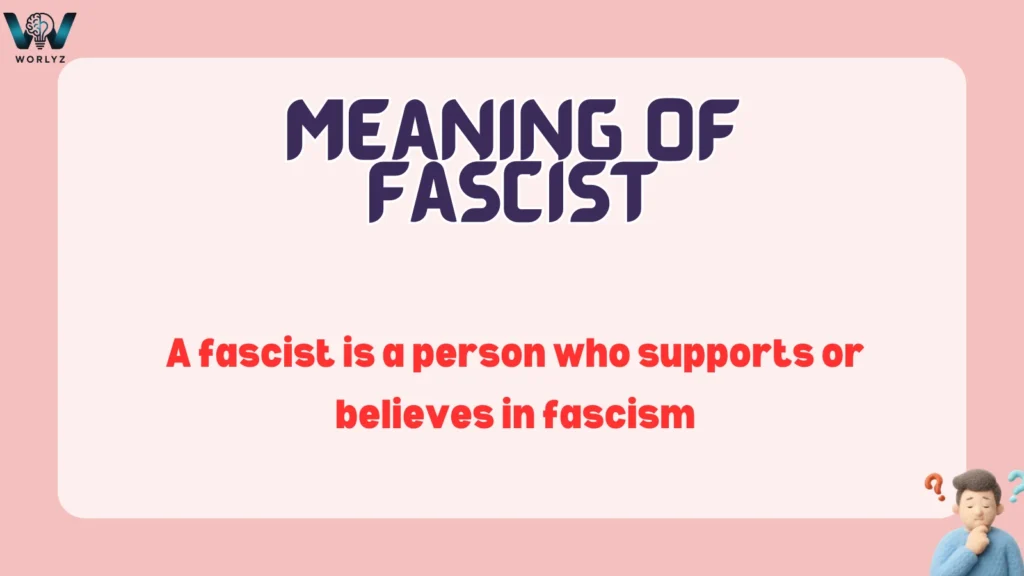
A fascist is a person who supports or believes in fascism, a political ideology that promotes:
- Strong centralized power
- Extreme nationalism
- Strict control over society
- Limited political opposition
Fascism places the state or nation above individual freedoms.
Origin of the Word
The word fascist comes from the Italian word fascio, meaning bundle or group. It was first used in Italy in the early 20th century and became widely known through the rule of Benito Mussolini.
The term symbolized unity and strength through collective power, often enforced through authority.
Core Beliefs Associated With Fascism
Authoritarian Leadership
Fascism supports a strong leader with significant control over government and society. Decisions are often made without democratic processes.
Extreme Nationalism
Fascists emphasize loyalty to the nation, often placing it above personal rights or international cooperation.
Suppression of Opposition
Political disagreement, free press, and protests are often restricted or punished under fascist systems.
Control Over Society
Fascist ideology supports heavy government involvement in culture, media, education, and sometimes the economy.
Meaning of Fascist in Simple Language
In simple terms, fascist refers to someone who believes:
- One powerful leader should control the country
- The nation comes before individual freedom
- People should not challenge authority
Today, the word is sometimes used loosely to describe overly controlling behavior, even outside politics.
Fascist meaning in history
Definition
Fascism is a political ideology that promotes a powerful central government, strong national identity, and strict control over society. It often places the interests of the nation above individual freedoms.
Historical Background
Fascism became prominent in the early 20th century, especially in parts of Europe. Fascist governments typically emphasized:
- Strong leadership
- National unity
- Military strength
- Limited political opposition
Key Characteristics
- Authoritarian rule
- Nationalism
- Government control over many aspects of society
- Suppression of political opponents
Anti fascist meaning
Definition
Anti fascist refers to people, groups, or movements that oppose fascism and its ideas.
What Anti Fascists Believe
Anti fascists generally support:
- Democracy
- Individual rights
- Political freedom
- Opposition to authoritarian governments
Simple Explanation
Someone who is anti fascist believes that governments should not have unchecked power and that people should have political freedoms and rights.
Fascist meaning for kids
Simple Definition
A fascist is someone who supports a type of government where one leader or group has a lot of power and people have fewer freedoms to disagree.
Easy Example
Imagine a country where:
- One leader makes most of the important decisions
- People are not allowed to criticize the government
- Different political opinions are discouraged
That kind of system may be described as fascist.
Fascist Compared to Similar Political Terms
Understanding fascist is easier when compared to related ideologies.
| Term | Meaning | Key Difference |
|---|---|---|
| Fascist | Supports authoritarian nationalism | Rejects democracy |
| Dictator | Ruler with absolute power | Not always nationalist |
| Totalitarian | State controls all aspects of life | Broader than fascism |
| Authoritarian | Strong central authority | Less ideological |
| Communist | State ownership and class equality | Economic focus |
Fascism is defined more by nationalism and control than by economic policy.
How the Word Fascist Is Used Today
Political Discussions
The word fascist is commonly used in debates about government power, civil rights, and leadership styles.
Social Media Usage
On social platforms, fascist is sometimes used to criticize behavior seen as controlling or oppressive, even outside formal politics.
Everyday Speech
Some people use fascist loosely to describe strict rules or authority figures, though this can oversimplify the term.
Common Mistakes or Misunderstandings
Using Fascist as a General Insult
Fascist has a specific political meaning and should not be used casually as an insult.
Confusing Fascism With Other Ideologies
Not all authoritarian or conservative systems are fascist. Fascism has distinct characteristics.
Ignoring Historical Context
The term is closely linked to historical regimes and events, especially in Europe during the 20th century.
Historical Examples of Fascism
Fascism is most commonly associated with:
- Italy under Benito Mussolini
- Germany under Adolf Hitler
These regimes demonstrated extreme nationalism, suppression of opposition, and centralized authority.
Related Political Terms
When exploring the meaning of fascist, you may also encounter:
- Fascism
- Authoritarianism
- Nationalism
- Totalitarianism
- Dictatorship
Each term has its own definition and should not be used interchangeably without care.
FAQs:
What does fascist mean in simple words?
Fascist means supporting a system where one powerful leader controls the nation and limits individual freedoms.
Is fascist the same as dictator?
No, fascist refers to a specific ideology, while a dictator is simply someone with absolute power.
Can fascist be used outside politics?
It is sometimes used loosely, but its proper meaning is political and historical.
Why is the word fascist considered serious?
Because it is linked to historical regimes that caused widespread oppression and violence.
Is fascism still relevant today?
The ideology itself exists mostly in history, but the term is still used in modern political discussions.
Conclusion:
The meaning of fascist goes beyond a casual label. It describes a political ideology centered on authoritarian leadership, extreme nationalism, and the suppression of opposition. Because of its historical significance and serious consequences, the word should be used carefully and accurately.
Understanding what fascist truly means helps promote informed discussion and prevents misuse in everyday conversation.

John is the founder and primary content creator of Worlyz. He has a strong passion for explaining word meanings, language concepts, slang terms, and educational topics in a clear and simple way. John focuses on creating well researched, reader friendly content that helps users easily understand complex words and ideas. Through Worlyz, his goal is to make learning meanings and concepts straightforward and accessible for everyone.