The abbreviation STNA is commonly seen in texts, social media comments, and online chats, especially among younger users and in informal conversations. Many people come across it and wonder what it actually stands for. Understanding the STNA meaning helps you avoid confusion and respond correctly when you see it used in messages.
Like many internet abbreviations, STNA can change meaning depending on context. This guide explains its most common meanings, how people use it, and how to tell which meaning fits the situation.
What Does STNA Mean
Definition
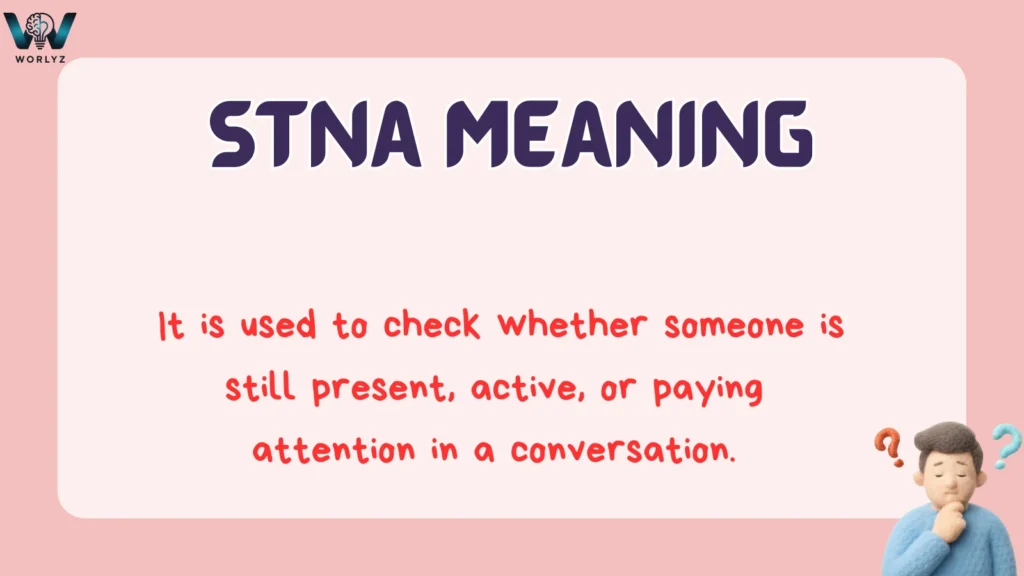
STNA most commonly means Still There? It is used to check whether someone is still present, active, or paying attention in a conversation.
It is often sent when:
- Someone stops replying
- A chat goes quiet
- The sender wants confirmation the other person is online
Origin and Background
STNA developed as a shorthand phrase in texting and instant messaging. As people began shortening common questions to save time, Still There? became STNA.
It is part of a larger trend of attention-check abbreviations used in digital communication.
Different Meanings of STNA Based on Context
STNA as Still There?
This is the most common meaning in chats and messages.
Example:
STNA or did you fall asleep
STNA in Professional or Educational Contexts
In non-chat settings, STNA can also stand for State Tested Nursing Assistant, especially in healthcare discussions.
Example:
She is studying to become an STNA.
Context makes the meaning clear in these cases.
STNA Meaning in Simple Language
In everyday texting, STNA simply means:
Are you still here
Are you still paying attention
Are you still online
It is usually neutral and not aggressive unless paired with tone or repetition.
How STNA Is Used in Conversations
Casual Chat Example
Hey STNA
Group Chat Example
STNA we need your input
Professional Example
He works as an STNA at the hospital
These examples show how context determines the meaning.
STNA Compared to Similar Abbreviations
Understanding STNA becomes easier when compared to similar terms.
| Abbreviation | Meaning | Usage Style |
|---|---|---|
| STNA | Still There? | Attention check |
| BRB | Be right back | Temporary absence |
| AFK | Away from keyboard | Not available |
| WYD | What you doing | Conversation starter |
| TTYL | Talk to you later | Ending a chat |
STNA is usually used mid-conversation, not at the beginning or end.
When and When Not to Use STNA
Appropriate Situations
- Friendly conversations
- Casual chats
- Checking in after silence
Situations to Avoid
- Formal emails
- Professional messaging
- Serious discussions
Using STNA in the wrong setting can appear unprofessional.
Common Mistakes or Misunderstandings
Thinking STNA Has Only One Meaning
STNA can also mean State Tested Nursing Assistant, so context matters.
Using STNA Too Frequently
Repeated use can sound impatient or rude.
Using STNA in Formal Communication
STNA is informal and not suitable for professional emails.
Related Slang and Abbreviations
If you see STNA, you might also encounter:
- You there
- Ping
- Hello?
- Still online
- Anyone there
These phrases serve the same purpose.
FAQs:
What does STNA mean in texting?
In texting, STNA usually means Still There? and is used to check if someone is still present in the chat.
Is STNA rude to use?
STNA is not rude by itself, but using it repeatedly can come across as impatient.
Can STNA mean something else?
Yes, STNA can also stand for State Tested Nursing Assistant in healthcare-related contexts.
Is STNA used on social media?
Yes, STNA appears in DMs, comments, and group chats on social platforms.
Should STNA be used in professional emails?
No, STNA is informal and should be avoided in professional communication.
Conclusion:
The STNA meaning depends entirely on context. In casual texting and online chats, it usually means Still There? and is used to check if someone is active or paying attention. In professional or medical contexts, it can refer to State Tested Nursing Assistant.
By understanding how STNA is used and recognizing the situation, you can interpret messages correctly and use the abbreviation appropriately in your own conversations.

John is the founder and primary content creator of Worlyz. He has a strong passion for explaining word meanings, language concepts, slang terms, and educational topics in a clear and simple way. John focuses on creating well researched, reader friendly content that helps users easily understand complex words and ideas. Through Worlyz, his goal is to make learning meanings and concepts straightforward and accessible for everyone.