The word vitae often appears in academic, professional, and formal contexts, yet many people are unsure what it actually means. You may have seen it in phrases like curriculum vitae or encountered it in documents, resumes, or online profiles. Understanding the vitae meaning helps you use the term correctly and avoid common confusion.
Although vitae looks complex, its meaning is straightforward once broken down. This article explains the word in detail, covering its origin, usage, examples, comparisons, and common misunderstandings.
What Does Vitae Mean
Definition
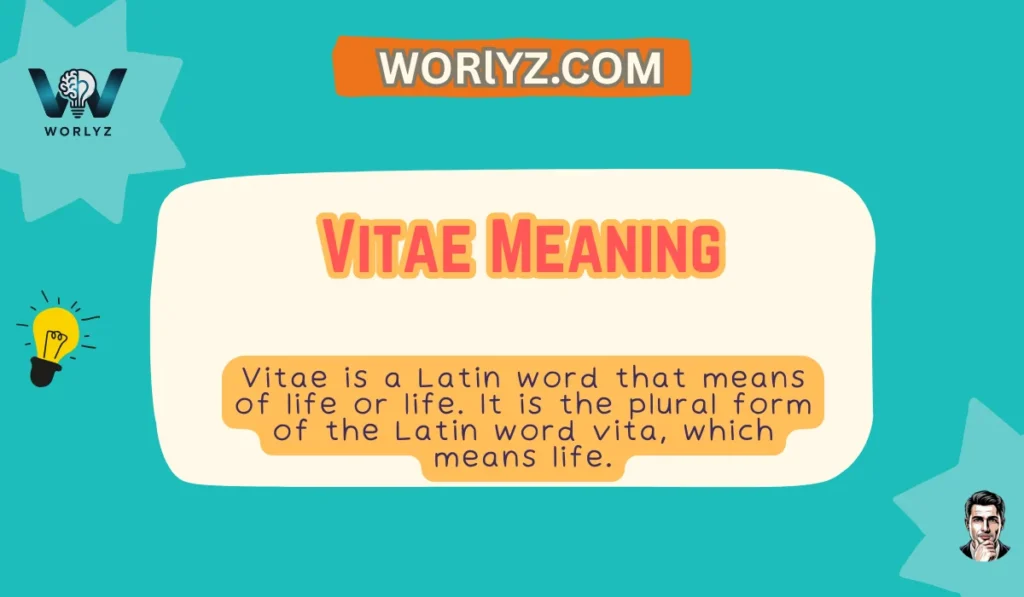
Vitae is a Latin word that means of life or life. It is the plural form of the Latin word vita, which means life.
In modern English usage, vitae most commonly appears in the phrase curriculum vitae, which refers to a detailed summary of a person’s professional and academic life.
Origin and Background
Vitae comes from classical Latin, where vita meant life and vitae functioned as its plural or possessive form, depending on grammatical use.
Over time, English adopted vitae mainly through academic and professional language, preserving its Latin structure rather than translating it fully.
How Vitae Is Used in Modern English
Vitae in Curriculum Vitae
The most common usage of vitae today is within curriculum vitae, often shortened to CV.
In this context, vitae represents:
- Education history
- Work experience
- Skills and achievements
- Publications and research
The phrase literally means course of life.
Vitae in Academic and Formal Writing
Vitae may also appear in:
- Academic biographies
- Scholarly introductions
- Professional profiles
In these cases, it still relates to a person’s life journey, especially in education or career.
Vitae Meaning in Simple Language
In everyday terms, vitae means:
- Life
- Life history
- Life details
When people say vitae, they are usually referring to a summary of someone’s professional or academic life.
Curriculum vitae meaning
What Does Curriculum Vitae Mean?
The term curriculum vitae is a Latin phrase that means:
- “Course of life”
- “Journey of one’s life”
It is commonly shortened to CV and is used to describe a document that highlights a person’s:
- Education
- Work experience
- Skills
- Achievements
- Qualifications
Why Is It Called Curriculum Vitae?
The phrase reflects the idea that a CV tells the story of a person’s academic and professional life. It provides a detailed overview of someone’s career path and accomplishments.
Where Is a CV Used?
A curriculum vitae is commonly used for:
- Job applications
- University admissions
- Scholarships
- Research positions
- Professional careers
Difference Between CV and Resume
Although people sometimes use them interchangeably, there can be differences:
| CV | Resume |
|---|---|
| More detailed | Shorter summary |
| Includes full academic background | Focuses on specific job skills |
| Common in academic fields | Common in business jobs |
Key Meaning
The deeper meaning of curriculum vitae points to a written record of a person’s life journey, growth, and professional experience.
Vitae meaning vampire
What Does Vitae Mean?
The word vitae comes from Latin and means:
- “Life”
- “Of life”
It is connected to the word vita, which means life or living existence.
Vitae in Vampire Stories and Games
In vampire fiction, the word vitae often refers to:
- Blood as the source of life
- Supernatural energy
- The life force vampires consume or use
Many fantasy books, games, and vampire stories use “vitae” as a mystical term for blood because blood is seen as the essence of life.
Symbolic Meaning
In vampire mythology, vitae symbolizes:
- Immortality
- Power
- Survival
- Dark spiritual energy
Why the Word Fits Vampire Lore
Since the Latin meaning is connected to life itself, writers often use vitae in vampire worlds to describe the magical life force contained in blood.
Aqua vitae meaning
What Does Aqua Vitae Mean?
The phrase aqua vitae is Latin for:
- “Water of life”
It was historically used to describe strong distilled alcohol or medicinal spirits.
Historical Background
In ancient times, people believed distilled alcohol had healing and restorative powers. Because of this, it became known as the “water of life.”
Common Uses of Aqua Vitae
Historically, aqua vitae referred to:
- Early whiskey
- Herbal alcohol mixtures
- Medicinal spirits
- Distilled liquor
Cultural Significance
Different cultures developed their own versions of aqua vitae:
- Whiskey in Scotland and Ireland
- Brandy in parts of Europe
- Herbal spirits used for medicine
Symbolic Meaning
Aqua vitae often symbolizes:
- Vitality
- Healing
- Energy
- Preservation of life
Interesting Fact
The word “whiskey” itself comes from a phrase related to aqua vitae, meaning “water of life” in Gaelic traditions.
Examples of Vitae in Conversations
Professional Example
Please send your curriculum vitae before the interview.
Academic Example
Her vitae includes several published research papers.
Formal Writing Example
The professor’s vitae highlights decades of teaching experience.
These examples show that vitae is mainly used in formal or professional situations.
Vitae Compared to Similar Terms
Understanding vitae becomes easier when compared with related words.
| Term | Meaning | Key Difference |
|---|---|---|
| Vitae | Of life | Latin term, formal |
| Resume | Job summary | Shorter and less detailed |
| Biography | Life story | Narrative form |
| Profile | Overview | Often brief |
| Portfolio | Work samples | Focuses on output |
Vitae is typically more detailed and formal than a resume.
Why Vitae Is Considered Formal
Vitae is viewed as formal because:
- It comes directly from Latin
- It is used mainly in academic and professional settings
- It follows traditional structure and tone
This is why vitae is rarely used in casual conversations.
Common Mistakes or Misunderstandings
Thinking Vitae Means Resume
While related, a resume is usually shorter, while a curriculum vitae is more detailed.
Pronunciation Confusion
Vitae is commonly pronounced as vee tie or vee tee.
Using Vitae Alone Incorrectly
Vitae is usually used as part of a phrase rather than on its own.
Vitae in Global and Cultural Context
In many countries, curriculum vitae is the standard document for job applications, while resumes are more common in others.
This makes understanding vitae important for international education and employment.
Related Words and Expressions
When learning the vitae meaning, you may also encounter:
- Curriculum
- Academic profile
- Professional history
- Life record
Each relates to documenting personal or professional development.
FAQs:
What does vitae mean in simple words?
Vitae means life and is usually used to describe a summary of someone’s education and work history.
Is vitae singular or plural?
Vitae is the plural form of vita in Latin, meaning life.
What is the difference between vitae and resume?
A vitae is longer and more detailed, while a resume is brief and job-focused.
How do you pronounce vitae?
Vitae is commonly pronounced as vee tie or vee tee.
Is vitae used outside academic settings?
Yes, vitae is also used in professional and international job applications.
Conclusion:
The vitae meaning comes from its Latin roots and centers on the idea of life and life history. Most commonly used in the phrase curriculum vitae, it refers to a detailed record of education, experience, and achievements.
Understanding vitae helps you navigate academic, professional, and international environments with confidence and clarity.

John is the founder and primary content creator of Worlyz. He has a strong passion for explaining word meanings, language concepts, slang terms, and educational topics in a clear and simple way. John focuses on creating well researched, reader friendly content that helps users easily understand complex words and ideas. Through Worlyz, his goal is to make learning meanings and concepts straightforward and accessible for everyone.