The word inept is often used to describe someone’s ability, behavior, or performance, especially when things do not go as expected. You may hear it in conversations, workplace feedback, books, or online discussions. Understanding the inept meaning helps you recognize when the word is being used to describe lack of skill, poor judgment, or awkward handling of a situation.
Although inept can sound harsh, it is commonly used to explain mistakes or shortcomings rather than intentional failure. Below is a clear and detailed explanation of what inept means and how it is used.
What Does Inept Mean
Definition
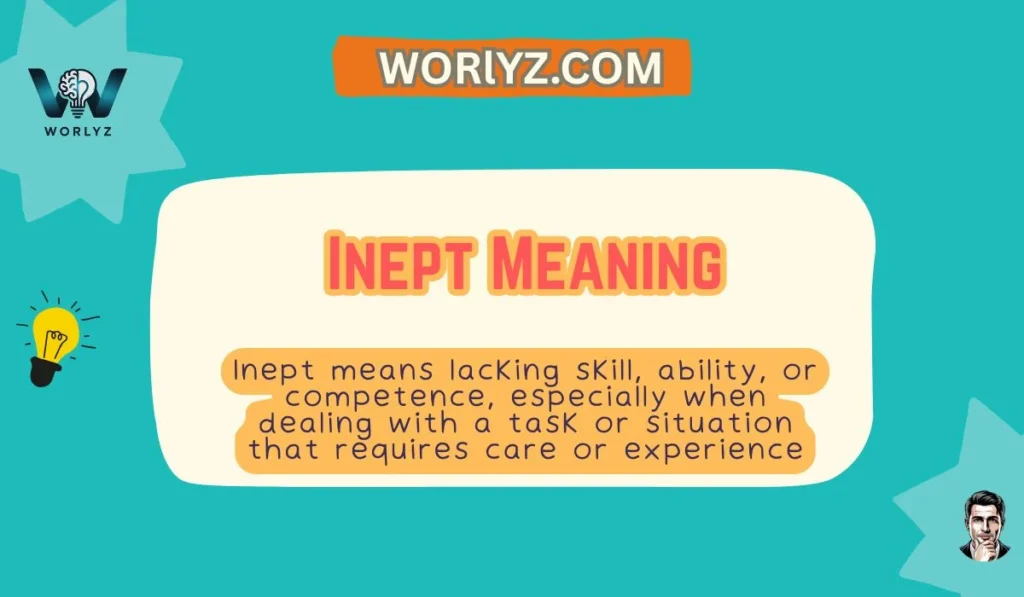
Inept means lacking skill, ability, or competence, especially when dealing with a task or situation that requires care or experience. It often describes someone who struggles to perform effectively or handle responsibilities properly.
In simple terms, inept means not good at what you are doing.
Origin and Background
The word inept comes from the Latin word ineptus, which means unsuitable or unfit. Over time, it entered English to describe people or actions that are awkward, clumsy, or poorly executed.
Historically, inept has been used to highlight practical or social incompetence rather than moral failure.
Different Meanings of Inept Based on Context
Inept as a Skill or Ability Description
Inept is commonly used to describe lack of ability in performing tasks.
Examples include:
- An inept manager who cannot organize a team
- An inept worker struggling with basic responsibilities
In this context, inept focuses on performance and effectiveness.
Inept in Social Situations
Inept can also describe someone who handles social interactions poorly.
Examples:
- Inept communication during a meeting
- Socially inept behavior at events
Here, the word highlights awkwardness or poor judgment.
Inept in Decision Making
Inept may be used when someone repeatedly makes poor or careless decisions.
Example:
The project failed due to inept planning.
This usage often appears in professional or critical discussions.
Inept Meaning in Simple Language
In everyday language, inept can mean:
- Not skilled
- Clumsy or awkward
- Unable to do something properly
- Lacking experience or judgment
The tone depends on how it is used and who is being described.
Examples of Inept in Conversations
Casual Conversation Example
He felt inept when he could not fix the problem.
Workplace Example
The report was delayed due to inept handling of data.
Social Context Example
She described herself as inept at small talk.
These examples show how inept can apply to many situations.
Inept Compared to Similar Words
Understanding inept becomes clearer when compared with similar terms.
| Word | Meaning | Key Difference |
|---|---|---|
| Inept | Lacking skill or competence | Focuses on inability |
| Incompetent | Not capable of doing a job | Often formal or legal |
| Clumsy | Physically awkward | Physical focus |
| Unskilled | Lacking training | Neutral tone |
| Awkward | Socially uncomfortable | Social focus |
Inept often combines lack of skill with poor execution.
Common Mistakes or Misunderstandings
Thinking Inept Means Lazy
Inept does not mean lazy. It refers to inability, not lack of effort.
Assuming Inept Is Always an Insult
While it can be critical, inept is sometimes used neutrally or self-reflectively.
Using Inept for Temporary Mistakes
Inept usually implies ongoing difficulty rather than a one-time error.
Tone and Emotional Impact of Inept
The word inept can sound strong, especially in professional or public contexts. It often suggests frustration or disappointment, so it should be used carefully.
Self-use example:
I feel inept at learning new technology.
This softens the tone and shows honesty rather than criticism.
Related Words and Expressions
When learning the inept meaning, you may also encounter:
- Inadequate
- Inefficient
- Helpless
- Bungling
- Amateurish
Each word overlaps but carries a different intensity.
FAQs:
What does inept mean in simple words?
Inept means not having the skill or ability to do something properly.
Is inept a strong insult?
It can sound harsh, but it often describes performance rather than attacking a person.
Can inept be used in professional settings?
Yes, but it should be used carefully as it can sound critical.
Is inept the same as incompetent?
They are similar, but incompetent is often more formal and serious.
Can someone improve from being inept?
Yes, inept often reflects lack of experience, which can improve with learning and practice.
Conclusion:
The inept meaning centers on lack of skill, ability, or effective handling of situations. Whether used in professional, social, or personal contexts, the word describes struggles with competence rather than intentional failure.
Understanding inept allows you to interpret feedback more accurately and use the word thoughtfully. When used carefully, it can explain difficulties without unnecessary judgment.

John is the founder and primary content creator of Worlyz. He has a strong passion for explaining word meanings, language concepts, slang terms, and educational topics in a clear and simple way. John focuses on creating well researched, reader friendly content that helps users easily understand complex words and ideas. Through Worlyz, his goal is to make learning meanings and concepts straightforward and accessible for everyone.