The phrase wet behind the ears is a common idiom you might hear in conversations, movies, or casual writing. While it sounds funny and a little literal, it actually has a deeper figurative meaning. Understanding the wet behind the ears meaning helps you grasp the context when someone uses it to describe a person, situation, or behavior.
This idiom is widely used in English-speaking cultures, and it can apply to people, teams, or even organizations that are new, inexperienced, or naive. Below is a detailed guide explaining its origins, meanings, examples, and common mistakes.
What Does Wet Behind the Ears Mean
Definition
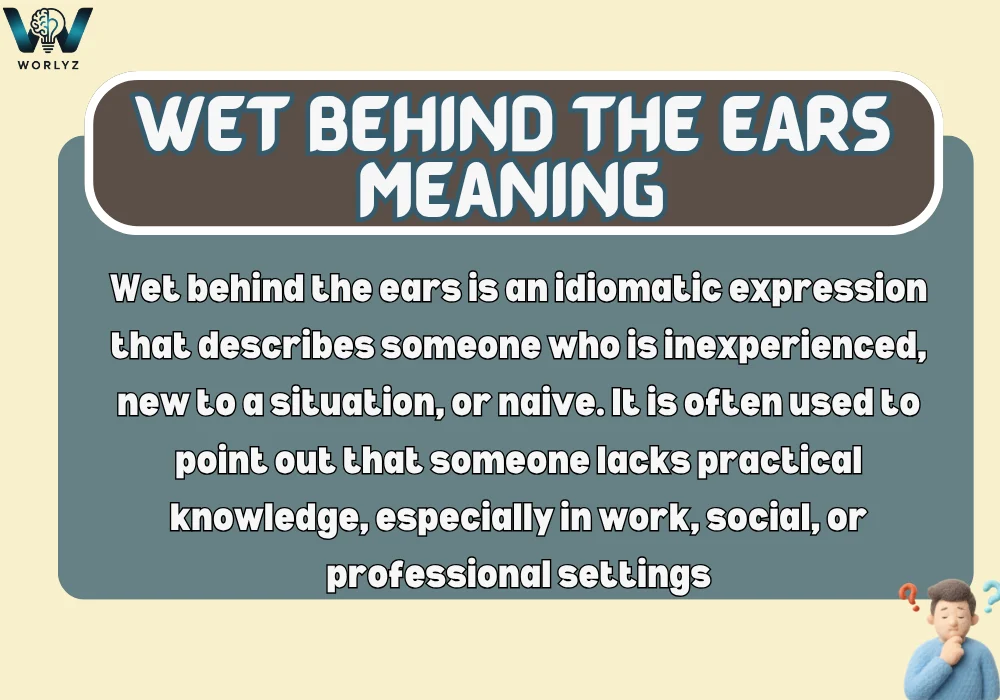
Wet behind the ears is an idiomatic expression that describes someone who is inexperienced, new to a situation, or naive. It is often used to point out that someone lacks practical knowledge, especially in work, social, or professional settings.
In simple terms, it refers to a person who may have theoretical knowledge but not the experience needed to act confidently.
Origin of the Phrase
The phrase dates back to at least the early 1600s. Originally, it was used quite literally: newborn babies were described as “wet behind the ears” because they were literally fresh from birth and had not yet developed the knowledge or skills of older individuals.
Over time, the phrase evolved into figurative language, describing anyone who is new, inexperienced, or green in a particular environment.
Different Meanings Based on Context
Wet Behind the Ears in Work or Professional Life
In professional settings, this idiom often refers to someone who is new to a job or industry.
Examples:
- A recent graduate starting their first job may be wet behind the ears.
- A trainee at a company might be wet behind the ears until they learn practical skills.
It implies potential for growth but highlights the current lack of experience.
Wet Behind the Ears in Social Life
The idiom can also describe someone naive in social situations or interpersonal interactions.
Examples:
- A teenager just moving to a new school might be wet behind the ears socially.
- Someone new to a city may be wet behind the ears in understanding local customs.
Here, the focus is on lack of exposure rather than professional experience.
Wet Behind the Ears in Education
Students or interns who are new to practical learning situations may also be described as wet behind the ears.
Example:
- The interns were wet behind the ears but eager to learn from their mentors.
It emphasizes that theoretical knowledge alone does not replace hands-on experience.
Wet Behind the Ears Meaning in Simple Language
In everyday terms, wet behind the ears can mean:
- Inexperienced or new at something
- Naive or untested
- Lacking practical knowledge
- Fresh and learning the ropes
The idiom usually carries a neutral to slightly humorous tone rather than harsh criticism.
Examples of Wet Behind the Ears in Conversations
Workplace Example
He’s still wet behind the ears, but with time, he’ll become a skilled manager.
Social Example
Don’t worry if you feel wet behind the ears; everyone starts somewhere.
Casual Example
She’s wet behind the ears in dating, so give her some guidance.
Literary or Movie Example
The hero was wet behind the ears when he first joined the team, but quickly learned the ropes.
These examples show how versatile the phrase is in different contexts.
Wet Behind the Ears Compared to Similar Expressions
Understanding wet behind the ears becomes easier when compared with other idioms describing inexperience.
| Phrase | Meaning | Key Difference |
|---|---|---|
| Wet behind the ears | New, inexperienced | Often neutral or lightly humorous |
| Green | Inexperienced or naive | Can imply vulnerability |
| Rookie | Beginner, especially in sports or work | More casual, sometimes informal |
| Novice | New or untrained | Neutral and formal |
| Freshman | New member, often of school or college | Specific to education or teams |
| Tenderfoot | Beginner, often outdoors or in scouting | Slightly old-fashioned |
Wet behind the ears often emphasizes being new in a situation and needing practical experience.
Common Mistakes or Misunderstandings
Thinking It Is an Insult
The idiom is not meant to insult. It is often used lightly or humorously to highlight a person’s newness.
Using It Literally
Some people may mistakenly take it literally. It is figurative and should only be used to describe inexperience.
Overusing the Phrase
Using it too frequently can make speech sound clichéd. It works best sparingly in writing and conversation.
Cultural Significance and Modern Usage
Wet behind the ears is widely used in English-speaking countries, especially in:
- Workplace conversations
- Teacher-student interactions
- Mentorship contexts
- Literature and storytelling
It remains relevant today because it conveys both humor and clarity in describing someone inexperienced.
Related Words and Expressions
When exploring the wet behind the ears meaning, you may also encounter:
- Inexperienced
- Greenhorn
- Rookie
- Newbie
- Freshman
- Novice
Each term overlaps in meaning but carries its own tone and context.
FAQs:
What does wet behind the ears mean in simple words?
Wet behind the ears means someone is inexperienced, new to a situation, or naive.
Is wet behind the ears an insult?
Not usually. It is often humorous or descriptive rather than critical.
Where did the phrase wet behind the ears come from?
It originated from the literal observation of newborn babies being “wet behind the ears” and evolved to describe anyone inexperienced.
Can it describe adults too?
Yes, the phrase can describe anyone new to a job, activity, or situation, regardless of age.
What are similar expressions to wet behind the ears?
Similar expressions include rookie, green, novice, tenderfoot, and newbie.
Conclusion:
The wet behind the ears meaning captures the idea of being new, inexperienced, or naive. It is a versatile idiom that works in professional, social, and educational contexts. While it often highlights a lack of experience, it also suggests potential for growth and learning.
Understanding this phrase helps you communicate clearly and adds a touch of humor or empathy when describing someone just starting out. Whether in conversation, writing, or storytelling, wet behind the ears remains a timeless and widely recognized expression.

John is the founder and primary content creator of Worlyz. He has a strong passion for explaining word meanings, language concepts, slang terms, and educational topics in a clear and simple way. John focuses on creating well researched, reader friendly content that helps users easily understand complex words and ideas. Through Worlyz, his goal is to make learning meanings and concepts straightforward and accessible for everyone.