The word folklore is rich, cultural, and deeply connected to history, traditions, and storytelling. You may have heard it in books, movies, or discussions about culture and wondered what it really means. Understanding the folklore meaning helps you explore how people pass down beliefs, stories, and customs from one generation to another.
Folklore is not just about old tales or myths. It represents the identity, values, and imagination of a community. From fairy tales and legends to everyday traditions and sayings, folklore plays a big role in shaping how cultures express themselves.
What Does Folklore Mean
Definition
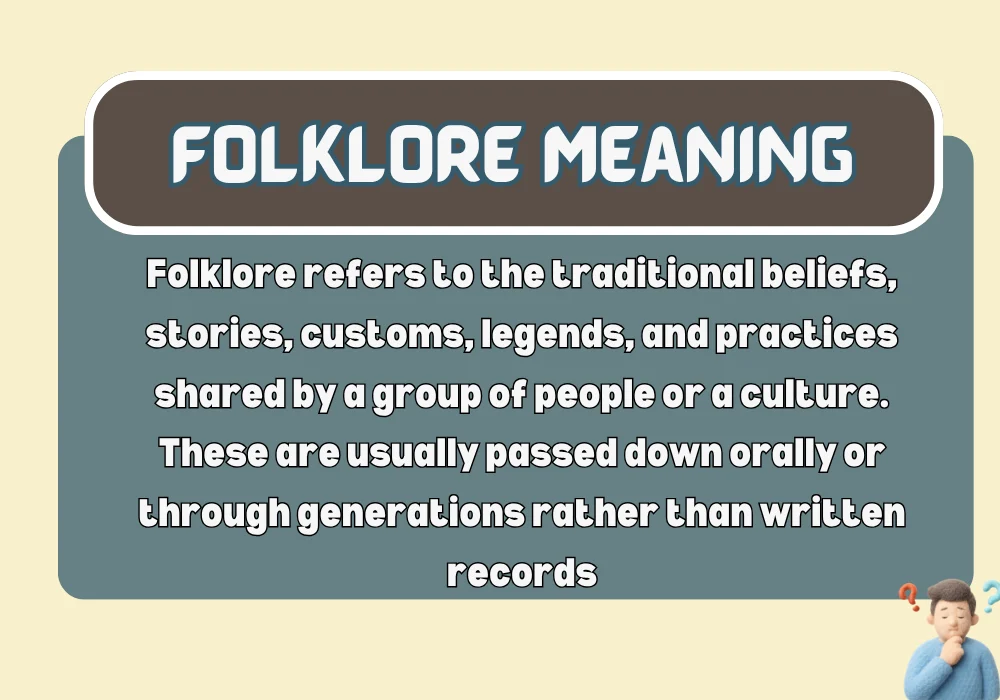
Folklore refers to the traditional beliefs, stories, customs, legends, and practices shared by a group of people or a culture. These are usually passed down orally or through generations rather than written records.
In simple terms, folklore is the collection of stories and traditions that belong to a community.
Origin and Background
The word folklore was first introduced in the 19th century by combining two words:
- Folk meaning people
- Lore meaning knowledge or traditions
Originally, it was used to describe the cultural knowledge of ordinary people, especially those passed down informally.
Over time, folklore expanded to include:
- Myths and legends
- Folk songs and dances
- Superstitions and customs
Different Types of Folklore
Oral Folklore
This includes stories and tales shared by word of mouth.
Examples:
- Fairy tales
- Legends
- Myths
These stories often change slightly as they are retold over time.
Material Folklore
Material folklore refers to physical objects connected to traditions.
Examples:
- Traditional clothing
- Handcrafted items
- Cultural decorations
Social or Customary Folklore
This type includes traditions and practices people follow in daily life.
Examples:
- Festivals and celebrations
- Wedding traditions
- Greetings and rituals
Folklore Meaning in Simple Language
In everyday terms, folklore means:
- Stories people tell over generations
- Traditions followed by a culture
- Beliefs shared within a community
It reflects how people think, celebrate, and understand the world around them.
Examples of Folklore in Real Life
Story Based Example
Stories like Cinderella or local village legends are part of folklore.
Cultural Example
Celebrating traditional festivals is also a form of folklore.
Daily Life Example
Believing in superstitions like good luck symbols comes from folklore.
These examples show how folklore exists in both stories and everyday practices.
Folklore Compared to Similar Terms
Understanding folklore becomes easier when compared with related words.
| Word | Meaning | Key Difference |
|---|---|---|
| Folklore | Cultural stories and traditions | Broad and community-based |
| Myth | Traditional sacred story | Often about gods or origins |
| Legend | Story based on history | May include real events |
| Tradition | Repeated customs | Focus on actions |
| Culture | Overall way of life | Much broader concept |
Folklore is a part of culture but focuses mainly on stories and shared traditions.
Importance of Folklore in Society
Folklore plays an important role in:
- Preserving cultural identity
- Teaching moral lessons
- Passing knowledge across generations
- Entertaining and inspiring people
Through folklore, people learn values, history, and social norms.
Folklore in Modern Times
Even today, folklore continues to evolve. It appears in:
- Movies and TV shows
- Social media storytelling
- Urban legends and internet myths
Modern folklore can include viral stories, memes, and shared online beliefs.
Common Mistakes or Misunderstandings
Thinking Folklore Is Only Fiction
While some folklore is fictional, it often contains cultural truths and values.
Assuming Folklore Is Outdated
Folklore still exists today and continues to grow with modern society.
Confusing Folklore With Myth Only
Folklore includes much more than myths, such as customs and traditions.
Related Words and Concepts
When learning the folklore meaning, you may also come across:
- Mythology
- Legends
- Traditions
- Customs
- Heritage
These concepts are closely connected to folklore.
FAQs:
What does folklore mean in simple words?
Folklore means the traditional stories, beliefs, and customs shared by a group of people.
Is folklore only about old stories?
No, folklore also includes traditions, customs, and beliefs that are still practiced today.
What is the difference between folklore and myth?
Myth is a type of folklore that usually involves gods or creation stories.
Can folklore change over time?
Yes, folklore often changes slightly as it is passed down through generations.
Is folklore important today?
Yes, folklore helps preserve culture and continues to influence modern storytelling.
Conclusion:
The folklore meaning goes beyond simple stories. It represents the shared traditions, beliefs, and creativity of a community. From ancient legends to modern cultural practices, folklore connects people to their roots and identity.
By understanding folklore, you gain insight into how cultures express themselves and pass knowledge from one generation to the next.

John is the founder and primary content creator of Worlyz. He has a strong passion for explaining word meanings, language concepts, slang terms, and educational topics in a clear and simple way. John focuses on creating well researched, reader friendly content that helps users easily understand complex words and ideas. Through Worlyz, his goal is to make learning meanings and concepts straightforward and accessible for everyone.