The word boomer is widely used in conversations, social media, memes, and everyday language. You might hear it in a joking comment, see it in online debates, or come across phrases like ok boomer. Understanding the boomer meaning helps you recognize the tone behind the word and use it correctly in different situations.
While boomer originally had a specific historical meaning, its usage has evolved over time. Today, it can refer to a generation, an attitude, or even a humorous reaction in online culture.
What Does Boomer Mean
Definition
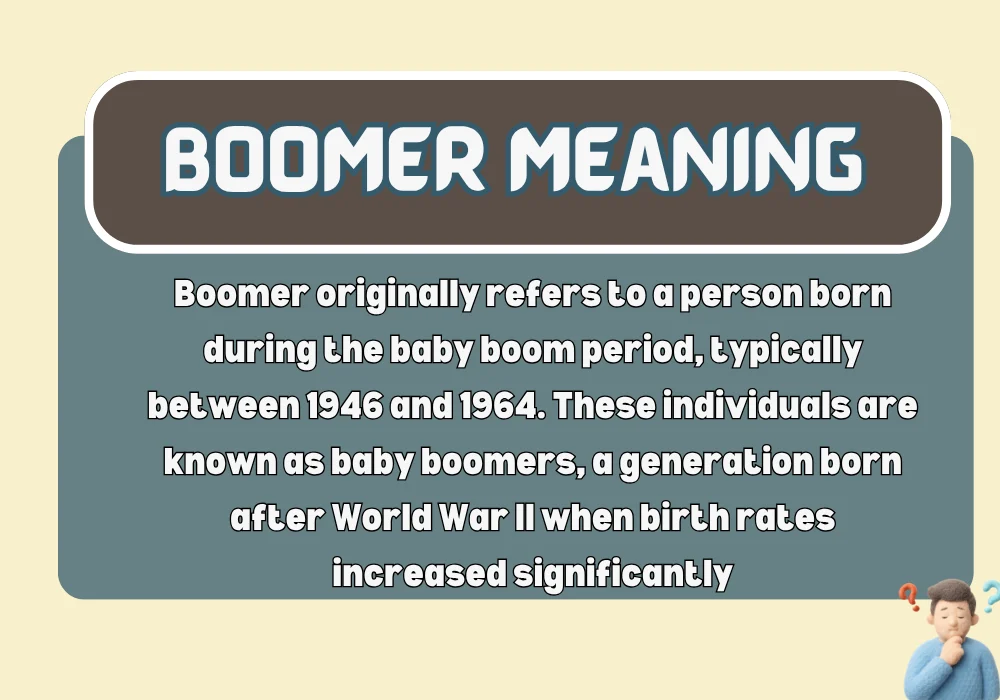
Boomer originally refers to a person born during the baby boom period, typically between 1946 and 1964. These individuals are known as baby boomers, a generation born after World War II when birth rates increased significantly.
In modern usage, boomer can also describe:
- Someone with traditional or outdated views
- A person who struggles with new technology
- A humorous label used in online conversations
Origin and Background
The term boomer comes from the phrase baby boom, which describes the large increase in births after World War II. As this generation grew, they had a strong influence on culture, economy, and society.
Over time, younger generations began using boomer more casually, often shifting it from a neutral term to a cultural or humorous one.
Different Meanings of Boomer Based on Context
Boomer as a Generational Term
In its original sense, boomer is a neutral term used to describe people born in a specific time period.
Examples:
- My grandparents are boomers
- Boomers experienced major social changes in their youth
This usage is factual and not offensive.
Boomer as a Cultural Label
In modern conversations, boomer is often used to describe attitudes rather than age.
It may refer to someone who:
- Prefers traditional ways of thinking
- Disagrees with modern trends
- Resists change or new ideas
Example:
That opinion sounds very boomer.
Boomer in Internet Slang
Online, boomer is often used humorously or sarcastically.
The phrase ok boomer became popular as a way to respond to outdated or dismissive opinions.
Example:
You still print emails? ok boomer
This usage is casual and depends heavily on tone.
Boomer Meaning in Simple Language
In everyday terms, boomer can mean:
- A person from an older generation
- Someone with traditional thinking
- A playful or sarcastic way to respond to outdated ideas
The meaning changes based on context and tone.
Examples of Boomer in Conversations
Neutral Example
My parents are boomers who grew up without the internet.
Casual Example
He refuses to use apps, such a boomer move.
Internet Slang Example
You think social media is pointless? ok boomer
Light Humor Example
I still write things on paper, guess I am becoming a boomer.
These examples show how the word can shift from neutral to humorous.
Boomer Compared to Similar Terms
Understanding boomer becomes easier when compared to related words.
| Word | Meaning | Key Difference |
|---|---|---|
| Boomer | Baby boomer generation or mindset | Can be neutral or humorous |
| Gen X | Generation after boomers | More neutral and specific |
| Millennial | Younger generation | Often contrasted with boomers |
| Traditional | Old-fashioned thinking | More formal |
| Old school | Classic or outdated style | Often positive |
Boomer is unique because it mixes generational identity with cultural tone.
Cultural Impact of the Word Boomer
Boomers played a major role in shaping modern society. They experienced:
- Economic growth
- Cultural revolutions
- Technological change
Because of this, the term carries historical importance as well as modern reinterpretation.
Boomer in Social Media and Online Culture
On platforms like social media, boomer is often used in:
- Memes
- Comments and replies
- Debates about generational differences
The tone can be:
- Playful
- Sarcastic
- Critical
Understanding tone is important to avoid misunderstandings.
Common Mistakes or Misunderstandings
Thinking Boomer Is Always Offensive
Boomer is not always negative. It depends on how it is used.
Using Boomer Only for Age
Boomer can describe attitude, not just age.
Overusing the Term
Using boomer too often may sound repetitive or disrespectful in serious discussions.
Related Words and Expressions
When exploring the boomer meaning, you may also encounter:
- Generation gap
- Old school
- Traditional mindset
- Digital divide
- Modern vs classic
These terms often appear in similar discussions.
FAQs:
What does boomer mean in simple words?
Boomer means a person from the baby boomer generation or someone with traditional thinking.
Is boomer an insult?
Boomer is not always an insult, but it can sound rude depending on tone and context.
What does ok boomer mean?
It is a casual or sarcastic way to dismiss outdated opinions.
Can young people be called boomers?
Yes, sometimes the term is used humorously to describe behavior, not age.
Why is the term boomer popular online?
It became popular through memes and generational discussions on social media.
Conclusion:
The boomer meaning has evolved from a simple generational label to a broader cultural expression. It can describe age, mindset, or even humor in online conversations. Understanding how and when to use the term helps avoid confusion and keeps communication clear.
By recognizing the different meanings and tones behind boomer, you can use it naturally and interpret it correctly in both real-life and digital conversations.

John is the founder and primary content creator of Worlyz. He has a strong passion for explaining word meanings, language concepts, slang terms, and educational topics in a clear and simple way. John focuses on creating well researched, reader friendly content that helps users easily understand complex words and ideas. Through Worlyz, his goal is to make learning meanings and concepts straightforward and accessible for everyone.