The word hoping is commonly used in everyday conversations, texting, social media captions, and emotional discussions. Even though it is a simple word, it carries deep emotional meaning because it often reflects expectations, wishes, dreams, and optimism about the future. Understanding the hoping meaning helps you use the word naturally and understand its emotional tone in different situations.
People use hoping when they want something positive to happen, whether it involves relationships, work, health, or personal goals. The word appears in casual chats, motivational quotes, songs, and daily communication because it expresses a very human feeling.
What Does Hoping Mean
Definition
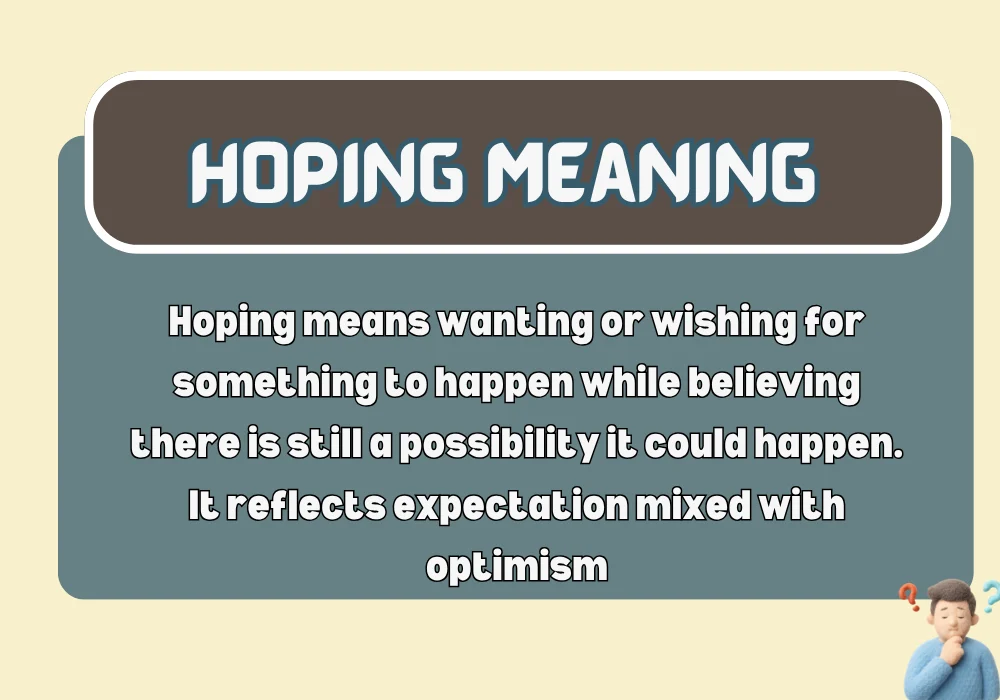
Hoping means wanting or wishing for something to happen while believing there is still a possibility it could happen. It reflects expectation mixed with optimism.
In simple words, hoping means:
- Wanting a good outcome
- Looking forward to something positively
- Believing things may improve or work out
Origin of the Word
The word hoping comes from the verb hope, which has roots in Old English and originally referred to confidence or trust in future outcomes.
Over time, hoping became strongly connected with:
- Emotional expectation
- Positive thinking
- Desire for improvement
Today, the word is used in both serious and casual communication.
How Hoping Is Used in Everyday Language
Hoping in Personal Conversations
People often use hoping to express emotional wishes or expectations.
Examples:
- I am hoping things get better soon
- She is hoping to pass her exams
- We are hoping for good weather tomorrow
This usage sounds emotional, sincere, and positive.
Hoping in Relationships
The word is very common in emotional or romantic contexts.
Examples:
- He is hoping she replies soon
- They are hoping their relationship improves
- I was hoping to see you today
In these situations, hoping expresses emotional desire and anticipation.
Hoping in Professional Situations
Hoping is also used politely in work or formal communication.
Examples:
- Hoping to hear from you soon
- We are hoping for a successful launch
- I am hoping this project goes smoothly
This usage sounds softer and more respectful than demanding or expecting.
Hoping Meaning in Simple Language
In everyday simple language, hoping means:
- Wanting something good to happen
- Waiting positively for an outcome
- Feeling optimistic about the future
It often carries emotional warmth and sincerity.
Examples of Hoping in Conversations
Casual Conversation Example
I am hoping this weekend will be relaxing.
Emotional Example
She is hoping her family stays safe.
Work Related Example
We are hoping the meeting goes well.
Social Media Example
Hoping for brighter days ahead.
These examples show how flexible and emotional the word can be.
Hoping Compared to Similar Words
Understanding hoping becomes easier when compared to related words.
| Word | Meaning | Key Difference |
|---|---|---|
| Hoping | Wanting a positive outcome | Emotional and optimistic |
| Wishing | Desiring something | May feel less realistic |
| Expecting | Believing something will happen | Stronger certainty |
| Dreaming | Imagining ideal situations | More imaginative |
| Praying | Seeking spiritual help | Religious or spiritual tone |
Hoping usually sits between wishing and expecting.
Emotional Meaning Behind Hoping
Hoping is emotionally powerful because it reflects:
- Optimism
- Faith in improvement
- Emotional resilience
- Desire for happiness
People often hold onto hope during difficult moments because it gives emotional strength and motivation.
How Hoping Is Used Online and in Chat
The word hoping is common in:
- Text messages
- Instagram captions
- WhatsApp chats
- TikTok comments
- Motivational posts
Examples:
- Hoping everything works out
- Just hoping for peace right now
- Hoping you have a great day
Online, the word usually carries supportive or emotional energy.
Is Hoping Considered Slang
Hoping is not slang. It is a standard English word used in both formal and informal communication.
However, people often use it casually in:
- Text messages
- Social media captions
- Emotional conversations
Because of its emotional tone, it feels personal and relatable.
Common Mistakes or Misunderstandings
Thinking Hoping Means Certainty
Hoping does not guarantee something will happen. It only expresses desire and optimism.
Overusing Hoping in Professional Writing
Using hoping too often in business writing can sometimes sound uncertain.
Confusing Hope With Expectation
Hope is emotional and uncertain, while expectation carries stronger belief.
Related Words and Expressions
When learning the hoping meaning, you may also encounter:
- Hopeful
- Optimistic
- Wishing
- Dreaming
- Looking forward to
These words all connect to positive future thinking.
FAQs:
What does hoping mean?
Hoping means wanting or wishing for something positive to happen while believing it is possible.
Is hoping slang?
No, hoping is a standard English word and not slang.
Where is hoping used?
Hoping is used in everyday conversations, texting, social media, emotional discussions, and professional communication.
What does hoping mean in chat?
In chat, hoping usually means someone is expressing optimism, emotional support, or positive expectations about something.
What is the difference between hoping and wishing?
Hoping usually feels more realistic and optimistic, while wishing can sometimes feel less certain or imaginary.
Can hoping be used in formal communication?
Yes, hoping can be used politely in professional emails and formal conversations.
Conclusion:
The hoping meaning reflects optimism, emotional expectation, and positive thinking about the future. Whether used in personal conversations, online chats, relationships, or professional communication, hoping expresses a sincere desire for good outcomes.
Understanding how hoping works in different contexts helps you communicate emotions more clearly and connect naturally with others in everyday language.

Hi, I’m Mike Grobgaard, founder of Lexonr. I write about meanings, internet slang, biblical terms, and modern expressions in a simple yet engaging way. My goal is to help readers understand the deeper story behind every word they search for.