The phrase personal exigency is commonly used in workplaces, schools, official documents, and professional conversations. While it may sound formal or complicated at first, the meaning is actually straightforward once broken down clearly. Understanding the personal exigency meaning helps you use the phrase correctly in emails, leave requests, workplace communication, and everyday discussions.
Many people encounter this term when requesting emergency leave or explaining urgent personal situations. Because it often appears in formal settings, knowing its exact meaning can help avoid misunderstandings and improve communication.
What Does Personal Exigency Mean
Definition
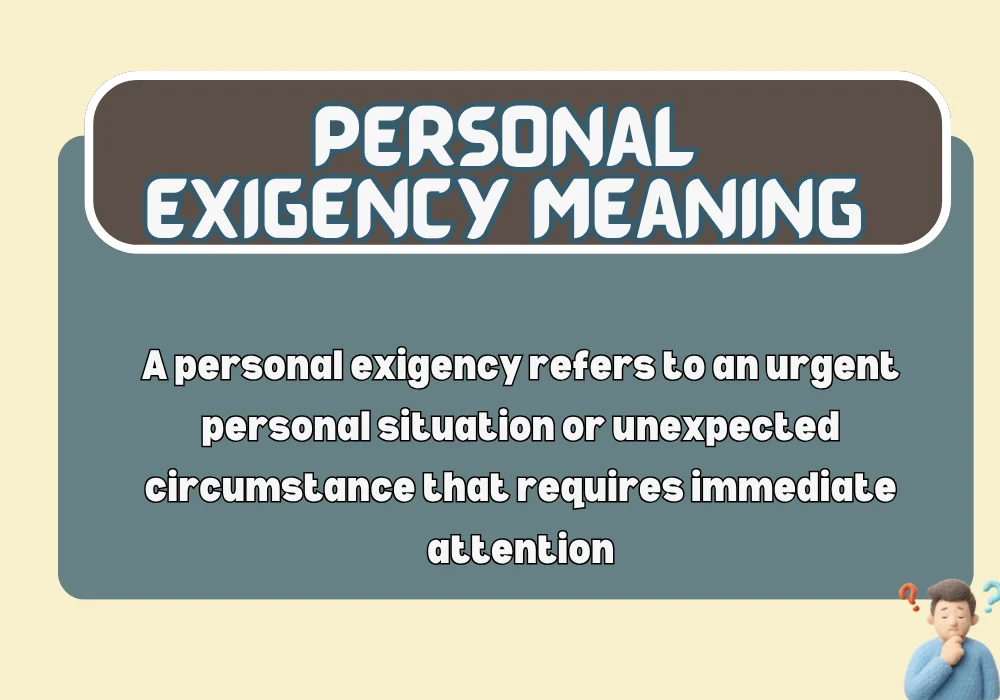
A personal exigency refers to an urgent personal situation or unexpected circumstance that requires immediate attention. It usually involves important matters that cannot be delayed or ignored.
In simple terms, a personal exigency is:
- A personal emergency
- An urgent private matter
- A situation requiring immediate action
Origin of the Word Exigency
The word exigency comes from the Latin word exigere, meaning to demand or require urgently. Over time, the term evolved to describe situations that create pressure or immediate need.
When combined with the word personal, it specifically refers to urgent matters in someone’s private life.
Personal Exigency Meaning in Simple Language
In everyday language, personal exigency simply means:
- An urgent personal issue
- A serious matter needing quick attention
- A private emergency
It is often used in formal communication because it sounds respectful and professional.
Common Situations Considered Personal Exigencies
Many situations can qualify as a personal exigency depending on urgency and importance.
Examples include:
- Sudden illness
- Family emergencies
- Accidents
- Urgent childcare situations
- Emergency travel
- Unexpected personal crises
Example sentence:
I need to leave work due to a personal exigency.
How Personal Exigency Is Used in Professional Settings
Workplace Usage
In offices and companies, the phrase is often used when requesting:
- Emergency leave
- Short notice absence
- Flexible work arrangements
Example:
She informed her manager about a personal exigency and requested leave.
Educational Institutions
Schools and universities may use the phrase in:
- Absence explanations
- Deadline extensions
- Emergency requests
Example:
The student missed the exam because of a personal exigency.
Official Documents and Policies
Many HR policies and legal documents use personal exigency because it sounds neutral and respectful without revealing private details.
Examples of Personal Exigency in Conversations
Workplace Example
I apologize for the late response. I was dealing with a personal exigency.
School Example
Due to a personal exigency, I could not attend class yesterday.
Formal Email Example
I am requesting emergency leave because of a personal exigency.
These examples show how the phrase is commonly used in respectful and professional communication.
Personal Exigency Compared to Similar Terms
Understanding personal exigency becomes easier when compared with related phrases.
| Phrase | Meaning | Key Difference |
|---|---|---|
| Personal Exigency | Urgent personal matter | Formal and professional |
| Emergency | Serious urgent situation | Broader and stronger |
| Personal Issue | Private problem | Less urgent |
| Crisis | Severe difficult situation | More intense |
| Urgent Matter | Important issue needing attention | More general |
Personal exigency is often preferred in formal settings because it sounds polite and discreet.
Why People Use the Phrase Personal Exigency
People often choose this phrase because:
- It sounds professional
- It protects privacy
- It avoids oversharing details
- It communicates urgency respectfully
For example, someone may not want to explain personal family matters in detail, so they simply say they are handling a personal exigency.
Common Mistakes or Misunderstandings
Thinking It Only Refers to Major Emergencies
A personal exigency does not always mean a life-threatening situation. It can include any urgent personal matter requiring attention.
Using It Too Casually
Because the phrase sounds formal, it may feel unnatural in very casual conversations.
Confusing Exigency With Excuse
A personal exigency refers to a genuine urgent situation, not simply an excuse to avoid responsibilities.
Personal Exigency in Modern Communication
Today, the phrase appears frequently in:
- Work emails
- HR forms
- Online leave requests
- Academic communication
- Professional chats
It remains popular because it communicates urgency while maintaining professionalism.
Related Words and Expressions
When learning the personal exigency meaning, you may also encounter:
- Personal emergency
- Urgent matter
- Family emergency
- Critical situation
- Immediate concern
These expressions are similar but may differ in tone and formality.
FAQs:
What does personal exigency mean?
Personal exigency means an urgent personal situation or private matter that requires immediate attention.
Is personal exigency slang?
No, personal exigency is a formal phrase commonly used in workplaces, schools, and official communication.
Where is personal exigency used?
It is commonly used in professional emails, leave requests, school notices, HR policies, and formal conversations.
What does personal exigency mean in chat?
In chat or messaging, personal exigency usually means someone is dealing with an urgent personal issue and may be unavailable temporarily.
Can personal exigency refer to family problems?
Yes, family emergencies and urgent family matters are common examples of personal exigencies.
Conclusion:
The personal exigency meaning centers around urgent personal matters that require immediate attention. Whether used in workplaces, schools, or official communication, the phrase helps people communicate emergencies respectfully and professionally without sharing unnecessary private details.
Understanding how personal exigency is used can improve both professional communication and everyday understanding of formal language.

Hi, I’m Mike Grobgaard, founder of Lexonr. I write about meanings, internet slang, biblical terms, and modern expressions in a simple yet engaging way. My goal is to help readers understand the deeper story behind every word they search for.