If you have seen the word eel used in chats, comments, or online conversations and felt confused, you are not alone. While eel is commonly known as an animal, its meaning can change depending on context. Understanding the eel meaning helps you avoid misunderstandings and lets you follow conversations more confidently, especially in casual or internet-based communication.
In modern digital language, many ordinary words take on new meanings. Eel is one of those terms that can mean very different things depending on where and how it is used.
What Does Eel Mean
Literal Meaning
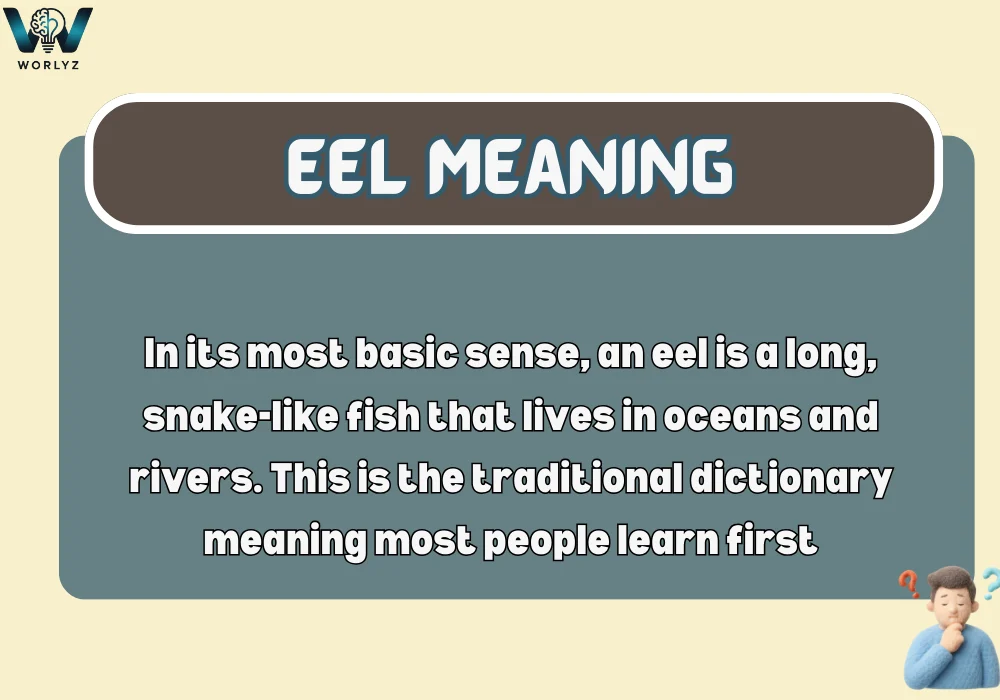
In its most basic sense, an eel is a long, snake-like fish that lives in oceans and rivers. This is the traditional dictionary meaning most people learn first.
However, online and in conversation, eel can carry symbolic or slang-related meanings that are not about the animal itself.
Figurative or Slang Meaning
In informal language, calling someone an eel usually describes behavior rather than appearance.
Common implied meanings include:
- Someone who is slippery or hard to pin down
- A person who avoids direct answers
- Someone who changes opinions quickly
This meaning comes from how real eels move, slipping away when you try to grab them.
How Eel Is Used in Conversations
Eel as a Personality Description
Eel is sometimes used to describe a person who avoids commitment or responsibility.
Example:
He is such an eel, never gives a straight answer
In this case, eel suggests someone who is clever but evasive.
Eel in Online Chats and Comments
In online spaces, eel can be used playfully or critically, depending on tone.
Examples:
That reply was pure eel energy
Stop being an eel and say what you mean
These uses rely heavily on context and tone rather than strict definition.
Eel Meaning Explained in Simple Language
In simple terms, when eel is used outside its animal meaning, it usually refers to someone who:
- Slips out of situations
- Avoids being clear
- Is difficult to confront directly
It is not usually a compliment, but it is also not always harsh. Sometimes it is used jokingly among friends.
Examples of Eel in Conversations
Casual Chat Example
Why are you acting like an eel about this plan
Online Comment Example
That politician answers questions like an eel
Playful Friend Example
You are an eel, always dodging responsibilities
These examples show how eel shifts from literal to descriptive language.
Common Mistakes or Misunderstandings
Assuming Eel Is Always Insulting
While eel can be negative, it is sometimes used humorously without serious offense.
Confusing Eel with Similar Slang
Eel is different from words like snake or rat, which often imply betrayal. Eel focuses more on avoidance than harm.
Taking It Literally in Online Chats
In many online contexts, eel has nothing to do with the animal and everything to do with behavior.
Related Words and Expressions
Words with similar meanings include:
- Slippery
- Dodgy
- Shifty
- Elusive
These terms are often used in similar contexts as eel.
FAQs:
What does eel mean in slang?
In slang, eel usually refers to someone who is slippery, evasive, or avoids giving clear answers.
Is calling someone an eel an insult?
It can be mildly negative, but it is often playful or humorous depending on tone and context.
Does eel always mean a person?
No, eel can still mean the animal. The slang meaning depends entirely on how it is used in conversation.
Is eel common internet slang?
Eel is not mainstream slang, but it appears in casual chats and comments, especially to describe behavior.
Can eel be used jokingly among friends?
Yes, among friends it is often used lightly to tease someone who is avoiding a topic.
Conclusion:
The eel meaning depends strongly on context. While it is literally a type of fish, in conversations it often describes someone who avoids directness or slips out of situations easily.
By understanding how eel is used figuratively, you can better interpret online comments, jokes, and casual remarks. Like many modern expressions, its meaning comes from behavior rather than the word itself.

John is the founder and primary content creator of Worlyz. He has a strong passion for explaining word meanings, language concepts, slang terms, and educational topics in a clear and simple way. John focuses on creating well researched, reader friendly content that helps users easily understand complex words and ideas. Through Worlyz, his goal is to make learning meanings and concepts straightforward and accessible for everyone.