The word adapt is one of those versatile words you encounter in daily life, education, business, and casual conversations. While it may seem straightforward, its meaning shifts depending on context. Understanding the adapt meaning helps you communicate effectively, whether you’re talking about people, animals, technology, or ideas.
Adapt is a word that reflects flexibility, change, and survival. It is widely used in science, literature, social situations, and even online discussions, making it a highly practical word in modern language.
What Does Adapt Mean
Definition
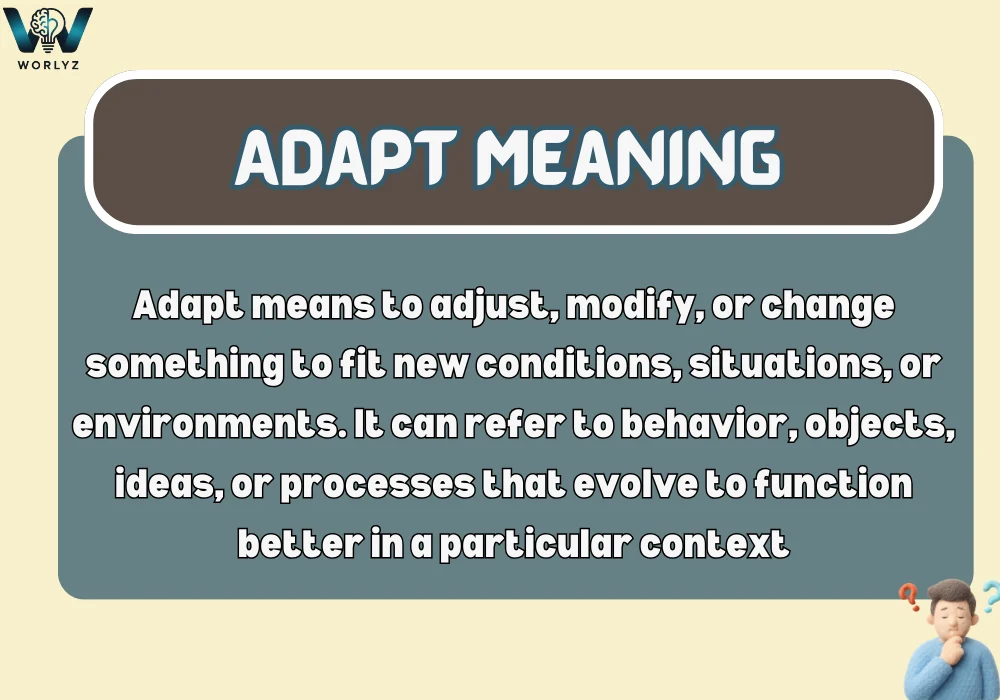
Adapt means to adjust, modify, or change something to fit new conditions, situations, or environments. It can refer to behavior, objects, ideas, or processes that evolve to function better in a particular context.
In simple terms, to adapt is to make something suitable for new circumstances.
Origin and Background
The word adapt comes from the Latin adaptare, which means “to fit, adjust, or tailor.” Historically, it was used in medicine, mechanics, and nature to describe adjustments that improve function or performance.
Today, adapt is used broadly, covering:
- Personal growth and behavior
- Changes in technology or systems
- Evolution in nature
- Cultural and social adjustments
Different Meanings of Adapt Based on Context
Adapt in Human Behavior
Adapt is often used to describe people adjusting to new situations, environments, or challenges.
Examples include:
- Adapting to a new school or job
- Adjusting to different cultural norms
- Learning to work remotely or manage time efficiently
In this sense, adapt is about flexibility, resilience, and personal growth.
Adapt in Nature and Biology
In biology, adaptation is a survival mechanism. Animals and plants change behaviors, traits, or physical features to thrive in their environment.
Examples:
- Camels adapting to desert climates
- Birds adapting migration patterns to seasonal changes
- Fish adapting to polluted waters
Here, adapt reflects the process of natural selection and environmental response.
Adapt in Technology and Business
In business or technology, adapt is often about modifying systems, processes, or strategies to meet new requirements.
Examples:
- Companies adapting to market trends
- Software adapting to user needs
- Businesses adapting to remote work environments
Adaptation in this context ensures efficiency, competitiveness, and relevance.
Adapt in Literature and Media
In literature, movies, and games, adapt can also mean changing a story or work to fit a new medium or audience.
Examples:
- A book adapted into a film
- A comic series adapted for TV
- A classic story adapted for children
This usage highlights creativity and interpretation rather than survival.
Adapt Meaning in Simple Language
In everyday terms, adapt can mean:
- Change yourself to fit new circumstances
- Modify tools, methods, or ideas for better use
- Adjust behavior or thinking to meet challenges
Whether literal, figurative, or creative, adapt always involves flexibility.
Examples of Adapt in Conversations
Personal Growth Example
She had to adapt quickly to her new city and lifestyle.
Workplace Example
Our team adapted the project plan to meet client requirements.
Nature Example
Polar bears adapt to extreme cold with thick fur and fat layers.
Creative Example
The director adapted the novel into an engaging movie.
These examples show how adapt works in diverse contexts.
Adapt Compared to Similar Words
Understanding adapt becomes easier when compared with related words:
| Word | Meaning | Key Difference |
|---|---|---|
| Adapt | Adjust to fit new conditions | Flexible and context-driven |
| Adjust | Slight modification | Usually minor or temporary |
| Modify | Change form or content | Can be intentional or partial |
| Acclimate | Become comfortable with new conditions | Often used for people or environments |
| Evolve | Gradual natural change | Usually long-term or biological |
Adapt is broader and often involves active change to succeed in a new situation.
Psychological and Social Importance of Adapt
Adaptability is a key life skill. People who can adapt easily:
- Handle stress better
- Learn new skills faster
- Build stronger relationships
- Succeed in changing work or social environments
Being able to adapt shows intelligence, emotional maturity, and resilience.
Common Mistakes or Misunderstandings
Assuming Adapt Means Immediate Change
Adaptation often takes time. Quick adjustment is ideal but not always possible.
Confusing Adapt with Conform
Adapting does not always mean losing individuality; it means adjusting for effectiveness.
Overusing Adapt in Slang
Some people use adapt casually to mean “just deal with it,” but true adaptation involves thought and effort.
Adapt in Modern Usage
Today, adapt appears in many fields:
- Education: Students adapt to online learning
- Business: Companies adapt to changing markets
- Technology: Devices adapt to user preferences
- Social media: Users adapt to trends and platforms
Adaptation is a daily reality in our fast-paced, ever-changing world.
Related Words and Expressions
When exploring adapt, you may also encounter:
- Flexible
- Resilient
- Adjustable
- Transform
- Evolve
These words overlap but each emphasizes different aspects of adaptation.
FAQs:
What does adapt mean in simple words?
Adapt means to change or adjust yourself, something, or a process to fit new conditions.
Can adapt refer to people and objects?
Yes, adapt applies to people, animals, tools, ideas, and even stories.
What is the difference between adapt and adjust?
Adapt usually involves a broader or more significant change, while adjust is often minor or temporary.
How is adapt used in nature?
In nature, adapt refers to changes in behavior, traits, or survival strategies to thrive in the environment.
Can you adapt to culture or social norms?
Yes, adapting to social or cultural environments means adjusting behavior and understanding to fit in effectively.
Conclusion:
The adapt meaning reflects flexibility, resilience, and the ability to respond to change. Whether in personal growth, nature, business, technology, or creative work, adaptation allows individuals and systems to thrive in new conditions.
Understanding how to adapt improves problem-solving, communication, and success in almost every aspect of life. By practicing adaptability, you can face challenges more confidently and make the most of any situation.

John is the founder and primary content creator of Worlyz. He has a strong passion for explaining word meanings, language concepts, slang terms, and educational topics in a clear and simple way. John focuses on creating well researched, reader friendly content that helps users easily understand complex words and ideas. Through Worlyz, his goal is to make learning meanings and concepts straightforward and accessible for everyone.