The word believe is one of the most commonly used terms in everyday language, yet many people pause to ask what it truly means. You may hear it in conversations, read it in books, see it in motivational posts, or use it in personal messages. Understanding the believe meaning helps you express trust, confidence, and acceptance more clearly in both spoken and written communication.
Whether someone says I believe you, believe in yourself, or believe in God, the word carries emotional and mental weight. Its meaning can change slightly depending on context, which is why it is important to understand how it is used in real life.
What Does Believe Mean
Basic Definition
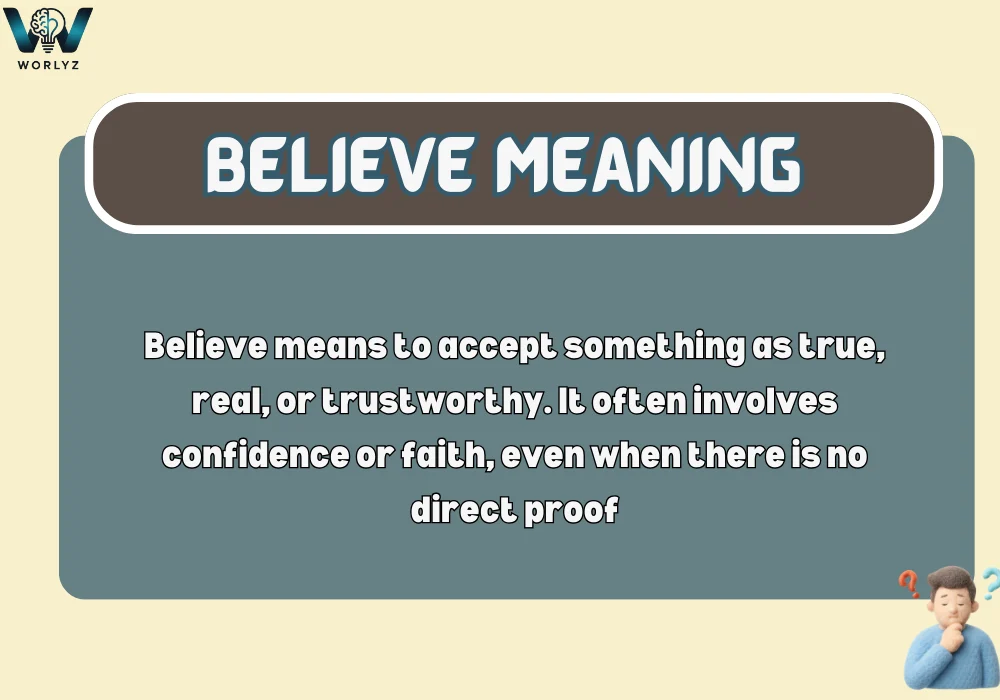
Believe means to accept something as true, real, or trustworthy. It often involves confidence or faith, even when there is no direct proof.
In simple words, to believe is to feel sure about something in your mind or heart.
Origin of the Word
The word believe comes from Old English belyfan, which originally meant to hold dear or to trust. Over time, its meaning expanded to include accepting facts, ideas, or statements as true.
This origin shows that belief is not just logical but also emotional.
Different Meanings of Believe Based on Context
The meaning of believe changes slightly depending on how it is used.
Believe as Trust
When someone says I believe you, they are expressing trust in what another person is saying.
Example:
I believe your story
I believe what she told me
Here, believe means trust or confidence in honesty.
Believe as Faith
In religious or spiritual contexts, believe often means having faith without seeing physical proof.
Example:
I believe in God
She believes in a higher power
In this case, believe is connected to faith and spiritual conviction.
Believe as Confidence or Hope
Believe is also used to express confidence in oneself or others.
Example:
I believe in myself
We believe in your abilities
This usage is common in motivational language.
Believe as Opinion or Assumption
Sometimes believe means thinking something is true without being completely sure.
Example:
I believe it will rain today
I believe he is coming later
Here, believe reflects an educated guess or opinion.
How Believe Is Used in Everyday Conversation
The word believe appears frequently in daily speech, texts, and online communication.
Common Everyday Uses
- Expressing trust
- Sharing opinions
- Showing faith
- Giving encouragement
Examples:
I believe you can do it
I believe this is the right choice
Do you believe what happened today
These examples show how flexible the word is.
Believe in Text Messages and Online Chats
Believe is commonly used in texting and social media because it expresses emotion clearly.
Popular Text Examples
- I believe in you
- Believe me, it’s true
- Just believe everything will work out
In digital conversations, believe often replaces longer explanations and adds emotional support.
Believe vs Faith vs Trust
These words are closely related but not exactly the same.
- Believe focuses on accepting something as true
- Faith focuses on strong spiritual or emotional conviction
- Trust focuses on reliance and confidence in someone or something
Example:
I believe what you said
I have faith things will improve
I trust your decision
Understanding these differences improves communication.
Common Mistakes When Using Believe
Using Believe Without Context
Saying I believe without explaining what can confuse listeners. Adding context makes your message clearer.
Confusing Believe with Know
Believe suggests acceptance without certainty, while know implies confirmed truth.
Example:
I know the answer means certainty
I believe the answer means uncertainty
Related Words and Expressions
Words related to believe include:
- Believe in meaning to support or have faith
- Belief meaning an accepted idea or conviction
- Believer meaning someone who believes
- Unbelievable meaning hard to accept as true
These variations help express belief in different forms.
Why the Word Believe Matters
Believe plays a major role in communication because it expresses trust, hope, and understanding. It helps build relationships, encourage others, and share opinions respectfully.
From personal conversations to motivational messages, believe helps connect thoughts with emotions.
FAQs:
What is the simple meaning of believe?
Believe means accepting something as true or trusting that it is real.
Is believe the same as know?
No, believe suggests acceptance without full certainty, while know means being sure through facts or proof.
How is believe used in daily conversation?
Believe is used to show trust, express opinions, share faith, or encourage someone.
Can believe be used in both positive and negative situations?
Yes, believe can express hope or doubt depending on how it is used in a sentence.
What is the difference between believe and trust?
Believe focuses on accepting something as true, while trust focuses on reliance and confidence in someone or something.
Conclusion:
The believe meaning goes beyond a simple definition. It represents trust, faith, confidence, and personal conviction. The word adapts to different situations, whether you are expressing belief in a person, an idea, or a higher power.
By understanding how believe is used in various contexts, you can communicate more clearly and emotionally. It is a small word with powerful impact, shaping conversations, relationships, and personal outlooks every day.

Alex is the owner and founder of Worlyz. He is passionate about explaining word meanings, language concepts, slang terms, and educational topics in a clear and simple manner. Alex focuses on creating high quality, well researched, and user focused content that helps readers understand complex words easily. Through Worlyz, his goal is to make learning language meanings and concepts accessible and reliable for everyone.