The word dicey is often used in conversations when something feels uncertain, risky, or not completely safe. You might hear it in casual talk, see it in news headlines, or read it in online comments. Understanding the dicey meaning helps you quickly grasp when a situation is questionable or could go wrong.
In modern communication, dicey is a useful word for describing moments that sit on the edge between success and failure. This article explains its meaning, usage, comparisons, and common misunderstandings in a clear and practical way.
What Does Dicey Mean
Definition
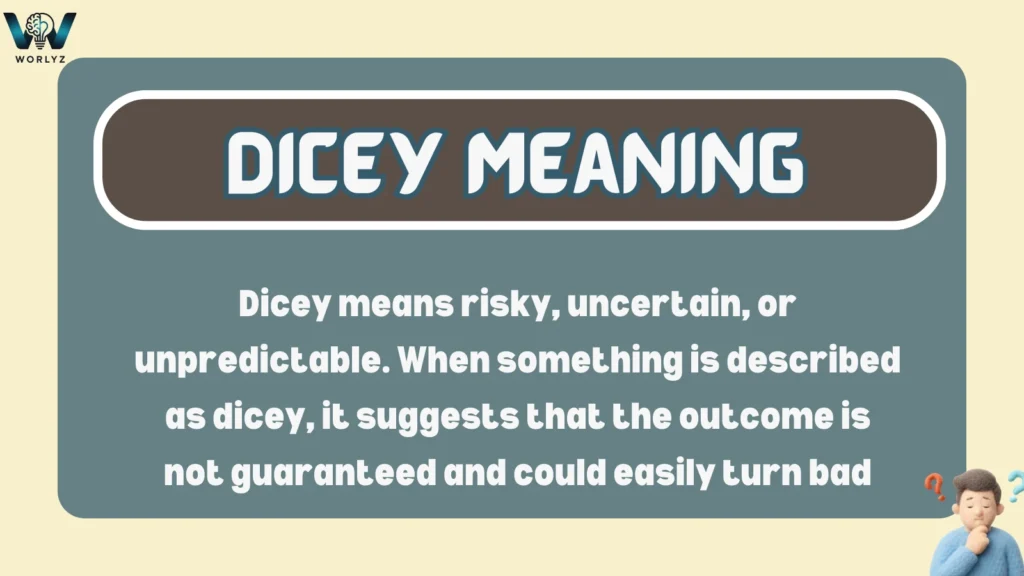
Dicey means risky, uncertain, or unpredictable. When something is described as dicey, it suggests that the outcome is not guaranteed and could easily turn bad.
At its core, dicey refers to situations where there is doubt or danger involved.
Origin and Background
The word dicey comes from the word dice, referring to the small cubes used in games of chance. Since rolling dice depends on luck, the term evolved to describe situations that rely heavily on chance or uncertainty.
This connection explains why dicey often implies risk or unpredictability.
Different Meanings of Dicey Based on Context
Dicey as Risky or Dangerous
In many cases, dicey describes situations that involve physical or practical risk.
Example:
Driving on that icy road is dicey.
Dicey as Uncertain or Unclear
Dicey can also refer to situations where the outcome is not clear or dependable.
Example:
The project deadline looks dicey right now.
Dicey in Social or Personal Situations
Dicey is sometimes used to describe conversations or decisions that could lead to conflict or awkwardness.
Example:
Bringing up that topic at dinner might be dicey.
Dicey Meaning in Simple Everyday Language
In everyday speech, dicey usually means:
- Something might go wrong
- The situation feels unsafe
- The outcome is unpredictable
It is often used as a warning or expression of concern.
Dicey Compared to Similar Words
Understanding dicey becomes easier when you compare it with similar terms.
| Word | Meaning | Key Difference |
|---|---|---|
| Dicey | Risky or uncertain | Informal and conversational |
| Risky | Involves danger | More direct and formal |
| Uncertain | Not clearly decided | Less emphasis on danger |
| Tricky | Difficult to handle | Focuses on complexity |
| Dangerous | Likely to cause harm | Stronger and more serious |
Dicey often sounds more casual and conversational than its alternatives.
How Dicey Is Used in Daily Conversations
Casual Conversation
That plan sounds a bit dicey to me.
Work Related Example
The budget situation is getting dicey.
News or Media Example
The weather conditions made the rescue mission dicey.
Online Chat Example
This update might fix things, but it’s still dicey.
These examples show how flexible the word is across different situations.
Dicey in Decision Making and Emotions
Dicey is often used when:
- Making tough decisions
- Facing uncertain outcomes
- Assessing risk quickly
People use dicey to express caution without sounding overly dramatic.
Common Mistakes or Misunderstandings About Dicey
Thinking Dicey Means Impossible
Dicey does not mean something will fail, only that it carries risk.
Using Dicey for Minor Issues
Dicey is usually reserved for situations with real uncertainty or danger, not small inconveniences.
Confusing Dicey With Dangerous
While related, dicey does not always mean serious harm is likely.
Related Words and Expressions
When learning the dicey meaning, you may also come across:
- Risky
- Unstable
- Uncertain
- Questionable
- Shaky
Each term has a slightly different tone but overlaps in meaning.
FAQs:
What does dicey mean in simple words?
Dicey means risky or uncertain, where the outcome is not guaranteed.
Is dicey used in formal writing?
Dicey is more common in informal or conversational writing, but it can appear in media and reports.
Can dicey describe people?
Dicey usually describes situations, plans, or decisions rather than people themselves.
Is dicey always negative?
Dicey often has a negative tone, but it does not mean failure is certain.
What is the difference between dicey and risky?
Dicey sounds more casual and implies uncertainty, while risky is more direct and serious.
Conclusion:
The dicey meaning centers on risk, uncertainty, and unpredictability. Whether used for dangerous situations, unclear outcomes, or sensitive decisions, dicey helps communicate caution in a simple and relatable way.
By understanding how dicey is used and how it differs from similar words, you can recognize it quickly in conversations and use it accurately in your own speech and writing.

John is the founder and primary content creator of Worlyz. He has a strong passion for explaining word meanings, language concepts, slang terms, and educational topics in a clear and simple way. John focuses on creating well researched, reader friendly content that helps users easily understand complex words and ideas. Through Worlyz, his goal is to make learning meanings and concepts straightforward and accessible for everyone.