The word epoch is often encountered in history books, science discussions, and everyday conversation, but many people are unsure what it truly means. Understanding the epoch meaning helps you use it correctly in writing, conversation, and even in cultural or scientific contexts. It’s a word that combines the ideas of time, significance, and change, making it versatile in both formal and casual settings.
Whether you see it in phrases like “a new epoch” or in discussions about geological or historical periods, epoch carries depth and weight. This article explores its literal and figurative meanings, examples, comparisons, and common uses.
What Does Epoch Mean
Definition
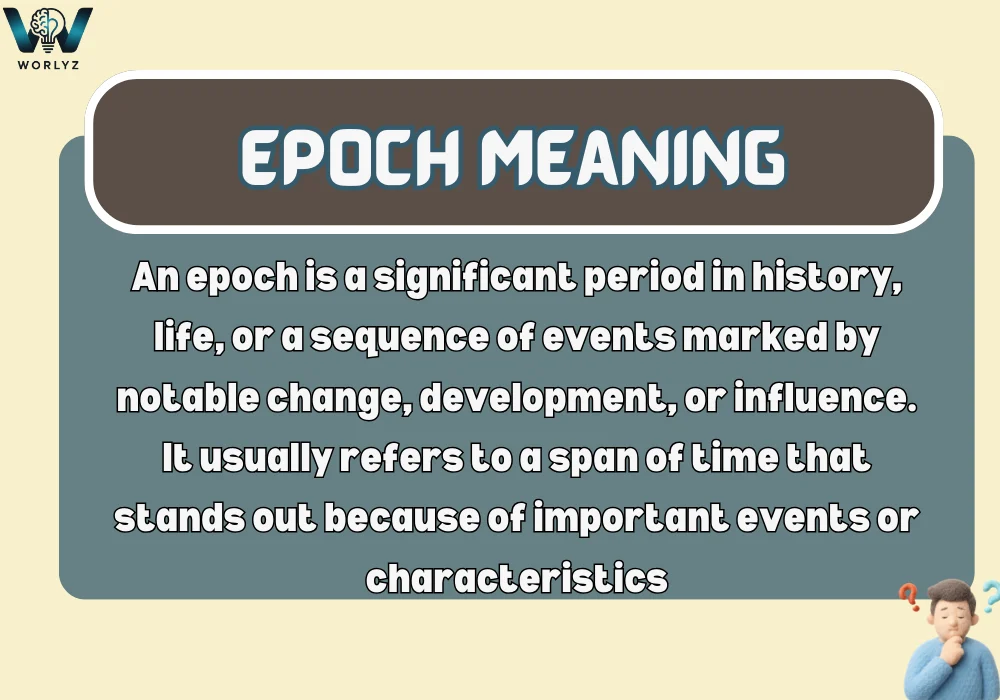
An epoch is a significant period in history, life, or a sequence of events marked by notable change, development, or influence. It usually refers to a span of time that stands out because of important events or characteristics.
In simpler terms, an epoch is a noteworthy era that shapes the future or is remembered for its impact.
Origin of the Word
The word epoch comes from the Greek word epokhē, meaning a fixed point in time. Initially, it was used in astronomy and philosophy to mark important points or turning moments. Over centuries, the meaning expanded to include historical, cultural, and geological contexts.
Today, epoch is used to describe both literal periods of time and metaphorical milestones in life or society.
Different Meanings of Epoch Based on Context
Epoch in History
In historical contexts, epoch refers to a period defined by significant events, trends, or leaders.
Examples:
- The Victorian epoch (1837–1901)
- The Renaissance epoch
- The Industrial epoch
Here, epoch highlights the uniqueness and influence of a particular era.
Epoch in Science
In scientific terms, particularly geology, an epoch is a subdivision of time smaller than a period but larger than an age.
Examples:
- Holocene epoch (the current geological epoch)
- Pleistocene epoch (Ice Age epoch)
Geological epochs are used to track changes in Earth’s climate, life forms, and major events over millions of years.
Epoch in Everyday Life
Metaphorically, epoch can refer to important phases or turning points in personal or societal life.
Examples:
- Graduating college marked a new epoch in her life.
- The invention of the internet started a digital epoch.
In these cases, epoch is synonymous with milestones or eras of transformation.
Epoch Meaning in Simple Language
In everyday terms, epoch can mean:
- A notable period in history or life
- A major turning point or milestone
- A time remembered for its importance
It emphasizes significance over length, meaning even a short period can be called an epoch if it brings meaningful change.
Examples of Epoch in Conversations
Historical Context Example
The 20th century was an epoch of rapid technological advancement.
Personal Life Example
The birth of her first child marked a new epoch in her life.
Scientific Example
Scientists study the Pleistocene epoch to understand ancient climate patterns.
Casual Expression Example
This era of remote work feels like a new epoch for the workforce.
These examples show how flexible the word epoch can be, applying to history, science, and personal milestones.
Epoch Compared to Similar Words
Understanding epoch becomes clearer when compared with similar terms.
| Word | Meaning | Key Difference |
|---|---|---|
| Epoch | Significant period marked by change | Highlights importance or milestone |
| Era | Long period with defining features | Less emphasis on turning points |
| Age | Broad period of history or life | Can be descriptive without significance |
| Period | Any span of time | Neutral and general |
| Phase | Stage within a process | Smaller or transitional than epoch |
Epoch stands out because it emphasizes importance and impact rather than just duration.
Cultural and Symbolic Significance of Epoch
Epoch is often used symbolically to highlight transformations in culture, society, or thought.
- The digital epoch reflects the rise of technology and global connectivity.
- The Romantic epoch in literature symbolizes a shift toward emotion and nature.
- The post-war epoch reshaped nations and societies worldwide.
These uses demonstrate how epoch conveys both time and meaning, linking events, ideas, and human experience.
Common Mistakes or Misunderstandings
Confusing Epoch With Period
Period is neutral, while epoch emphasizes importance or significance.
Thinking Epoch Always Refers to Long Time
Epoch does not have to be long; a short but pivotal moment can be called an epoch.
Using Epoch in Casual Contexts Incorrectly
While epoch can be metaphorical, using it in overly casual conversation may sound pretentious unless the context calls for it.
Related Words and Concepts
When exploring the epoch meaning, you may also encounter:
- Milestone
- Turning point
- Era
- Phase
- Age
Each word shares an association with time, but epoch focuses on impact and significance.
FAQs:
What does epoch mean in simple words?
Epoch means a significant period or era marked by notable events or changes.
Can epoch refer to personal life events?
Yes, epoch can describe important milestones or turning points in an individual’s life.
Is epoch a scientific term?
Yes, particularly in geology, an epoch is a subdivision of time smaller than a period, used to study Earth’s history.
What is the difference between epoch and era?
Epoch emphasizes importance or turning points, while era describes a longer span of time with general characteristics.
Can short periods be called an epoch?
Yes, even brief periods can be considered epochs if they bring major change or significance.
Conclusion:
The epoch meaning encompasses both literal and metaphorical periods of significance. It applies to history, science, culture, and personal life, representing moments, eras, or phases that leave a lasting impact. Whether discussing geological changes, historical revolutions, or personal milestones, epoch highlights importance, transformation, and influence.
By understanding how epoch is used in different contexts, you can communicate ideas about time, significance, and change more clearly and confidently. Using the word correctly adds depth to writing, conversation, and interpretation of events.

John is the founder and primary content creator of Worlyz. He has a strong passion for explaining word meanings, language concepts, slang terms, and educational topics in a clear and simple way. John focuses on creating well researched, reader friendly content that helps users easily understand complex words and ideas. Through Worlyz, his goal is to make learning meanings and concepts straightforward and accessible for everyone.