The word expiation is not used as often in daily conversation, which is why many people feel confused when they see it in books, religious texts, or serious discussions. Understanding the expiation meaning helps clarify ideas related to guilt, responsibility, and making amends.
You may come across expiation in religious contexts, legal writing, or formal English. This guide explains the meaning in clear language, with practical examples and comparisons to make it easy to understand and use correctly.
What Does Expiation Mean
Definition
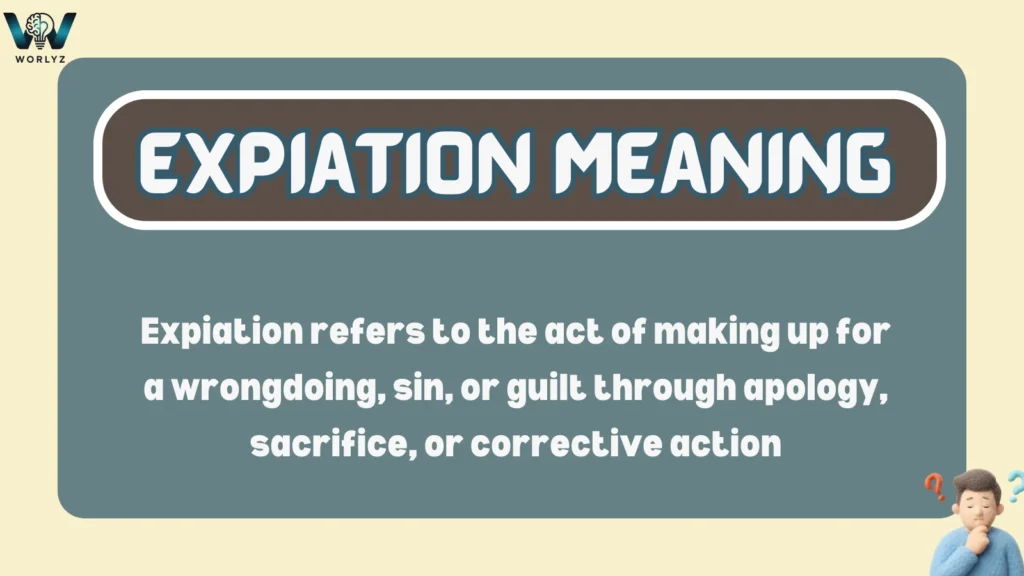
Expiation refers to the act of making up for a wrongdoing, sin, or guilt through apology, sacrifice, or corrective action. It involves removing blame or guilt by taking responsibility and doing something to repair the wrong.
In simple terms, expiation means paying for a mistake in a meaningful way.
Origin and Historical Background
The word expiation comes from the Latin word expiatio, which means atonement or purification. Historically, it was used in religious ceremonies where sacrifices or rituals were performed to cleanse wrongdoing.
Over time, the meaning expanded beyond religion and began to include moral, emotional, and social responsibility.
Different Meanings of Expiation Based on Context
Expiation in Religious Contexts
In religion, expiation often refers to acts performed to remove sin or restore spiritual purity. This may involve prayer, sacrifice, repentance, or confession.
Example:
The ritual was seen as an expiation for the community’s sins.
Expiation in Moral or Ethical Contexts
Outside religion, expiation describes actions taken to make amends for harmful behavior.
Examples include:
- Apologizing sincerely
- Accepting consequences
- Making restitution
These acts show accountability and remorse.
Expiation in Literature and Formal Writing
In books or formal texts, expiation is often used to describe deep emotional or moral struggle.
Example:
He devoted his life to expiation after realizing the harm he caused.
Expiation Meaning in Simple Language
In everyday terms, expiation means:
- Making things right
- Taking responsibility for wrongdoing
- Removing guilt through action
It focuses more on correction than punishment.
Expiation Compared to Similar Words
Understanding expiation becomes easier when compared with related terms.
| Word | Meaning | Key Difference |
|---|---|---|
| Expiation | Making amends for wrongdoing | Focuses on removing guilt |
| Atonement | Reconciliation after wrongdoing | Often involves forgiveness |
| Punishment | Penalty for wrongdoing | Imposed by authority |
| Repentance | Feeling remorse | Focuses on emotion |
| Restitution | Repaying loss or damage | Focuses on compensation |
Expiation emphasizes action taken to correct a wrong.
How Expiation Is Used in Everyday Language
Formal Conversation
He saw community service as expiation for his actions.
Religious Discussion
The ceremony symbolized expiation and renewal.
Literary Usage
Her long journey was one of expiation and self-forgiveness.
Though formal, the word adds depth and seriousness to expression.
Expiation in Emotional and Social Situations
Expiation often appears in situations involving:
- Guilt
- Regret
- Moral responsibility
- Personal growth
It reflects a desire to restore balance and integrity.
Common Mistakes or Misunderstandings
Confusing Expiation With Punishment
Expiation is voluntary and corrective, while punishment is enforced.
Assuming Expiation Is Only Religious
Although rooted in religion, expiation is widely used in moral and social contexts.
Using Expiation in Casual Speech
Expiation is formal and may sound unnatural in casual conversation.
Related Words and Expressions
When learning the expiation meaning, you may also encounter:
- Atonement
- Remorse
- Redemption
- Reconciliation
- Penance
Each word connects to accountability and moral repair.
FAQs:
What does expiation mean in simple words?
Expiation means making up for a wrongdoing by taking responsibility and correcting it.
Is expiation the same as punishment?
No, expiation focuses on removing guilt through action, while punishment is imposed as a penalty.
Is expiation only used in religious contexts?
No, expiation is also used in moral, ethical, and literary contexts.
Can apology be a form of expiation?
Yes, a sincere apology combined with corrective action can be a form of expiation.
Is expiation a positive concept?
Yes, it often reflects personal growth, responsibility, and moral awareness.
Conclusion:
The expiation meaning centers on responsibility, correction, and the desire to make things right after wrongdoing. It is a powerful word that conveys depth, seriousness, and moral awareness.
By understanding expiation and how it differs from related terms, you can use it accurately in writing and better interpret it when reading religious, ethical, or literary texts.

John is the founder and primary content creator of Worlyz. He has a strong passion for explaining word meanings, language concepts, slang terms, and educational topics in a clear and simple way. John focuses on creating well researched, reader friendly content that helps users easily understand complex words and ideas. Through Worlyz, his goal is to make learning meanings and concepts straightforward and accessible for everyone.