Language shapes how we communicate in everyday life. Whether you are writing an email to your boss, attending a wedding, or describing someone’s behavior, you have probably come across the word formal. But what does formal really mean, and how should you use it correctly?
Understanding the meaning of formal is important because it affects how people perceive your tone, behavior, and communication style. In both personal and professional settings, knowing when to be formal and when to be casual can make a big difference.
Let’s break it down clearly and simply.
What Does Formal Mean? (Definition & Origin):
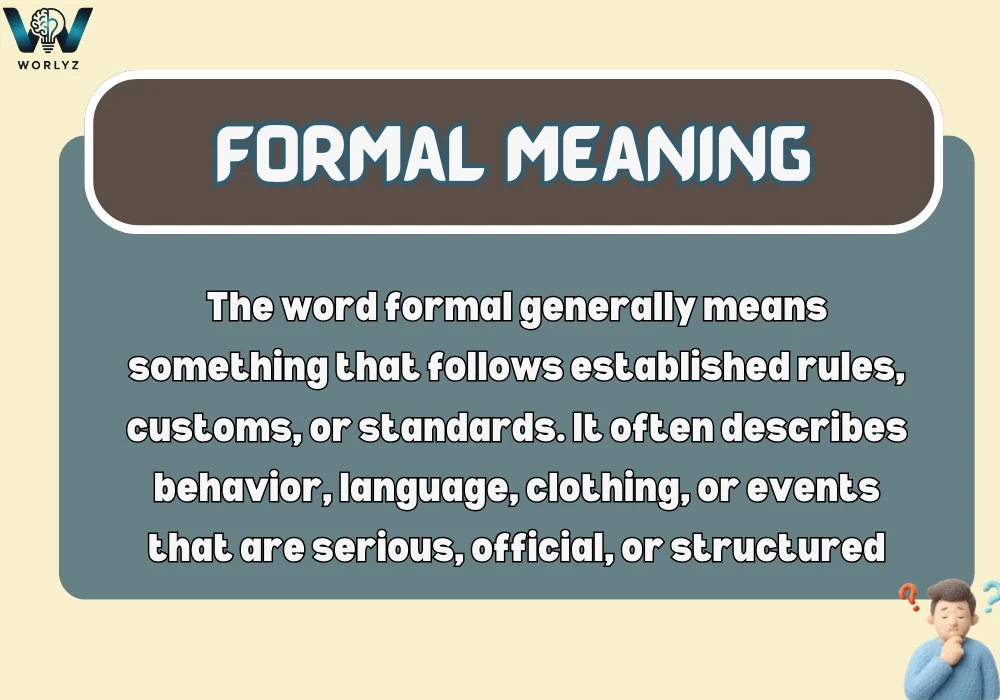
The word formal generally means something that follows established rules, customs, or standards. It often describes behavior, language, clothing, or events that are serious, official, or structured.
Basic Definition
Formal means:
- Done according to rules or conventions
- Official or authorized
- Serious in tone
- Not casual or relaxed
For example:
- A formal meeting follows an agenda and official procedures.
- A formal dress event requires elegant clothing.
- A formal email uses polite and respectful language.
Origin of the Word
The word formal comes from the Latin word formalis, which relates to form or structure. Over time, it evolved in English to describe anything that follows a specific structure or recognized pattern.
So when something is formal, it is structured, organized, and usually more serious than everyday interaction.
How to Use Formal in Different Contexts:
The meaning of formal slightly changes depending on where it is used. Let’s explore the most common contexts.
1. Formal in Communication
In communication, formal refers to polite, respectful, and structured language.
Examples:
- Dear Mr. Ahmed, I hope this message finds you well.
- I would like to request a meeting at your convenience.
Formal language avoids:
- Slang
- Abbreviations like LOL or BTW
- Emojis in professional emails
It is commonly used in:
- Job applications
- Academic writing
- Business emails
- Official letters
2. Formal in Clothing
When talking about clothing, formal means elegant and suitable for official occasions.
Examples:
- Men wearing suits and ties
- Women wearing evening gowns
- Black tie events
A wedding reception or corporate gala is often described as a formal event.
3. Formal in Behavior
Formal behavior is polite, reserved, and respectful.
For example:
- Shaking hands instead of hugging
- Using titles like Sir, Madam, Dr., or Professor
- Maintaining professional body language
4. Formal in Education
In academic settings, formal refers to structured learning environments such as:
- Classroom education
- Recognized certifications
- Official exams
Formal education differs from informal learning like watching YouTube tutorials or self-study.
Formal vs Informal: Clear Comparison Table
Understanding formal becomes easier when you compare it with informal.
| Feature | Formal | Informal |
|---|---|---|
| Tone | Serious and respectful | Casual and relaxed |
| Language | Complete sentences | Shortened words |
| Setting | Professional or official | Friends or family |
| Example | I would appreciate your response | Please reply soon |
| Clothing | Suit, gown | Jeans, t-shirt |
| Events | Business meeting | Birthday party |
This comparison helps you quickly decide which style to use.
Examples of Formal in Sentences:
Here are practical examples to make it clearer.
In Work Environment
- The manager sent a formal notice to all employees.
- Please submit a formal request before Friday.
In Social Situations
- The invitation asked guests to wear formal attire.
- The dinner was formal, with assigned seating.
For Writing
- Academic essays require a formal tone.
- Avoid contractions in formal writing.
Funny Relatable Scenario
Imagine texting your best friend:
- Yo, what’s up?
Now imagine texting your university professor:
- Good afternoon Professor, I hope you are doing well.
That shift in tone shows the difference between informal and formal communication.
When Should You Use Formal Language?:
You should use formal language when:
- Speaking to someone in authority
- Writing a job application
- Attending official events
- Communicating in professional settings
- Writing academic papers
Using formal language in the wrong setting can make you seem distant, but not using it when required can appear disrespectful.
Common Mistakes or Misunderstandings:
Many people misunderstand the meaning of formal. Here are some common mistakes.
1. Thinking Formal Means Complicated
Formal does not mean using difficult vocabulary. It means being polite and structured.
Wrong:
- Utilizing advanced terminologies unnecessarily
Correct:
- Using clear, respectful language
2. Overusing Formal Tone
Being too formal with close friends can sound robotic.
Example:
- I sincerely appreciate your invitation to watch a movie.
Your friend might laugh because it sounds like a business email.
3. Confusing Formal with Serious
Formal does not always mean serious or boring. A formal event can still be fun. It just follows a certain standard of behavior and dress.
Types of Formal Usage Explained in Detail:
To better understand the word, let’s categorize it further.
Formal Writing
Used in:
- Research papers
- Business proposals
- Government documents
Characteristics:
- No slang
- No emojis
- Clear structure
- Third person perspective
Formal Events
Examples:
- Award ceremonies
- Corporate conferences
- Graduation ceremonies
Characteristics:
- Dress codes
- Structured schedules
- Polite interactions
Formal Relationships
These exist when:
- Professional boundaries are maintained
- Personal topics are avoided
- Titles and last names are used
Synonyms of Formal:
Here are some related words:
- Official
- Ceremonial
- Conventional
- Structured
- Proper
- Polite
Each synonym carries a slightly different nuance, but all connect to rules and structure.
Related Words and Expressions:
To deepen your understanding, here are closely related terms:
- Formality
- Formalize
- Formalwear
- Formal education
- Formal agreement
Example:
- They signed a formal agreement to begin the partnership.
How Formal Is Used in Modern Life:
In today’s digital world, the line between formal and informal is becoming more flexible.
For example:
- Some workplaces allow semi-formal emails.
- Startups may encourage relaxed communication.
- Social media blends formal announcements with casual tone.
However, in traditional industries like law, medicine, or government, formal communication remains important.
FAQs:
What does formal mean in simple words?
Formal means following rules or standards. It describes something official, polite, or structured rather than casual.
What is the difference between formal and informal?
Formal is serious and respectful, while informal is relaxed and casual. Formal is used in professional settings, informal is used with friends and family.
What is an example of formal language?
An example of formal language is writing Dear Sir or Madam instead of Hi there.
Does formal mean strict?
Not always. Formal means structured and official, but it does not always mean strict or harsh.
What is formal attire?
Formal attire refers to elegant clothing suitable for official events such as suits, tuxedos, and evening gowns.
Conclusion:
The word formal is more than just a dictionary definition. It represents structure, respect, and adherence to standards in communication, clothing, education, and behavior. Understanding when and how to use a formal tone helps you navigate professional and social environments confidently.
Whether you are writing an email, attending a wedding, or preparing a presentation, knowing the meaning of formal allows you to adjust your tone appropriately. Balance is key. Too formal can feel distant, while too casual can feel unprofessional.
Now that you understand the meaning of formal, how do you use it in your daily life? Share your experience or favorite example in the comments below.

Alex is the owner and founder of Worlyz. He is passionate about explaining word meanings, language concepts, slang terms, and educational topics in a clear and simple manner. Alex focuses on creating high quality, well researched, and user focused content that helps readers understand complex words easily. Through Worlyz, his goal is to make learning language meanings and concepts accessible and reliable for everyone.