If you have seen someone reply with LMR in a message or social media comment and felt confused, you are not alone. Short abbreviations like this appear often in texting, chats, and online conversations, and their meanings can change depending on context. Understanding the LMR meaning in text helps you respond correctly and avoid awkward misunderstandings.
Texting language moves fast, and people use shortcuts to save time and express tone quickly. LMR is one of those abbreviations that can feel unclear at first, especially if you see it without context. This guide breaks down what it means, how it is used, and when you should or should not use it.
What Does LMR Mean in Text
Definition
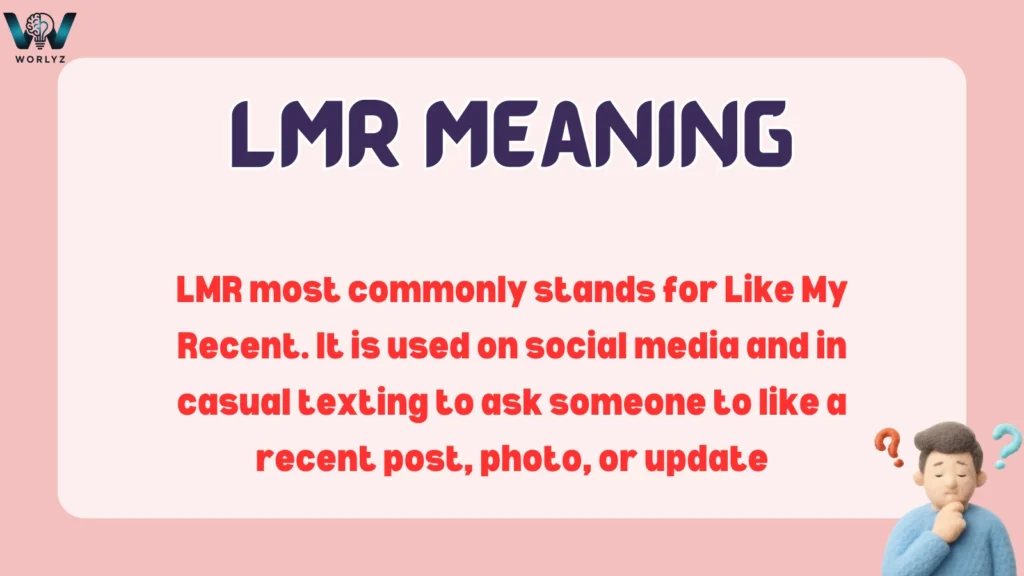
LMR most commonly stands for Like My Recent. It is used on social media and in casual texting to ask someone to like a recent post, photo, or update.
In simple terms, LMR is a request for engagement.
Origin and Background
LMR became popular with the rise of social media platforms where likes and engagement matter. Users started shortening phrases to save time, and Like My Recent quickly turned into LMR.
It is most commonly seen on:
- Snapchat
- TikTok comments
- Direct messages
Different Meanings of LMR Based on Context
LMR as Like My Recent
This is the most widely used meaning.
Example:
LMR on my last post
Hey, LMR please
Less Common Meanings of LMR
In rare cases, LMR can stand for different phrases depending on the conversation, such as:
- Last Minute Reminder
- Let Me Rest
These meanings are uncommon in texting and usually become clear only through context.
LMR Meaning in Simple Language
In everyday texting language, LMR usually means:
Please go like my latest post
It is often friendly and informal rather than demanding.
How LMR Is Used in Texts and Social Media
Direct Message Usage
LMR on my recent pic
Can you LMR real quick
Comment Section Usage
LMR and I will return the favor
LMR for LMR
Story or Caption Usage
New post up, LMR
These examples show how LMR is tied closely to social engagement.
LMR Compared to Similar Text Abbreviations
Understanding LMR becomes easier when compared to similar abbreviations.
| Abbreviation | Meaning | Usage |
|---|---|---|
| LMR | Like My Recent | Asking for likes |
| L4L | Like for Like | Mutual engagement |
| F4F | Follow for Follow | Mutual follows |
| SFS | Shoutout for Shoutout | Promotion |
| DM | Direct Message | Private chat |
LMR focuses only on liking a recent post.
When and When Not to Use LMR
Appropriate Situations
- Casual chats with friends
- Social media engagement
- Influencer or creator circles
Situations to Avoid
- Professional conversations
- Formal emails
- Serious discussions
LMR is informal and best used in relaxed online spaces.
Common Mistakes or Misunderstandings
Thinking LMR Has One Universal Meaning
While Like My Recent is most common, always check context.
Using LMR Without Explanation
Some people may not understand the abbreviation, especially older users.
Overusing LMR
Repeatedly asking for engagement can feel spammy.
Related Slang and Abbreviations
When learning the LMR meaning in text, you may also see:
- L4L
- F4F
- TBH
- IDC
- IMO
These abbreviations are common in social and messaging platforms.
FAQs:
What does LMR mean in texting?
LMR usually means Like My Recent and is used to ask someone to like a recent post.
Is LMR rude to use?
LMR is not rude, but it can feel pushy if overused.
Where is LMR most commonly used?
LMR is most common on Instagram, Snapchat, and TikTok.
Does LMR have other meanings?
Yes, but other meanings are rare and depend on context.
Should I use LMR in professional messages?
No, LMR is informal and should be avoided in professional communication.
Conclusion:
The LMR meaning in text is simple once you know the context. Most of the time, it stands for Like My Recent and is used to encourage social media engagement. While it is common in casual chats and online platforms, it should be used carefully to avoid sounding spammy.
Understanding abbreviations like LMR helps you communicate more confidently and respond appropriately in modern digital conversations.

John is the founder and primary content creator of Worlyz. He has a strong passion for explaining word meanings, language concepts, slang terms, and educational topics in a clear and simple way. John focuses on creating well researched, reader friendly content that helps users easily understand complex words and ideas. Through Worlyz, his goal is to make learning meanings and concepts straightforward and accessible for everyone.