The phrase mon amour is widely recognized in romantic contexts, music, literature, and everyday conversation, especially among French speakers or those influenced by French culture. Many people have heard it in songs, movies, or texts but may wonder what it truly means and how to use it appropriately. Understanding the mon amour meaning helps you convey affection accurately and appreciate its emotional depth.
From a simple declaration of love to a poetic expression in literature or music, mon amour carries both literal and emotional significance. This detailed guide explores its meaning, origins, usage, and cultural context.
What Does Mon Amour Mean
Definition
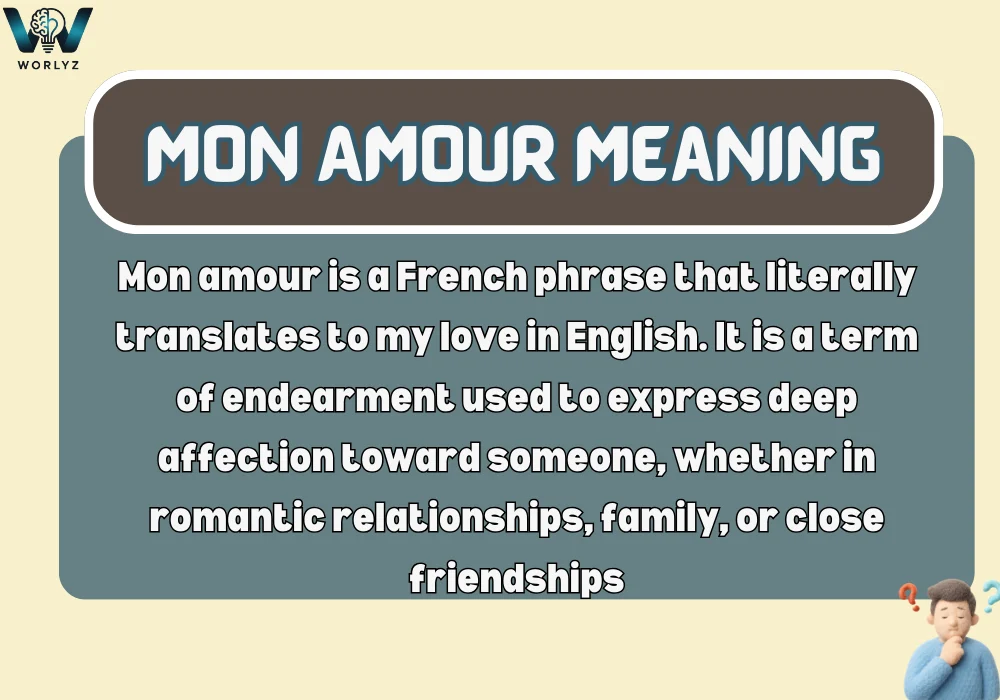
Mon amour is a French phrase that literally translates to my love in English. It is a term of endearment used to express deep affection toward someone, whether in romantic relationships, family, or close friendships.
In modern usage, it can convey:
- Romantic love
- Affectionate friendship
- Poetic or artistic expression
Origin of the Phrase
The phrase comes from French, where:
- Mon means my
- Amour means love
French has a long tradition of romantic expression, and mon amour has been popularized worldwide through literature, films, and music. It has become one of the most recognizable French expressions associated with love and intimacy.
Different Meanings of Mon Amour Based on Context
Romantic Usage
In romantic settings, mon amour is primarily directed at a partner or someone with whom one shares deep affection.
Examples:
- Je t’aime, mon amour (I love you, my love)
- Mon amour, tu es mon monde (My love, you are my world)
This usage conveys intimacy, passion, and emotional closeness.
Friendly or Affectionate Usage
Although most common in romance, mon amour can sometimes be used playfully among friends or family members to show care and affection.
Examples:
- Mon amour, prends soin de toi (My love, take care of yourself)
- Thanks for helping me today, mon amour
In this sense, it communicates warmth rather than romantic love.
Poetic or Artistic Usage
Mon amour is often used in songs, poetry, and novels as a stylistic expression. Writers and artists use it to evoke emotion and add a romantic or dramatic tone.
Examples:
- Classic French chansons often begin with “Mon amour…”
- Literature uses the phrase to highlight intimate emotions
Here, mon amour goes beyond literal meaning, carrying a musical and emotional resonance.
Mon Amour Meaning in Simple Language
In everyday terms, mon amour can mean:
- My sweetheart
- My darling
- My beloved
- My love
It is used to show closeness, care, and emotional connection. The phrase is affectionate, intimate, and often poetic.
Examples of Mon Amour in Conversations
Romantic Text Example
Je t’aime tellement, mon amour. (I love you so much, my love.)
Casual Affection Example
Mon amour, don’t forget to eat today.
Music and Poetry Example
Mon amour, tu es mon soleil. (My love, you are my sunshine.)
These examples demonstrate how flexible the phrase is, depending on tone, context, and relationship.
Mon Amour Compared to Similar Words
Understanding mon amour becomes easier when compared to related expressions in French and English.
| Phrase | Meaning | Key Difference |
|---|---|---|
| Mon amour | My love | Romantic or affectionate; personal |
| Mon chéri / Ma chérie | My darling | Slightly less formal and common in daily speech |
| Mon trésor | My treasure | Sweet nickname; playful or affectionate |
| Mon coeur | My heart | Very intimate, poetic |
| Mon bébé | My baby | Casual, affectionate, often romantic |
Mon amour is the most classic and widely recognized term of deep affection.
Pronunciation and How to Say It
For non-French speakers, pronunciation can be tricky. It is pronounced approximately as:
mon ah-moor
Key tips:
- “Mon” rhymes with “on” in English but nasalized
- “Amour” is pronounced with a soft “r” at the end
- Keep it smooth and melodic for a romantic tone
Cultural Significance of Mon Amour
Mon amour is not just a phrase; it represents the French approach to romance and emotional expression. France has long been associated with love, poetry, and elegance, and mon amour embodies this tradition.
It is commonly used in:
- Romantic films
- French songs and pop culture
- Love letters and personal texts
- Art, literature, and poetry
Common Mistakes or Misunderstandings
Using Mon Amour in the Wrong Context
While playful usage exists, using mon amour casually with someone you barely know may feel over-familiar or awkward.
Confusing Mon Amour with Everyday Terms
It is more intimate than phrases like “friend” or “buddy.” It is typically reserved for someone close or loved.
Mispronunciation
Incorrect pronunciation can change the tone or sound unnatural. Practicing “mon ah-moor” ensures authenticity.
Related Words and Expressions
When learning mon amour meaning, you may also encounter:
- Mon chéri / Ma chérie (my darling)
- Mon trésor (my treasure)
- Mon coeur (my heart)
- Mon ange (my angel)
- Ma belle / Mon beau (my beautiful / handsome)
These terms all convey love, care, or affection with subtle differences in tone and formality.
FAQs:
What does mon amour mean in English?
Mon amour means my love and is a term of deep affection or romantic endearment.
Can mon amour be used for friends or family?
Yes, sometimes it is used playfully or affectionately with family or close friends, but mostly it is romantic.
Is mon amour formal or casual?
It can be both, but it is intimate and best suited for personal or romantic contexts.
How do you pronounce mon amour correctly?
It is pronounced approximately as mon ah-moor, with a soft and melodic tone.
Is mon amour commonly used in songs and poetry?
Yes, it is widely used in French literature, poetry, and songs to evoke romance and emotional depth.
Conclusion:
The mon amour meaning goes beyond a simple translation of “my love.” It represents intimacy, affection, and emotional closeness. Whether used in romance, casual affection, or artistic expression, mon amour conveys warmth, connection, and poetic charm.
Understanding mon amour helps you communicate love and affection accurately, whether in texts, conversations, or creative works. Using it correctly can make your messages more heartfelt and culturally authentic, adding elegance and emotion to your expressions of love.

John is the founder and primary content creator of Worlyz. He has a strong passion for explaining word meanings, language concepts, slang terms, and educational topics in a clear and simple way. John focuses on creating well researched, reader friendly content that helps users easily understand complex words and ideas. Through Worlyz, his goal is to make learning meanings and concepts straightforward and accessible for everyone.