The phrase needless to say is commonly used in everyday conversation, writing, movies, and online discussions. While it sounds formal, people often use it casually to emphasize a point that feels obvious or expected. Understanding the needless to say meaning helps you recognize tone, avoid repetition, and use the phrase naturally without sounding awkward.
This expression is especially useful when you want to highlight something without explaining it in detail, making your communication smoother and more confident.
What Does Needless to Say Mean
Definition
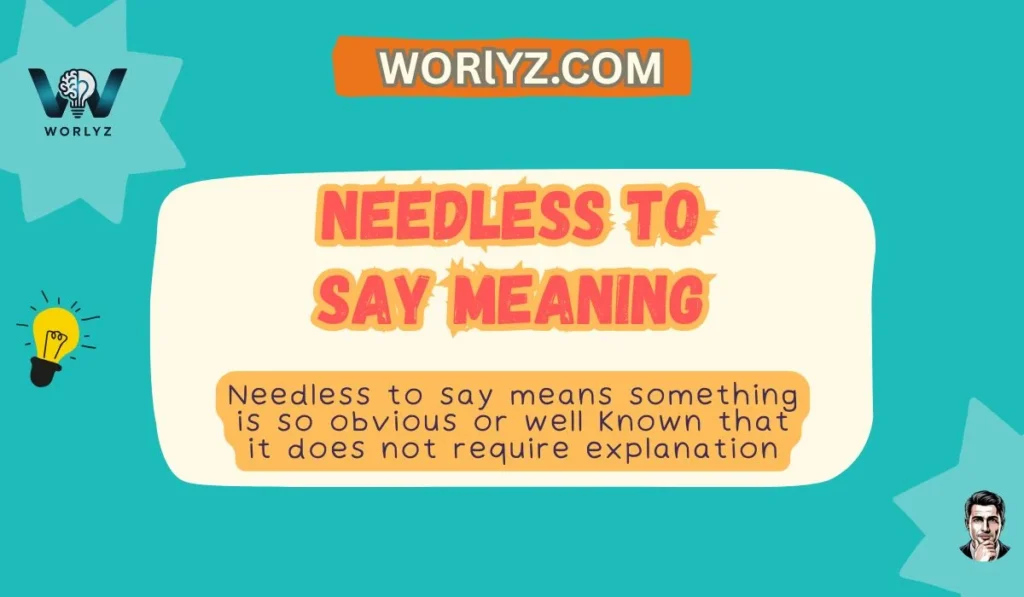
Needless to say means something is so obvious or well known that it does not require explanation. The speaker uses the phrase to emphasize that a result, feeling, or outcome is expected.
In simple terms, it signals that the listener already understands the point.
Origin and Background
The phrase needless to say has been used in English for centuries. It comes from the idea that certain facts or reactions are so clear that stating them would be unnecessary.
Over time, the phrase became a common expression in both formal writing and everyday speech.
How Needless to Say Is Used in Sentences
Emphasizing an Obvious Outcome
Needless to say is often used to highlight a result that naturally follows a situation.
Example:
The project failed, needless to say, everyone was disappointed.
Showing Shared Understanding
The phrase can also show that the speaker assumes the listener already agrees or understands.
Example:
She forgot his birthday and needless to say he was upset.
Needless to Say Meaning in Simple Language
In everyday terms, needless to say means:
- Obviously
- As expected
- You can guess what happened next
It acts as a shortcut to avoid over-explaining something.
Examples of Needless to Say in Conversations
Casual Conversation Example
He showed up late again, needless to say the meeting started without him.
Workplace Example
The deadline was missed and needless to say the client was unhappy.
Storytelling Example
The joke failed and needless to say the room went quiet.
These examples show how the phrase adds emphasis without extra detail.
Needless to Say Compared to Similar Expressions
Understanding needless to say becomes clearer when compared to similar phrases.
| Phrase | Meaning | Key Difference |
|---|---|---|
| Needless to say | Obvious outcome | Slightly formal tone |
| Obviously | Clearly evident | More direct |
| Of course | Expected result | Casual tone |
| Goes without saying | Self-evident | Very similar meaning |
| Naturally | Expected reaction | Softer emphasis |
Needless to say often sounds more polished than casual alternatives.
When to Use Needless to Say
Needless to say works best when:
- The outcome is predictable
- You want to avoid unnecessary explanation
- You are summarizing a story or event
It fits well in writing, storytelling, and reflective conversation.
When Not to Use Needless to Say
There are times when the phrase can sound awkward or unnecessary.
Avoid using it when:
- The information is not obvious
- You are explaining something complex
- You have already clearly stated the point
Overusing it can weaken your message.
Common Mistakes or Misunderstandings
Using Needless to Say Then Saying It Anyway
People often follow the phrase with too much explanation, which defeats the purpose.
Using It in Very Formal Documents
In legal or technical writing, the phrase may sound informal or vague.
Assuming Everyone Understands
What seems obvious to one person may not be obvious to another.
Needless to Say in Modern Communication
Today, needless to say is still widely used in:
- Emails
- Social media captions
- Blog posts
- Casual texting
Example:
The concert was canceled, needless to say fans were disappointed.
It helps keep communication natural and efficient.
Related Expressions and Alternatives
You might also see or use:
- It goes without saying
- As expected
- Clearly
- Naturally
- Unsurprisingly
Choosing the right alternative depends on tone and audience.
FAQs:
What does needless to say mean in simple words?
Needless to say means something is obvious and does not need explanation.
Is needless to say formal or informal?
It can be used in both formal writing and casual conversation.
Can needless to say start a sentence?
Yes, it often appears at the beginning or middle of a sentence.
Is needless to say the same as obviously?
They are similar, but needless to say sounds more reflective and less direct.
Should I avoid using needless to say?
It is fine to use, but avoid overusing it or using it when something is not truly obvious.
Conclusion:
The needless to say meaning is rooted in shared understanding and emphasis. It allows speakers and writers to highlight obvious outcomes without over-explaining them. When used correctly, it makes communication smoother, clearer, and more natural.
By understanding when and how to use needless to say, you can express ideas confidently while keeping your message concise and effective.

John is the founder and primary content creator of Worlyz. He has a strong passion for explaining word meanings, language concepts, slang terms, and educational topics in a clear and simple way. John focuses on creating well researched, reader friendly content that helps users easily understand complex words and ideas. Through Worlyz, his goal is to make learning meanings and concepts straightforward and accessible for everyone.