The word opposed is commonly used in conversations, news, debates, and everyday situations, yet many people misunderstand its exact meaning. You might hear someone say they are opposed to an idea, a policy, or an action, but what does that really imply? Understanding the opposed meaning helps you communicate your opinions clearly and understand where others stand.
In both spoken and written language, opposed is often used to show disagreement or resistance. This article explains the meaning, usage, comparisons, and common mistakes in a clear and practical way.
What Does Opposed Mean
Definition
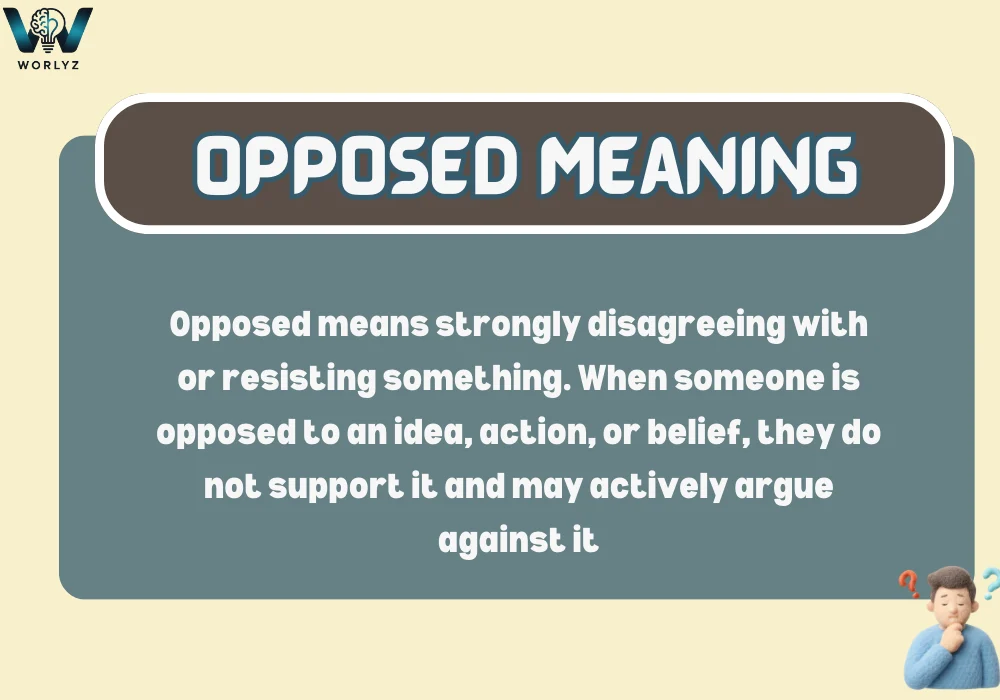
Opposed means strongly disagreeing with or resisting something. When someone is opposed to an idea, action, or belief, they do not support it and may actively argue against it.
In simple terms, being opposed means being against something.
Origin and Background
The word opposed comes from the Latin word opponere, which means to place against. Over time, it came to represent resistance, disagreement, or contrast in ideas and actions.
This origin explains why opposed often carries a firm or serious tone.
Different Ways Opposed Is Used
Opposed in Opinions and Beliefs
Opposed is often used when discussing personal opinions or beliefs.
Example:
She is opposed to the new rules because she believes they are unfair.
This usage shows clear disagreement rather than mild dislike.
Opposed in Actions or Movements
Opposed can also describe actions or efforts that work against something.
Example:
The group opposed the decision by organizing protests.
Here, opposed implies active resistance.
Opposed in Comparisons or Positions
Opposed can describe physical or symbolic positions.
Example:
The two teams stood on opposed sides of the field.
In this case, it refers to opposite placement rather than disagreement.
Opposed Meaning in Simple Language
In everyday terms, opposed means:
- Not agreeing with something
- Being against an idea or action
- Taking a different or conflicting position
The word often suggests seriousness and firm intent.
Opposed Compared to Similar Words
Understanding opposed becomes easier when compared to similar terms.
| Word | Meaning | Key Difference |
|---|---|---|
| Opposed | Against or resisting | Strong disagreement |
| Against | Not supporting | Can be casual or strong |
| Disagree | Having a different opinion | Less forceful |
| Resist | Try to stop or fight | Action-focused |
| Reject | Refuse to accept | Final decision |
Opposed usually implies a stronger stance than simple disagreement.
How Opposed Is Used in Daily Conversations
Everyday Conversation Example
I am opposed to changing the plan at the last minute.
News and Public Discussions
Many citizens are opposed to the proposed law.
Workplace Example
He was opposed to the idea because it increased workload.
These examples show how opposed fits naturally into formal and informal settings.
Common Mistakes or Misunderstandings
Thinking Opposed Means Slight Dislike
Opposed is stronger than not liking something. It suggests firm disagreement.
Using Opposed for Neutral Situations
Opposed should not be used when someone feels unsure or neutral.
Confusing Opposed With Opposite
Opposed refers to resistance or disagreement, while opposite refers to contrast or position.
Opposed in Emotional and Social Contexts
Being opposed often appears in:
- Political discussions
- Ethical debates
- Workplace decisions
- Personal boundaries
Using the word clearly helps express strong opinions respectfully.
Related Words and Expressions
When learning the opposed meaning, you may also encounter:
- Opposition
- Opposing views
- Against
- Resistant
- Contrary
Each term shares a similar idea but differs in strength or tone.
FAQs:
What does opposed mean in simple words?
Opposed means being against something or not agreeing with it.
Is opposed stronger than disagree?
Yes, opposed usually shows stronger and more firm disagreement.
Can opposed be used in physical positions?
Yes, opposed can describe things placed on opposite sides.
Is opposed always negative?
Opposed is not negative by itself. It simply shows a clear stance.
Can someone be politely opposed to something?
Yes, someone can express opposition respectfully and calmly.
Conclusion:
The opposed meaning centers on resistance, disagreement, and standing against something. Whether used in opinions, actions, or positions, opposed clearly communicates a firm stance.
By understanding how opposed differs from similar words and knowing when to use it, you can express your views more accurately and interpret conversations with greater clarity.

John is the founder and primary content creator of Worlyz. He has a strong passion for explaining word meanings, language concepts, slang terms, and educational topics in a clear and simple way. John focuses on creating well researched, reader friendly content that helps users easily understand complex words and ideas. Through Worlyz, his goal is to make learning meanings and concepts straightforward and accessible for everyone.