The word plunk may sound simple and playful, but it has several meanings depending on how it is used. You might hear it in everyday conversations, see it in books, or notice it in online comments. Understanding the plunk meaning helps you catch the tone of a sentence and use the word naturally in speech or writing.
Plunk is often used to describe a sound, an action, or even a type of person. This article explains all its meanings clearly, with examples and comparisons, so you can understand it without confusion.
What Does Plunk Mean
Definition
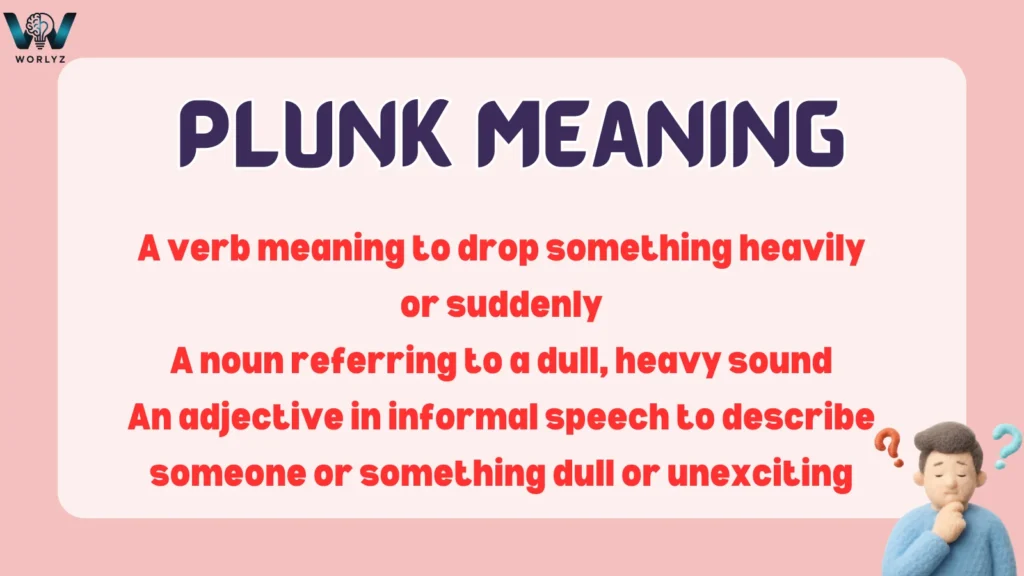
Plunk is commonly used as:
- A verb meaning to drop something heavily or suddenly
- A noun referring to a dull, heavy sound
- An adjective in informal speech to describe someone or something dull or unexciting
The exact meaning depends on context.
Origin of the Word
Plunk is an onomatopoeic word, meaning it imitates a sound. It comes from the idea of something hitting a surface with a low, heavy noise.
Because of this origin, plunk is often used in descriptive writing and storytelling.
Different Meanings of Plunk Based on Context
Plunk as a Verb
As a verb, plunk means to put or drop something down heavily or without much care.
Examples:
- He plunked his bag on the floor
- She plunked the coins onto the table
It often suggests a casual or slightly careless action.
Plunk as a Noun
As a noun, plunk refers to the sound made when something heavy falls or hits a surface.
Example:
- The stone hit the water with a plunk
This usage is common in books and descriptive writing.
Plunk as an Informal Description
In casual language, plunk can describe a person or thing that is dull, slow, or uninteresting.
Example:
- The movie felt a bit plunk to me
This usage is less common but still understood in informal settings.
Plunk Meaning in Simple Language
In everyday terms, plunk usually means:
- Dropping something with a heavy sound
- Hearing a low, solid noise
- Doing something without much elegance
The word often adds a visual or sound-based effect to a sentence.
Plunk Compared to Similar Words
Plunk is often confused with other sound-based or action words. Here is a simple comparison to help clarify its meaning.
| Word | Meaning | Difference |
|---|---|---|
| Plunk | Drop with a dull sound | Heavy and solid |
| Plop | Fall softly or wetly | Lighter or softer |
| Thud | Heavy impact sound | Stronger and deeper |
| Clunk | Metallic heavy sound | Often mechanical |
| Drop | General action | Neutral and plain |
Plunk usually feels more casual and descriptive than these alternatives.
How Plunk Is Used in Daily Conversations
Casual Speech
He plunked himself down on the couch after work.
Descriptive Writing
The apple fell from the tree with a plunk.
Informal Commentary
They plunked the building right in the middle of town.
These examples show how plunk adds a sense of sound or motion.
Tone and Emotional Feel of Plunk
Plunk often carries:
- A relaxed tone
- A slightly careless or sudden action
- A visual or sound-based feeling
It is rarely formal and is mostly used in storytelling or casual speech.
Common Mistakes or Misunderstandings
Thinking Plunk Is Always Negative
Plunk is usually neutral. It simply describes an action or sound.
Using Plunk in Formal Writing
Plunk is informal and may not fit academic or professional writing.
Confusing Plunk With Plop or Thud
Each word describes a different type of sound and impact.
Related Words and Expressions
When learning the plunk meaning, you may also encounter:
- Plop
- Thud
- Clunk
- Drop
- Slam
These words share similar sound-based meanings but differ in tone and intensity.
FAQs:
What does plunk mean in simple words?
Plunk means to drop something heavily or make a dull sound.
Is plunk a verb or a noun?
Plunk can be both a verb and a noun, depending on how it is used.
Is plunk a formal word?
No, plunk is informal and commonly used in casual speech or storytelling.
What is the difference between plunk and plop?
Plunk sounds heavier and more solid, while plop sounds softer or wetter.
Can plunk describe people?
Yes, in informal language it can describe someone as dull or unexciting.
Conclusion:
The plunk meaning centers around sound, movement, and informal expression. Whether used to describe dropping an object, hearing a dull noise, or adding color to storytelling, plunk helps create a vivid mental image.
By understanding how plunk works in different contexts, you can recognize its meaning easily and use it naturally in everyday conversation.

John is the founder and primary content creator of Worlyz. He has a strong passion for explaining word meanings, language concepts, slang terms, and educational topics in a clear and simple way. John focuses on creating well researched, reader friendly content that helps users easily understand complex words and ideas. Through Worlyz, his goal is to make learning meanings and concepts straightforward and accessible for everyone.