The word rehabilitation is commonly used in medical, legal, social, and everyday conversations, yet many people are unsure of its full meaning. You may hear it in discussions about health recovery, addiction treatment, injury healing, or even prison reform. Understanding the rehabilitation meaning helps you use the word correctly and grasp what people truly mean when they talk about recovery and improvement.
Rehabilitation is not just about fixing a problem. It is about restoring ability, confidence, and independence so a person can return to a better and more functional life.
What Does Rehabilitation Mean
Definition
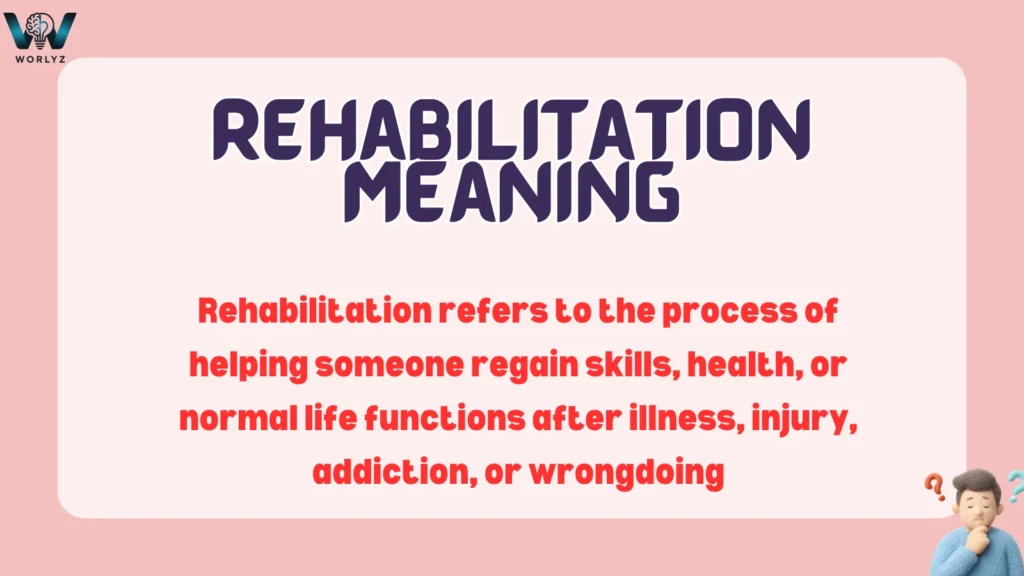
Rehabilitation refers to the process of helping someone regain skills, health, or normal life functions after illness, injury, addiction, or wrongdoing. The goal is to restore physical, mental, emotional, or social abilities as much as possible.
In simple words, rehabilitation means helping someone recover and get back on track.
Origin of the Word
The word rehabilitation comes from the Latin term rehabilitare, which means to restore or make fit again. Over time, its meaning expanded beyond physical recovery to include mental health, social behavior, and legal reform.
This explains why rehabilitation is used in many different fields today.
Different Types of Rehabilitation
Medical Rehabilitation
Medical rehabilitation focuses on restoring physical abilities after injury or illness.
Common examples include:
- Physical therapy after an accident
- Stroke recovery programs
- Post-surgery rehabilitation
The aim is to improve movement, strength, and daily functioning.
Addiction Rehabilitation
Addiction rehabilitation helps people recover from substance abuse or dependency.
It often includes:
- Detox programs
- Counseling and therapy
- Lifestyle and behavior changes
The focus is on long-term recovery, not just stopping the addiction.
Mental Health Rehabilitation
This type of rehabilitation supports people dealing with mental health conditions.
It may involve:
- Therapy sessions
- Skill-building activities
- Emotional support systems
The goal is to improve independence and quality of life.
Social and Legal Rehabilitation
Rehabilitation can also apply to people who have committed crimes or faced social setbacks.
Examples include:
- Prison rehabilitation programs
- Job training for reintegration
- Education and counseling support
This type focuses on helping individuals return to society as responsible members.
Rehabilitation Meaning in Simple Language
In everyday language, rehabilitation means:
- Healing and recovery
- Learning skills again
- Improving life after damage or difficulty
Rehabilitation is usually a gradual process that takes time, effort, and support.
Rehabilitation Compared to Similar Terms
Understanding rehabilitation becomes easier when compared to related words.
| Term | Meaning | Key Difference |
|---|---|---|
| Rehabilitation | Restoring ability or function | Long-term recovery process |
| Treatment | Medical or therapeutic care | Focuses on addressing the problem |
| Recovery | Improvement over time | General outcome |
| Therapy | Professional support method | Part of rehabilitation |
| Correction | Changing behavior | Often legal or disciplinary |
Rehabilitation is broader and more holistic than these terms.
How Rehabilitation Is Used in Daily Conversations
Health Context
She is in rehabilitation after her surgery.
Addiction Context
He checked into a rehabilitation center to get help.
Legal Context
The program focuses on rehabilitation rather than punishment.
Workplace Context
The injury required months of rehabilitation.
These examples show how flexible the word rehabilitation is across situations.
Why Rehabilitation Is Important
Rehabilitation plays a key role in:
- Restoring independence
- Improving quality of life
- Preventing relapse or further harm
- Supporting long-term stability
Without rehabilitation, recovery often remains incomplete.
Common Misunderstandings About Rehabilitation
Thinking Rehabilitation Is Only Physical
Rehabilitation also includes mental, emotional, and social recovery.
Believing Rehabilitation Is Quick
Most rehabilitation processes take time and consistent effort.
Assuming Rehabilitation Guarantees Full Recovery
Rehabilitation aims to improve function, but results vary depending on the situation.
Cultural and Social View of Rehabilitation
In many societies, rehabilitation represents:
- Second chances
- Personal growth
- Healing rather than punishment
This perspective has influenced modern healthcare, justice systems, and social services.
Related Words and Concepts
When learning the rehabilitation meaning, you may also encounter:
- Recovery
- Therapy
- Reintegration
- Healing
- Restoration
Each term connects to rehabilitation but highlights a different aspect of the process.
FAQs:
What does rehabilitation mean in simple words?
Rehabilitation means helping someone recover and regain normal abilities after illness, injury, addiction, or trouble.
Is rehabilitation only for physical injuries?
No, rehabilitation also applies to mental health, addiction recovery, and social or legal reform.
How long does rehabilitation usually take?
The duration depends on the condition, severity, and type of rehabilitation needed.
What is the difference between rehabilitation and recovery?
Rehabilitation is the process, while recovery is the result or outcome of that process.
Can rehabilitation help prevent future problems?
Yes, proper rehabilitation can reduce the risk of relapse, re-injury, or repeated harmful behavior.
Conclusion:
The rehabilitation meaning goes beyond simple healing. It represents a structured and supportive process aimed at restoring health, skills, and confidence. Whether related to medical care, addiction treatment, mental health, or social reform, rehabilitation focuses on helping people rebuild their lives.
By understanding rehabilitation in its full sense, you can better appreciate its importance in personal recovery and societal progress.

Alex is the owner and founder of Worlyz. He is passionate about explaining word meanings, language concepts, slang terms, and educational topics in a clear and simple manner. Alex focuses on creating high quality, well researched, and user focused content that helps readers understand complex words easily. Through Worlyz, his goal is to make learning language meanings and concepts accessible and reliable for everyone.