The word revenge is commonly used in everyday conversations, social media posts, movies, and online chats. People often use it emotionally, sometimes jokingly and sometimes seriously. Understanding the revenge meaning helps you recognize what it truly represents, how it is used in real life, and when it can be misunderstood.
In modern communication, revenge can describe anything from playful payback between friends to deep emotional responses after being wronged. Knowing the difference is important to avoid confusion and misuse.
What Does Revenge Mean
Definition
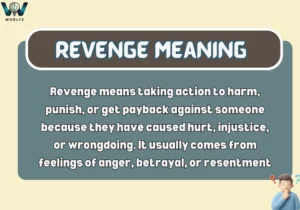
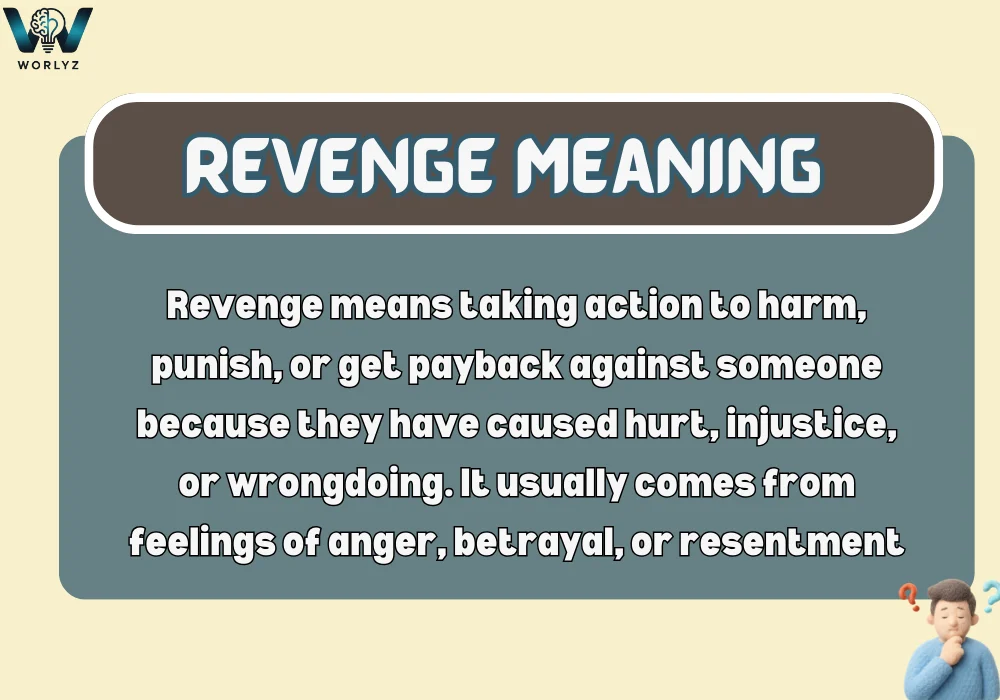
Revenge means taking action to harm, punish, or get payback against someone because they have caused hurt, injustice, or wrongdoing. It usually comes from feelings of anger, betrayal, or resentment.
In simple terms, revenge is about making someone feel the pain they caused you.
Origin of the Word
The word revenge comes from the Latin word vindicare, meaning to claim, avenge, or punish. Over time, the meaning evolved to focus on personal retaliation rather than legal justice.
This history explains why revenge is often seen as emotional rather than fair or balanced.
How Revenge Is Used in Everyday Life
Emotional Context
Revenge is often connected to strong emotions such as:
- Anger
- Hurt
- Jealousy
- Betrayal
People usually think about revenge when they feel wronged and believe justice was not served.
Revenge in Modern Conversations
In today’s digital world, revenge is frequently used in a lighter or exaggerated way, especially online.
Examples:
That was my revenge for stealing my fries
Success is the best revenge
Wait for my revenge
These uses are often symbolic rather than literal.
Revenge Meaning Explained in Simple Language
In everyday language, revenge means:
- Getting back at someone
- Paying someone back for a wrong
- Making things feel even again
It does not always involve physical harm. Many times, revenge is emotional, social, or verbal.
Examples of Revenge in Conversations
Casual Example
That promotion was my revenge after they doubted me
Playful Example
Posting that photo was my revenge for the prank
Serious Example
He planned revenge after being betrayed by his friend
These examples show how tone and context change the meaning of the word.
Common Misunderstandings About Revenge
Revenge and Justice Are the Same
- Revenge is personal and emotional, while justice is meant to be fair and lawful.
Revenge Always Brings Satisfaction
Many people believe revenge will bring peace, but it often increases anger or regret.
Revenge Is Always Violent
Revenge can be emotional, social, or symbolic, not just physical.
Related Words and Expressions
When discussing the revenge meaning, you may also see:
- Payback meaning return of a wrong
- Retaliation meaning responding to harm
- Vengeance meaning intense revenge
- Karma meaning consequences of actions
These words are often used interchangeably, though they have different tones.
FAQs:
What is the basic meaning of revenge?
Revenge means taking action to punish or harm someone in response to being wronged.
Is revenge always a bad thing?
Revenge is often viewed negatively because it is driven by anger and can lead to further harm.
What is the difference between revenge and justice?
Revenge is personal and emotional, while justice aims to be fair and lawful.
Can revenge be harmless or playful?
Yes, in casual conversations, revenge can be used playfully without serious intent.
Why do people seek revenge?
People seek revenge when they feel hurt, betrayed, or believe fairness was denied.
Conclusion:
The revenge meaning goes beyond simple retaliation. It reflects emotional responses to hurt, injustice, or betrayal. While it can be used jokingly in everyday language, revenge often carries a deeper emotional weight.
Understanding how revenge is used helps you recognize tone, intent, and context in both real-life situations and online conversations. Knowing the difference between playful payback and serious revenge can prevent misunderstandings and encourage healthier communication.

John is the founder and primary content creator of Worlyz. He has a strong passion for explaining word meanings, language concepts, slang terms, and educational topics in a clear and simple way. John focuses on creating well researched, reader friendly content that helps users easily understand complex words and ideas. Through Worlyz, his goal is to make learning meanings and concepts straightforward and accessible for everyone.