Understanding the stingy meaning can help you better interpret conversations, descriptions, and even jokes in everyday English. The word appears often in casual speech, literature, and online discussions when people talk about money, generosity, or attitudes toward sharing.
In simple terms, stingy describes someone who is unwilling to spend money, share resources, or give generously to others. While saving money is usually considered wise, being stingy often carries a negative tone because it suggests excessive reluctance to give or help.
In this detailed guide, you will learn the full meaning of stingy, how it is used in conversations, real-life examples, common misunderstandings, and related words that people often confuse with it.
What Does Stingy Mean? Definition and Origin
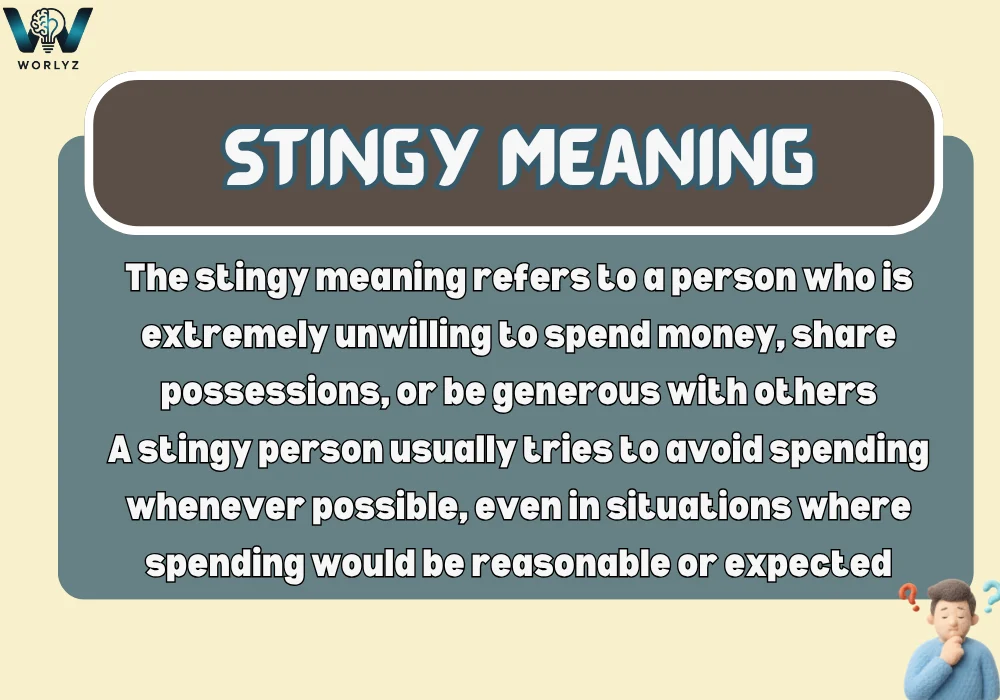
The stingy meaning refers to a person who is extremely unwilling to spend money, share possessions, or be generous with others.
A stingy person usually tries to avoid spending whenever possible, even in situations where spending would be reasonable or expected.
Simple definition
Stingy means:
- Unwilling to spend money
- Reluctant to share things with others
- Extremely careful about giving or providing resources
For example:
- Someone who never contributes when friends split a bill
- A person who refuses to lend small items or share food
Origin of the word
The word stingy has an interesting linguistic background. It is believed to have developed from the word sting, referring to the sharp pain caused by an insect or object.
Over time, the term stingy evolved metaphorically to describe someone who gives money or resources in a way that feels unpleasant or painful to others.
Historical usage
Historically, stingy appeared in English writing to describe people who were:
- Extremely frugal
- Unwilling to support others financially
- Tight with money or resources
In literature and storytelling, stingy characters are often portrayed as greedy or selfish individuals.
How to Use Stingy in Everyday Conversations
The word stingy is commonly used in everyday conversations when talking about generosity, money habits, or behavior toward sharing.
Common contexts where stingy appears
- Daily conversations
- Social media posts
- Stories or jokes about money
- Discussions about generosity or fairness
Examples of natural usage
Here are some examples of how people use stingy in real conversations:
- Example 1
- My friend is so stingy he never buys coffee for anyone.
Example 2
Don’t be stingy with the toppings on the pizza.
- Example 3
- The company was stingy with employee bonuses this year.
Example 4
She is stingy when it comes to lending her things.
In these examples, stingy describes someone who avoids giving or sharing.
Common phrases using stingy
You may also see stingy used in phrases such as:
- stingy with money
- stingy with compliments
- stingy with resources
- stingy attitude
These expressions extend the meaning beyond money and apply it to other things like praise, attention, or effort.
Examples of Stingy in Conversations
Real-life examples can help you understand how the word is used naturally.
Example conversation 1
Friend A: Did he pay his part of the bill?
Friend B: No, he pretended to forget again. He’s really stingy.
Example conversation 2
Person A: Why didn’t you share your snacks?
Person B: Come on, don’t call me stingy. I just brought enough for myself.
Example conversation 3
Coworker 1: The boss only gave a tiny raise.
Coworker 2: That’s pretty stingy considering how hard everyone worked.
Example conversation 4
Sibling A: Can I borrow your charger?
Sibling B: No.
Sibling A: You’re so stingy.
These examples show that stingy is usually used informally and often carries mild criticism or humor.
Common Mistakes or Misunderstandings
Many people confuse stingy with other similar words related to money or generosity. Understanding the differences can help you use the word correctly.
1. Stingy vs Frugal
Frugal describes someone who spends money carefully and wisely.
Stingy describes someone who refuses to spend even when necessary.
Example:
- Frugal person: saves money but still pays fairly
- Stingy person: avoids paying even when they should
2. Stingy vs Cheap
Cheap and stingy are similar but slightly different.
Cheap usually refers to spending as little money as possible.
Stingy focuses more on unwillingness to share or give.
3. Stingy vs Miserly
Miserly is a stronger and more formal version of stingy. It often describes extreme unwillingness to spend money.
For example, in stories a miserly character may live poorly despite having lots of wealth.
Comparison Table of Related Words
| Word | Meaning | Tone | Example |
|---|---|---|---|
| Stingy | Unwilling to spend or share | Negative | He is stingy with money |
| Frugal | Careful and practical with money | Positive | She is frugal and saves wisely |
| Cheap | Spending very little money | Neutral or negative | He bought the cheapest option |
| Generous | Willing to give freely | Positive | She is generous with gifts |
| Miserly | Extremely unwilling to spend | Very negative | The miserly man hoarded his wealth |
This comparison helps clarify when stingy is the most appropriate word to use.
Situations Where People Use Stingy
The word stingy can apply to many different situations beyond money.
1. Money and spending
This is the most common usage.
Example:
He is stingy and never tips at restaurants.
2. Sharing food or items
Example:
Don’t be stingy with the popcorn.
3. Giving compliments
Sometimes stingy describes people who rarely give praise.
Example:
The teacher is stingy with compliments.
4. Business or organizations
Companies can also be described as stingy.
Example:
The company was stingy with employee benefits.
Related Slangs or Abbreviations
While stingy itself is not slang, it is often used alongside other informal expressions related to money and generosity.
Some related terms include:
Tight
Tight means someone who hates spending money.
Example:
He’s too tight to buy new clothes.
Penny pincher
This describes someone who tries to save every small amount of money.
Example:
My uncle is a real penny pincher.
Cheap skate
Cheap skate refers to a person who avoids spending money whenever possible.
Example:
Don’t be such a cheap skate.
Broke
Broke means having no money, which is different from stingy.
Example:
I’m not stingy, I’m just broke.
Why the Word Stingy Can Sound Negative
The reason stingy often feels negative is because generosity is usually seen as a positive personality trait.
People expect others to:
- share when possible
- contribute fairly
- help friends or family
When someone refuses to do these things, they may be described as stingy.
However, context matters. Sometimes people labeled stingy are simply trying to manage their finances carefully.
Frequently Asked Questions:
What does stingy mean?
Stingy means being unwilling to spend money or share things with others. It usually describes someone who avoids giving or helping financially.
Is stingy the same as frugal?
No. Frugal means being careful and smart with money, while stingy suggests refusing to spend or share even when it is reasonable.
Can stingy describe things other than money?
Yes. Stingy can also describe someone who rarely gives compliments, attention, or help.
Example:
He is stingy with praise.
Is stingy a rude word?
Stingy can sound slightly rude because it criticizes someone’s generosity. It is often used jokingly among friends but may feel insulting in serious situations.
What is the opposite of stingy?
The opposite of stingy is generous. A generous person willingly shares money, time, or resources with others.
Conclusion:
Understanding the stingy meaning helps you recognize how the word is used in everyday conversations and descriptions of behavior. It usually refers to someone who is extremely unwilling to spend money or share resources with others.
Although saving money is sensible, stingy describes behavior that goes beyond careful spending and becomes overly restrictive or selfish. This is why the word often carries a negative tone in conversations.
By learning how stingy differs from similar terms like frugal, cheap, and miserly, you can use the word more accurately in both writing and daily speech.
Share your favorite English word or expression related to money or personality in the comments!

John is the founder and primary content creator of Worlyz. He has a strong passion for explaining word meanings, language concepts, slang terms, and educational topics in a clear and simple way. John focuses on creating well researched, reader friendly content that helps users easily understand complex words and ideas. Through Worlyz, his goal is to make learning meanings and concepts straightforward and accessible for everyone.