The word tangle is simple, but its meaning can change depending on how and where it’s used. You might see it in everyday conversation, social media posts, books, or even emotional discussions online. Understanding the tangle meaning helps you use the word correctly and avoid confusion, especially when it appears in casual chats or descriptive writing.
In modern communication, words like tangle are often used both literally and figuratively. This guide explains the meaning in a clear, human way with real-life examples.
What Does Tangle Mean
Basic Definition
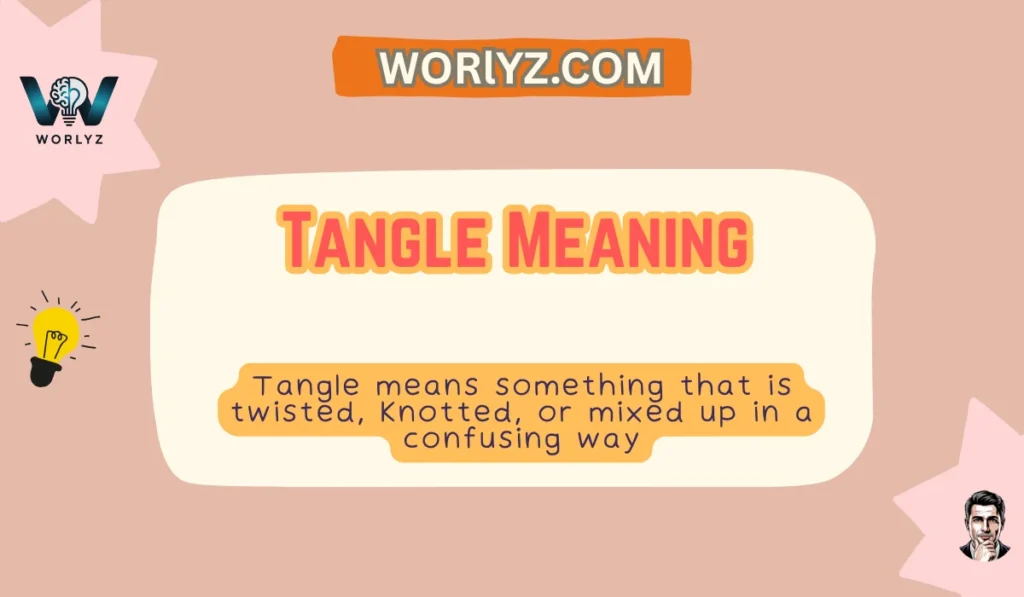
Tangle means something that is twisted, knotted, or mixed up in a confusing way. It can refer to physical objects, situations, or even emotions.
In simple words, a tangle is when things are not straight or easy to separate.
Origin of the Word
The word tangle comes from Old English and has been used for centuries to describe things that are intertwined or caught together. Over time, its meaning expanded beyond physical objects to include problems and emotions.
Different Meanings of Tangle
Tangle as a Physical Object
This is the most common and literal meaning.
Examples:
- Tangled hair after waking up
- Wires tangled behind a desk
- Fishing lines tangled together
In these cases, tangle means twisted together in a messy way.
Tangle as a Situation
Tangle can also describe a complicated situation that is hard to fix.
Examples:
- A legal tangle
- A financial tangle
- A messy relationship tangle
Here, the word suggests confusion and difficulty.
Tangle as an Emotional State
People often use tangle to describe mixed or confusing emotions.
Examples:
- A tangle of thoughts
- A tangle of feelings
- Emotionally tangled
This use is common in writing and social media captions.
How Tangle Is Used in Everyday Language
Common Contexts
Tangle appears in many everyday situations, including:
- Casual conversations
- Text messages
- Social media posts
- Storytelling and writing
Example sentences:
My headphones are always a tangle
I am stuck in a tangle of emotions right now
Tangle in Texts and Chats
In casual chats, tangle is often used metaphorically.
Examples:
I got myself into a tangle with that decision
Life feels like a tangle lately
It adds an expressive and relatable tone to messages.
Examples of Tangle in Conversations
Example 1: Physical Use
My hair turned into a complete tangle after the wind
Example 2: Situation-Based Use
He is dealing with a legal tangle at work
Example 3: Emotional Use
She felt a tangle of emotions after the conversation
Example 4: Casual Chat
My thoughts are a tangle today
These examples show how flexible the word is in everyday language.
Common Mistakes or Misunderstandings
Using Tangle Instead of Simple Mess
Tangle usually suggests twisting or interlocking, not just something being untidy.
Overusing Tangle in Formal Writing
While useful, tangle can sound informal in very professional writing unless used carefully.
Confusing Tangle With Trap
A tangle can feel like a trap, but it mainly focuses on confusion or twisting rather than being stuck intentionally.
Related Words and Similar Meanings
Words related to tangle include:
- Knot
- Twist
- Snarl
- Entangle
- Mix up
Each word has a slightly different tone, but all suggest complexity or confusion.
FAQs:
What does tangle mean in simple words?
Tangle means something twisted, knotted, or confusing and hard to separate.
Can tangle describe emotions?
Yes, tangle is often used to describe mixed or confusing emotions.
Is tangle a negative word?
Usually yes, because it implies messiness or difficulty, but it can be neutral in some contexts.
What is the difference between tangle and knot?
A knot is usually more fixed and intentional, while a tangle is messy and accidental.
Can tangle be used in informal texting?
Yes, tangle is commonly used in casual chats and everyday conversation.
Conclusion:
The tangle meaning depends on context, but it always points to something twisted, mixed up, or confusing. Whether you are talking about hair, wires, situations, or emotions, the word tangle helps paint a clear picture of complexity.
Understanding how to use tangle correctly makes your communication more expressive and relatable. It is a simple word with flexible meaning, making it useful in both everyday speech and descriptive writing.

Alex is the owner and founder of Worlyz. He is passionate about explaining word meanings, language concepts, slang terms, and educational topics in a clear and simple manner. Alex focuses on creating high quality, well researched, and user focused content that helps readers understand complex words easily. Through Worlyz, his goal is to make learning language meanings and concepts accessible and reliable for everyone.