The word trollop is an old-fashioned term that has appeared in literature, historical texts, and even casual conversation. While it may not be used as often today, understanding the trollop meaning helps you interpret older writings, recognize its connotations, and use language accurately in discussions about character, reputation, or social behavior.
Trollop carries a strong social judgment, so knowing its history, context, and nuances is essential for both comprehension and responsible use.
What Does Trollop Mean
Definition
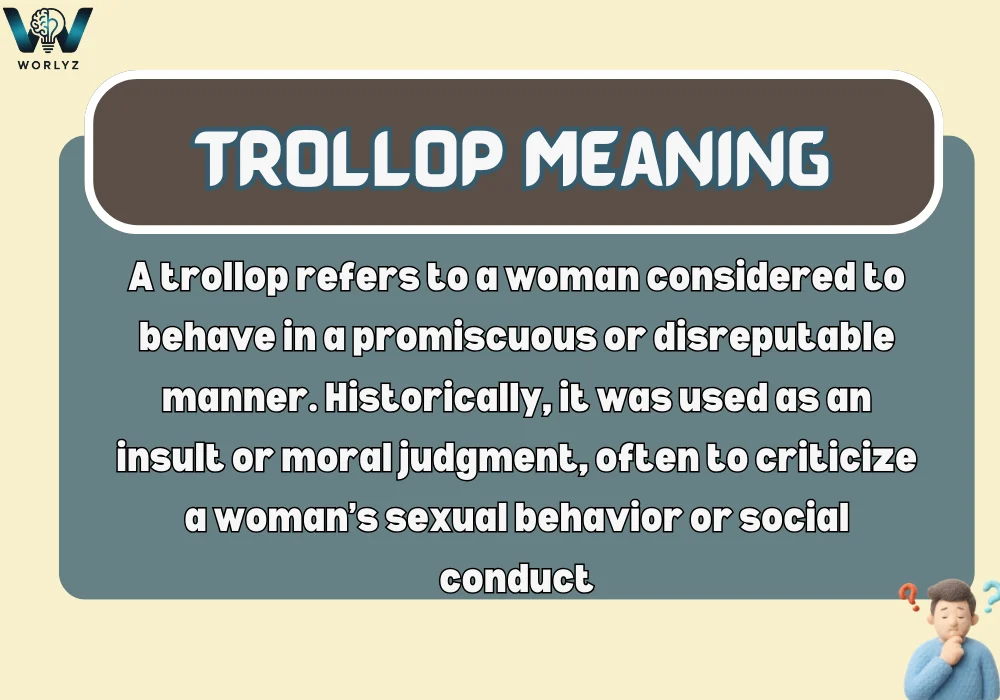
A trollop refers to a woman considered to behave in a promiscuous or disreputable manner. Historically, it was used as an insult or moral judgment, often to criticize a woman’s sexual behavior or social conduct.
In simple terms, trollop implies a negative reputation regarding morality and relationships.
Origin and Background
The word trollop has roots in Middle English, appearing in the 15th century. It originally referred to a female servant or lowly woman, but over time, the meaning shifted to focus on sexual reputation.
By the 16th and 17th centuries, trollop was widely used as a term of social judgment. Its strong moral connotations have persisted, even though the word is considered archaic today.
Different Meanings of Trollop Based on Context
Trollop in Historical and Literary Texts
In older literature, trollop is often used to describe a woman whose reputation is seen as scandalous or questionable.
Examples:
- Shakespearean plays sometimes referred to morally loose women as trollops.
- 18th-century novels might use trollop to critique social behavior.
This usage reflects the social attitudes and gender norms of the time.
Trollop in Modern Usage
Today, trollop is rarely used in everyday speech. When it is used, it tends to appear in:
- Historical novels
- Period dramas or films
- Discussions about old literature or social history
Modern audiences may find it offensive due to its derogatory tone.
Trollop as a Slang or Figurative Expression
In some contexts, trollop can be used figuratively to describe someone acting in a disreputable or careless way, though this usage is uncommon.
Example:
- The character in the story was called a trollop for her reckless decisions.
In general, trollop is negative and judgmental, so caution is required when using it.
Trollop Meaning in Simple Language
In simple, everyday terms, trollop means:
- A woman with a bad reputation
- Someone considered morally loose or scandalous
- A person whose actions are socially judged
It is important to note that trollop primarily targets women and is rarely used to describe men.
Examples of Trollop in Conversations or Literature
Historical Literature Example
The novel described the baron’s lover as a trollop, reflecting society’s harsh judgment.
Casual Historical Reference Example
She was unfairly called a trollop by the townspeople for talking to strangers.
Figurative Modern Example
The writer jokingly referred to the reckless socialite as a trollop, though the tone was ironic.
These examples highlight how trollop is rarely neutral and usually carries criticism.
Trollop Compared to Similar Words
Understanding trollop becomes easier when compared with related terms.
| Word | Meaning | Key Difference |
|---|---|---|
| Trollop | Woman of disreputable character | Strongly derogatory, historical |
| Harlot | Sex worker or morally loose woman | More formal, sometimes literary |
| Strumpet | Scorned woman or sex worker | Old English, often poetic |
| Jezebel | Cunning or morally corrupt woman | Biblical origin, metaphorical |
| Floozy | Woman perceived as promiscuous | Modern slang, less formal |
Trollop stands out for its archaic, judgmental tone and primary association with women.
Historical and Cultural Significance of Trollop
Trollop reflects past societal attitudes toward women. In history, women were often judged more harshly than men for their behavior, and terms like trollop reinforced moral and social norms.
- Literature and plays used trollop to convey societal expectations.
- Historians study its usage to understand gender roles and morality in different eras.
- Modern critiques highlight the term’s unfair bias against women.
Understanding trollop in historical context helps readers interpret literature accurately and recognize cultural bias.
Common Mistakes or Misunderstandings
Thinking Trollop Is Neutral
Trollop is always negative. It carries social judgment and is rarely used in a complimentary way.
Using Trollop for Men
Historically, the word targets women and is rarely applied to men. Using it for men would be incorrect or unusual.
Confusing Trollop With Casual Slang
Unlike terms like “floozy” or “party girl,” trollop is formal, archaic, and often literary.
Related Words and Expressions
When learning the trollop meaning, you may also encounter:
- Harlot
- Strumpet
- Floozy
- Jezebel
- Woman of ill repute
These words all carry moral judgment, though their tone and context vary.
FAQs:
What does trollop mean in simple words?
Trollop means a woman considered morally loose or disreputable.
Is trollop used in modern language?
It is rarely used today and mostly appears in historical or literary contexts.
Can trollop be used for men?
No, trollop is historically and culturally used only for women.
What is the difference between trollop and floozy?
Trollop is archaic and formal, often literary, while floozy is modern slang and less formal.
Where might I see the word trollop today?
You might see it in classic novels, period films, historical discussions, or literature studies.
Conclusion:
The trollop meaning carries strong historical and moral connotations. It primarily refers to a woman seen as disreputable or morally loose, with usage rooted in centuries of literature, social norms, and cultural judgment. While the word is largely archaic today, understanding trollop is valuable for reading older texts, interpreting historical social attitudes, and analyzing gendered language.
Recognizing trollop’s negative tone and historical context allows readers to approach older literature thoughtfully and understand how language reflects societal values. Even in modern discussions, knowing the word helps you navigate references in films, books, or historical analyses accurately.

John is the founder and primary content creator of Worlyz. He has a strong passion for explaining word meanings, language concepts, slang terms, and educational topics in a clear and simple way. John focuses on creating well researched, reader friendly content that helps users easily understand complex words and ideas. Through Worlyz, his goal is to make learning meanings and concepts straightforward and accessible for everyone.