The phrase stick season has become increasingly popular in everyday conversation, music, and social media. At first glance, it sounds simple, but its meaning depends heavily on context. Understanding the stick season meaning helps you grasp both its literal roots and its deeper emotional and cultural use today.
You might hear stick season used to describe a time of year, a feeling, or even a stage in life. This article explains all meanings clearly, with examples, comparisons, and real-world usage so you can understand and use the phrase naturally.
What Does Stick Season Mean
Definition
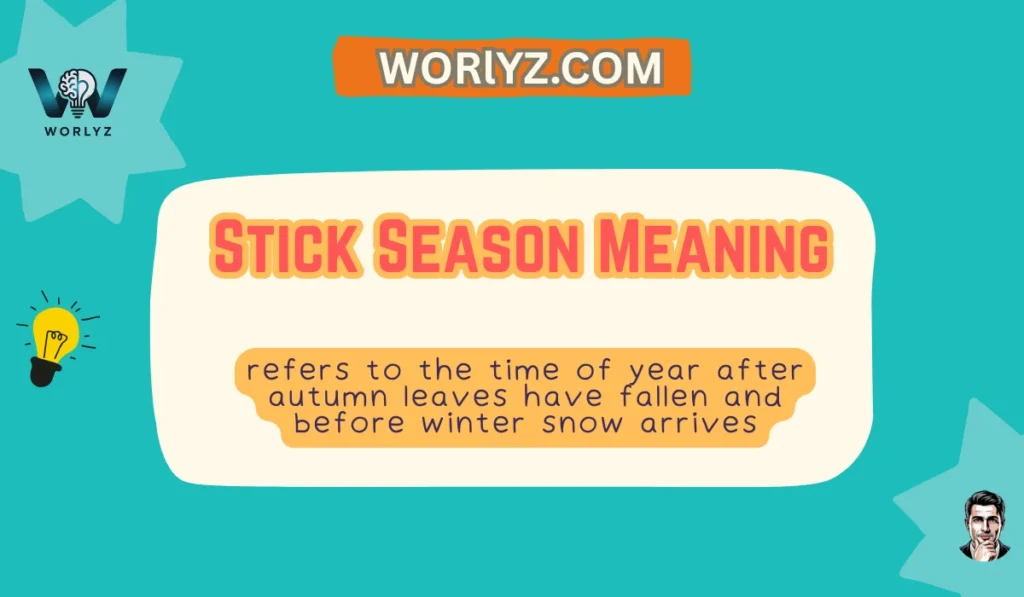
Stick season refers to the time of year after autumn leaves have fallen and before winter snow arrives, when trees are bare and only sticks or branches remain. The landscape looks empty, gray, and quiet during this period.
In modern usage, stick season can also describe an emotional or mental state, often connected to feeling stuck, lonely, or in between phases of life.
Origin of the Term
The term stick season originally comes from rural and cold-climate regions, especially in parts of the northeastern United States. After fall foliage disappears, trees lose their visual beauty, leaving only branches or sticks behind.
This period was traditionally seen as dull and unattractive compared to colorful autumn or snowy winter.
Stick Season as a Seasonal Term
Stick Season in Nature
In its literal sense, stick season describes a visual phase of the natural cycle.
Characteristics include:
- Bare trees with no leaves
- Gray or brown landscapes
- Cold but snowless weather
- Shorter daylight hours
Many people consider this the least visually appealing time of year.
Why Stick Season Feels Different
Stick season often feels slow and quiet. Outdoor activities are limited, and the environment lacks the energy of other seasons. This physical stillness contributes to the emotional meaning that developed later.
Stick Season Meaning in Modern Language
Stick Season as an Emotional State
Beyond nature, stick season is now used metaphorically to describe a period of emotional emptiness or transition.
It can mean:
- Feeling stuck or unmotivated
- Being in between life phases
- Experiencing emotional dullness
- Waiting for change or clarity
Example:
I feel like I am in my stick season right now.
Stick Season in Music and Pop Culture
The phrase gained widespread popularity through music, especially in songs that connect stick season to themes of loneliness, nostalgia, and self-reflection.
In these contexts, stick season represents:
- Emotional isolation
- Quiet self-awareness
- Unresolved feelings
This usage resonates strongly with younger audiences.
Stick Season Meaning in Simple Language
In everyday terms, stick season can mean:
- A dull time of year
- A period of emotional pause
- Feeling empty but not finished
- Being between better moments
The phrase often carries a calm but slightly heavy tone.
Examples of Stick Season in Conversations
Seasonal Example
Stick season makes everything look so gray before the snow comes.
Emotional Example
After graduation, I felt like I was in stick season.
Social Media Example
Stick season vibes lately, just trying to get through it.
Reflective Example
Stick season teaches patience before things bloom again.
These examples show how the phrase works in both literal and emotional contexts.
Stick Season Compared to Similar Phrases
Understanding stick season becomes clearer when compared with related expressions.
| Phrase | Meaning | Key Difference |
|---|---|---|
| Stick season | Bare, in-between phase | Neutral and reflective |
| Winter blues | Seasonal sadness | More emotional heaviness |
| Burnout | Mental exhaustion | Work or stress related |
| Transition phase | Period of change | More neutral and formal |
| Waiting period | Pause before change | Less emotional depth |
Stick season often feels quieter and more reflective than negative.
Why Stick Season Resonates With People
Stick season connects deeply with human experience. Many people relate to feeling stuck between:
- Past achievements and future goals
- Emotional highs and lows
- Stability and change
The phrase feels honest because it does not rush growth. It acknowledges stillness.
Stick Season in Mental and Emotional Awareness
Stick season is often used in self-reflection conversations. It helps people describe emotions without labeling them as failure or depression.
In this sense, stick season represents:
- Emotional rest
- Self-observation
- Preparation for change
It reminds people that growth does not always look active.
Common Mistakes or Misunderstandings
Thinking Stick Season Only Refers to Weather
While it started as a seasonal term, modern usage is often emotional or symbolic.
Assuming Stick Season Is Always Negative
Stick season can feel quiet, but it is not always sad. It can be peaceful or necessary.
Using Stick Season Too Literally in Emotional Contexts
The phrase works best when used thoughtfully rather than as a joke.
Stick Season in Writing and Expression
Stick season is commonly used in:
- Song lyrics
- Personal essays
- Poetry
- Reflective captions
Writers use it to express stillness, uncertainty, or emotional honesty.
Related Words and Expressions
When learning the stick season meaning, you may also encounter:
- In-between phase
- Emotional limbo
- Quiet season
- Pause in life
- Transitional period
Each phrase shares a similar idea but carries a different tone.
FAQs:
What does stick season mean in simple words?
Stick season means a quiet, bare time, either in nature or emotionally, when things feel empty or in between.
Is stick season a real season?
Stick season is not an official season but a term used to describe the period between fall and winter.
Why do people use stick season emotionally?
People use it to describe feeling stuck, reflective, or waiting for change without forcing positivity.
Is stick season a negative phrase?
Not always. It can be neutral or even peaceful, depending on how it is used.
Where did stick season become popular?
The phrase became more popular through music, social media, and personal storytelling.
Conclusion:
The stick season meaning goes beyond bare trees and gray landscapes. It describes a moment of pause, transition, and emotional stillness that many people experience in life. Whether used literally or metaphorically, stick season captures a feeling of waiting without rushing change.
By understanding how stick season works in both nature and emotion, you can use the phrase more accurately and connect with its deeper meaning in conversations, writing, and self-reflection.

John is the founder and primary content creator of Worlyz. He has a strong passion for explaining word meanings, language concepts, slang terms, and educational topics in a clear and simple way. John focuses on creating well researched, reader friendly content that helps users easily understand complex words and ideas. Through Worlyz, his goal is to make learning meanings and concepts straightforward and accessible for everyone.