The word misanthropic is often used to describe a certain type of personality or attitude, especially in conversations about human behavior, emotions, and social interaction. You might see it in books, movies, or even online discussions where someone talks about avoiding people or losing trust in society. Understanding the misanthropic meaning helps you use the word correctly and recognize when it applies in real-life situations.
Although it may sound complex, misanthropic simply describes a mindset toward people. This article breaks down the meaning in a clear, relatable way, along with examples, comparisons, and common misunderstandings.
What Does Misanthropic Mean
Definition
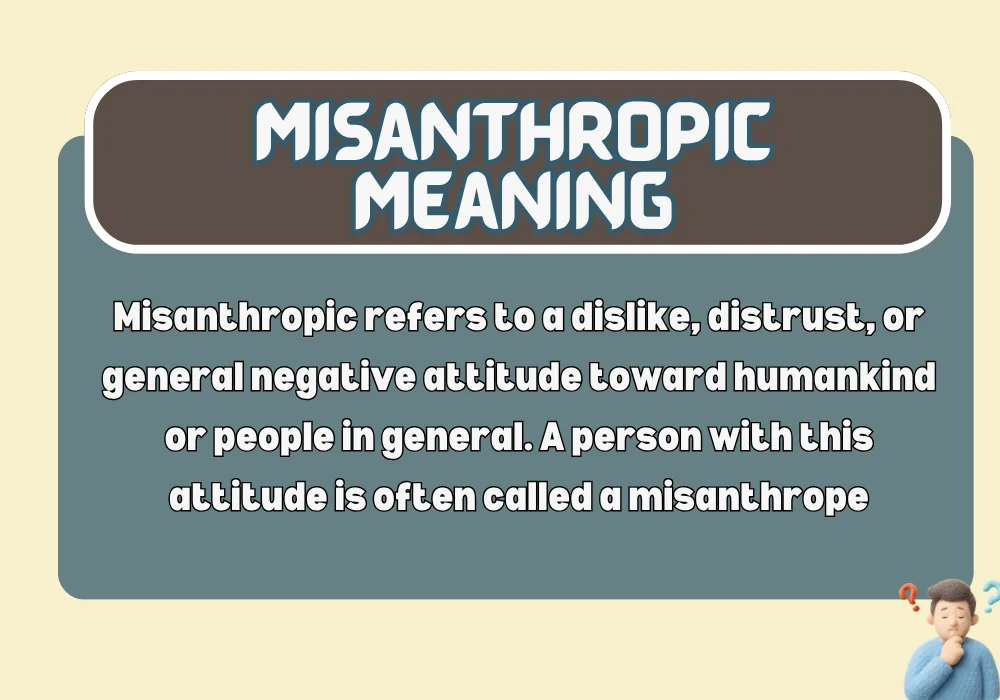
Misanthropic refers to a dislike, distrust, or general negative attitude toward humankind or people in general. A person with this attitude is often called a misanthrope.
In simple terms, being misanthropic means not liking people or feeling disconnected from society.
Origin and Background
The word misanthropic comes from Greek roots:
- misos meaning hatred
- anthropos meaning human
Together, the term literally means hatred of humans. Over time, its meaning softened slightly and now often refers to strong dislike or distrust rather than extreme hatred.
Different Meanings of Misanthropic Based on Context
Misanthropic as a Personality Trait
When used to describe a person, misanthropic refers to someone who:
- Prefers being alone
- Avoids social interaction
- Feels skeptical about people’s intentions
Example:
He has a misanthropic attitude and rarely attends social gatherings.
Misanthropic in Emotional or Psychological Context
Misanthropic feelings can sometimes develop due to:
- Negative life experiences
- Betrayal or disappointment
- Social exhaustion
In this sense, the attitude may not be permanent but rather a response to certain situations.
Misanthropic in Literature and Media
In books and movies, misanthropic characters are often portrayed as:
- Intelligent but withdrawn
- Critical of society
- Observant but distant
These characters are not always negative; sometimes they are shown as deep thinkers.
Misanthropic Meaning in Simple Language
In everyday language, misanthropic can mean:
- Not liking people much
- Feeling disconnected from society
- Avoiding social interaction
- Distrusting others easily
It does not always mean extreme hatred, but rather a strong preference for distance from people.
Examples of Misanthropic in Conversations
Casual Conversation Example
After years of bad experiences, he became more misanthropic.
Social Media Example
Sometimes I feel a bit misanthropic after reading too many negative comments online.
Descriptive Example
The character in the story is misanthropic but still cares deep down.
These examples show how the word is used in real-life situations.
Misanthropic Compared to Similar Words
Understanding misanthropic becomes easier when compared with related terms.
| Word | Meaning | Key Difference |
|---|---|---|
| Misanthropic | Dislike or distrust of people | Broad and general |
| Introvert | Prefers solitude | Not negative toward people |
| Cynical | Distrusts motives of others | Focus on skepticism |
| Antisocial | Avoids social interaction | Behavioral focus |
| Reserved | Quiet and private | Neutral personality trait |
Misanthropic is stronger than introversion because it includes negative feelings toward people.
Psychological and Social Perspective
Misanthropic attitudes can develop for different reasons. Some people become misanthropic due to repeated disappointments or negative interactions. Others may simply prefer solitude and independence.
It is important to understand that:
- Not all quiet people are misanthropic
- Misanthropy can vary in intensity
- Some people move in and out of this mindset
In many cases, it reflects a protective emotional response rather than permanent personality.
Misanthropic in Modern Culture
In today’s digital world, misanthropic feelings can sometimes increase due to:
- Social media negativity
- Online arguments
- Exposure to constant criticism
At the same time, the word is often used humorously in memes and casual posts.
Example:
Feeling misanthropic after scrolling too long
Common Mistakes or Misunderstandings
Thinking Misanthropic Means Hating Everyone Completely
Misanthropic usually means strong dislike or distrust, not absolute hatred.
Confusing Misanthropic With Introverted
Introverts enjoy alone time but do not necessarily dislike people.
Using It Too Casually
Misanthropic is a strong word and should be used carefully in conversation.
Misanthropic in Daily Life Situations
You might notice misanthropic behavior when someone:
- Avoids group activities
- Shows distrust in people’s intentions
- Prefers isolation over interaction
- Expresses negative views about society
However, context always matters before labeling someone this way.
Related Words and Concepts
When learning the misanthropic meaning, you may also come across:
- Misanthrope
- Cynicism
- Social withdrawal
- Isolation
- Detachment
These terms are connected but not identical.
FAQs:
What does misanthropic mean in simple words?
Misanthropic means having a dislike or distrust of people or society.
Is being misanthropic the same as being introverted?
No, introversion is about preferring solitude, while misanthropy involves negative feelings toward people.
Can misanthropic feelings change over time?
Yes, these feelings can change depending on experiences and personal growth.
Is misanthropic always negative?
It is generally seen as negative, but sometimes it reflects deep thinking or emotional protection.
What is a misanthrope?
A misanthrope is a person who has a strong dislike or distrust of people.
Conclusion:
The misanthropic meaning centers around a negative or distant attitude toward people and society. While the word may sound extreme, it often describes a range of feelings from mild distrust to strong dislike.
Understanding this term helps you use it correctly and recognize when it applies in real-life situations. Like many personality-related words, misanthropic depends on context and should be used thoughtfully.

John is the founder and primary content creator of Worlyz. He has a strong passion for explaining word meanings, language concepts, slang terms, and educational topics in a clear and simple way. John focuses on creating well researched, reader friendly content that helps users easily understand complex words and ideas. Through Worlyz, his goal is to make learning meanings and concepts straightforward and accessible for everyone.