The word mot might look simple, but it carries multiple meanings depending on the context. From casual conversation to literature, music, and professional settings, understanding the mot meaning helps you interpret messages correctly and use the word naturally.
Mot is a term that has been in use for centuries, primarily in English and French, and can describe humor, animals, or even short witty expressions. Its versatility makes it a word worth understanding in depth.
What Does Mot Mean
Definition
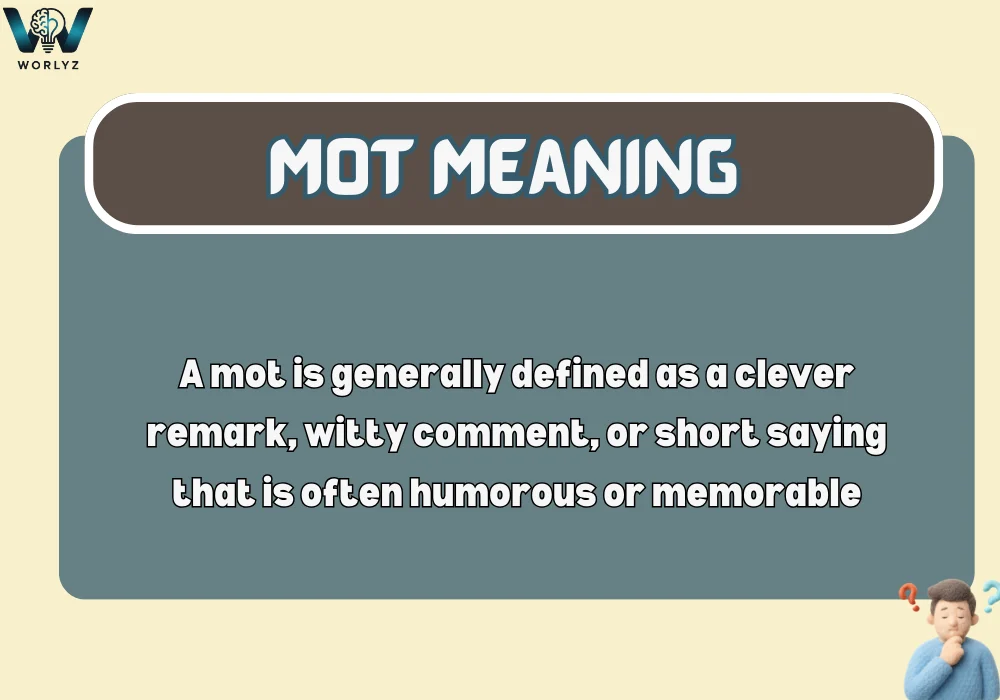
A mot is generally defined as a clever remark, witty comment, or short saying that is often humorous or memorable.
In everyday terms, it refers to something people say that is smart, funny, or sharp — often leaving a lasting impression.
Other common uses of mot include:
- A brief comment or statement
- A pithy or memorable expression
- Historical or literary references to witty sayings
Origin and Background
The word mot comes from the French language, where it simply means “word.” It was adopted into English in the 18th century to describe a witty or clever remark, often used in social gatherings or literature.
Historically, people valued witty expressions in conversation, and a well-timed mot could impress an audience or lighten a tense discussion.
Different Meanings of Mot Based on Context
Mot as a Witty Remark
In literature, speeches, or conversation, a mot is a short, clever, or humorous statement designed to entertain or make a point.
Examples:
- “He opened the meeting with a clever mot that made everyone laugh.”
- “Her mot about office politics was exactly what we needed.”
Mot in Literature and Media
Authors and playwrights often use mots to convey intelligence, humor, or character personality. In this context, a mot is less casual and more polished.
Example:
- Oscar Wilde was known for his memorable mots, full of wit and irony.
Mot as a Short Saying or Aphorism
Sometimes mot refers to a concise statement that expresses an idea or truth in a clever way. These are often used in essays, motivational quotes, or speeches.
Example:
- “A stitch in time saves nine” could be considered a mot in its clever brevity.
Mot in Animal Context (French Use)
In French, mot literally means “word” but can also appear in idiomatic expressions about speech, animals, or phrases. For example, mot du jour literally means “word of the day,” used in teaching and learning contexts.
Mot Meaning in Simple Language
In modern and everyday language, mot can mean:
- A clever or humorous remark
- A short witty expression
- A memorable comment that makes people think or laugh
Mots are often used to lighten conversation or highlight intelligence and humor.
Examples of Mot in Conversations
Casual Conversation Example
He ended the argument with a quick mot that left everyone laughing.
Literary Example
The author’s latest book is full of witty mots about city life.
Professional or Academic Example
During the seminar, she offered a mot that perfectly summarized the topic.
These examples show how mot can appear in casual, literary, or professional settings.
Mot Compared to Similar Words
Understanding mot is easier when compared to related terms.
| Word | Meaning | Key Difference |
|---|---|---|
| Mot | Clever remark or witty comment | Short, often humorous |
| Quip | Quick, funny remark | More spontaneous and casual |
| Aphorism | Short saying with a truth | Usually serious or philosophical |
| Joke | Story or comment meant to amuse | Focused entirely on humor |
| Bon mot | Literally “good word” | Sophisticated or elegant wit |
Mot is often used in sophisticated or literary contexts, while quip and joke are more casual.
Cultural and Historical Significance of Mot
Mots have played an important role in literature and social interaction for centuries:
- They showcase intelligence and wit
- They reflect cultural trends in humor
- They help speakers or writers make memorable points
Many famous authors, including Oscar Wilde, Dorothy Parker, and Mark Twain, used mots as a signature style in their works.
Common Mistakes or Misunderstandings
Confusing Mot With Ordinary Words
A mot is not just any word; it is a clever or witty remark.
Thinking Mot Only Appears in Literature
While common in literature, mots are also used in casual speech and social media today.
Using Mot Interchangeably With Joke
A joke often involves a story, while a mot is short, sharp, and clever.
Related Words and Expressions
When learning the mot meaning, you may also encounter:
- Bon mot (a witty or clever remark)
- Quip (a brief humorous comment)
- Pun (a play on words)
- Aphorism (a concise truth or insight)
- Wordplay (clever use of language)
These words share the idea of brevity and cleverness but vary in tone, style, and context.
FAQs:
What does mot mean in simple words?
Mot means a short, clever, or witty remark that is often humorous or memorable.
Is mot the same as a joke?
Not exactly. A mot is shorter, sharper, and clever, while a joke usually involves a story or longer setup.
Where did the word mot come from?
Mot comes from French, meaning “word,” and was adopted in English to describe witty remarks.
Can mot be used in casual conversation?
Yes, you can use a mot in social settings, but it is often more sophisticated than a typical quip.
What is a bon mot?
A bon mot is a refined or elegant mot, often used in literature or formal conversation.
Conclusion:
The mot meaning highlights the power of words in their briefest and most impactful form. A mot is more than just a comment; it is a clever, witty, and memorable statement that can entertain, impress, or illuminate a point.
Understanding mots allows you to appreciate literary works, social interactions, and casual conversation more deeply. Whether in writing or speaking, using a well-placed mot can make your words stand out and leave a lasting impression.

John is the founder and primary content creator of Worlyz. He has a strong passion for explaining word meanings, language concepts, slang terms, and educational topics in a clear and simple way. John focuses on creating well researched, reader friendly content that helps users easily understand complex words and ideas. Through Worlyz, his goal is to make learning meanings and concepts straightforward and accessible for everyone.