The word cabrones is a Spanish term that has made its way into English conversations, pop culture, music, and online discussions. Depending on context, it can be playful, insulting, or emphatic, which makes understanding the cabrones meaning very important if you encounter it in casual speech, social media, or entertainment.
Although it can sound harsh at first, cabrones is versatile. It can be used to refer to friends in a joking manner, criticize someone strongly, or express surprise. This article explores all aspects of the word, its origins, usage, examples, and cultural significance.
What Does Cabrones Mean
Definition
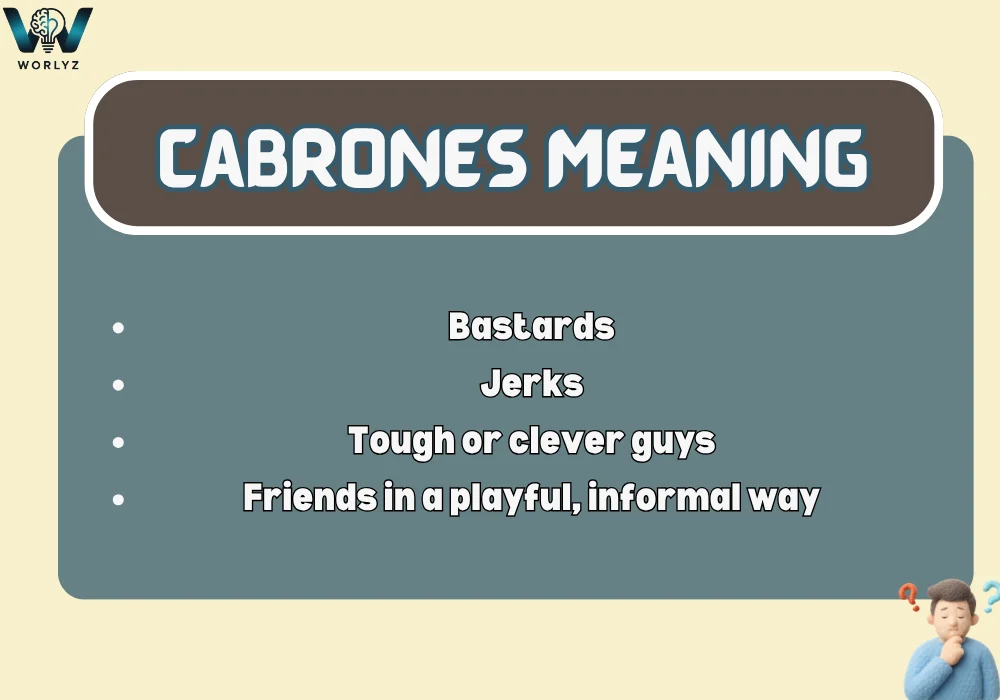
Cabrones is the plural form of cabrón in Spanish. Its literal meaning refers to a male goat, but in slang, it generally translates to:
- Bastards
- Jerks
- Tough or clever guys
- Friends in a playful, informal way
Its tone depends entirely on the context and relationship between the speaker and the audience.
Origin and Background
The word cabrón comes from the Spanish word cabra, meaning goat. Historically, it was a literal term for the animal but evolved in Spanish-speaking cultures into a slang word with multiple interpretations. Over time:
- Negative use: Insults or strong criticism
- Positive use: Praise among friends, implying toughness or cleverness
- Neutral use: Surprise, frustration, or emphasis
The plural form, cabrones, is used when referring to more than one person.
Different Meanings of Cabrones Based on Context
Negative or Insulting Meaning
In many cases, cabrones is used as an insult, similar to saying bastards, jerks, or scoundrels in English.
Examples:
- Esos cabrones me engañaron (Those bastards tricked me)
- ¡Qué cabrones tan molestos! (What annoying jerks!)
In these cases, the tone is clearly negative and should not be used casually with strangers.
Positive or Playful Meaning
Among friends or close acquaintances, cabrones can be used in a joking, friendly way, often implying admiration or camaraderie.
Examples:
- ¡Vamos, cabrones! (Let’s go, guys!)
- Esos cabrones ganaron el juego. (Those clever guys won the game.)
In this sense, the word is affectionate and informal.
Expressive or Emphatic Meaning
Cabrones can also be used to express surprise, frustration, or emphasis without being directed at anyone specifically.
Examples:
- ¡Cabrones, esto es increíble! (Guys, this is amazing!)
- ¡Malditos cabrones, casi lo rompemos! (Damn it, we almost broke it!)
This usage is common in informal conversation and online messages.
Cabrones Meaning in Simple Everyday Language
In simple terms, cabrones can mean:
- Bastards or jerks (insulting)
- Tough or clever guys (friendly)
- Guys or people in general (emphatic)
The meaning depends entirely on tone, context, and relationship.
Examples of Cabrones in Conversations
Casual Conversation Example
Esos cabrones siempre llegan tarde (Those jerks always arrive late)
Friendly Context Example
¡Vamos, cabrones, a la playa! (Let’s go, guys, to the beach!)
Social Media Example
¡Cabrones, este video es increíble! (Guys, this video is amazing!)
Cultural or Music Context
In Latin music, cabrones is often used in lyrics to convey toughness, attitude, or camaraderie.
Cabrones Compared to Similar Words
Understanding cabrones is easier when compared with related Spanish slang words:
| Word | Meaning | Key Difference |
|---|---|---|
| Cabrones | Bastards, clever guys, friends | Context-dependent; plural form |
| Cabrón | Singular form of cabrones | Same meanings for one person |
| Hijos de puta | Sons of bitches | Stronger, more offensive |
| Amigos | Friends | Positive and neutral |
| Tíos | Guys / dudes | Casual, friendly, neutral |
Cabrones is unique because its tone can shift from insult to praise depending on context.
Common Mistakes or Misunderstandings
Using Cabrones with Strangers
Cabrones can be extremely offensive if used with people you do not know. Always be cautious with tone.
Confusing Cabrones With Only Negative Meaning
While cabrones can insult, it also has playful and positive uses among friends.
Overusing Cabrones in Formal Writing
The word is highly informal and should not appear in professional or formal contexts.
Cultural Significance of Cabrones
Cabrones is common in:
- Latin American and Spanish pop culture
- Music lyrics, especially in reggaeton, rap, and rock
- Movies and TV shows
- Informal online chats
Its meaning often reflects humor, toughness, rebellion, or camaraderie, which is why it is so versatile.
Related Words and Expressions
When learning cabrones, you may also encounter:
- Cabrón (singular form)
- Malditos (damned)
- Tíos (guys / dudes)
- Hijos de puta (strong insult)
- Chicos (guys / friends)
These words are context-dependent and can range from affectionate to offensive.
FAQs:
What does cabrones mean in simple words?
Cabrones is a Spanish word that can mean bastards, jerks, or guys, depending on tone and context.
Is cabrones always insulting?
No, it can be playful or affectionate among friends, but it can also be an insult depending on how it is used.
What is the singular form of cabrones?
The singular form is cabrón, used to refer to one person.
Can cabrones be used in music or pop culture?
Yes, cabrones appears in many Latin songs and movies to convey attitude, camaraderie, or toughness.
Is cabrones appropriate in formal situations?
No, cabrones is highly informal and should not be used in professional or formal settings.
Conclusion:
The cabrones meaning is versatile and context-dependent. It can be an insult, a playful term among friends, or a way to express emphasis and excitement. Understanding tone, relationship, and context is key to using the word correctly.
Cabrones reflects cultural nuances in Spanish-speaking communities, showing how a single word can carry humor, toughness, camaraderie, and attitude. Knowing when and how to use cabrones allows you to communicate naturally in casual conversations, music, or social media while avoiding misunderstandings.
It’s a word that combines history, slang, and culture into a single expressive term.

John is the founder and primary content creator of Worlyz. He has a strong passion for explaining word meanings, language concepts, slang terms, and educational topics in a clear and simple way. John focuses on creating well researched, reader friendly content that helps users easily understand complex words and ideas. Through Worlyz, his goal is to make learning meanings and concepts straightforward and accessible for everyone.