The word bard is a term you might have come across in literature, history, movies, or even modern gaming and fantasy contexts. While it may seem old-fashioned at first glance, understanding the bard meaning reveals a rich cultural and historical significance. Knowing this meaning helps you appreciate stories, music, and even role-playing games where bards often appear as central figures.
Bards are more than just poets—they are storytellers, historians, musicians, and preservers of culture. This article explains the word in depth, including its origins, historical and modern usage, and cultural impact.
What Does Bard Mean
Definition
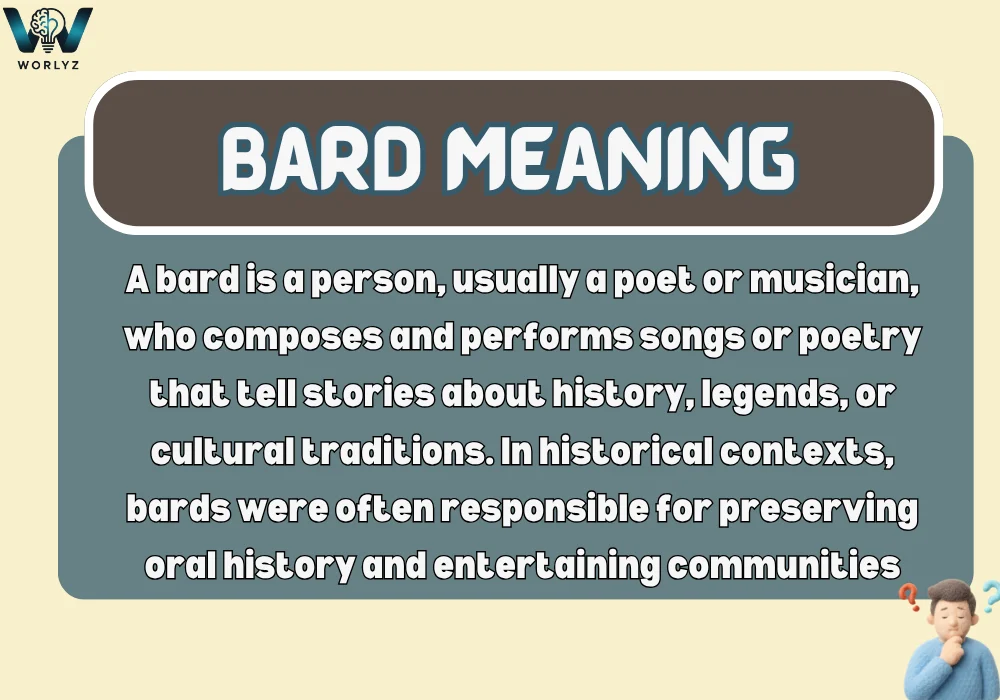
A bard is a person, usually a poet or musician, who composes and performs songs or poetry that tell stories about history, legends, or cultural traditions. In historical contexts, bards were often responsible for preserving oral history and entertaining communities.
In simple terms, a bard is:
- A storyteller
- A musician or poet
- A preserver of culture
Origin and Historical Background
The word bard comes from the Celtic word bardos, which referred to poets and singers in ancient Celtic societies. These bards played a vital role in:
- Preserving history orally
- Celebrating heroes and significant events
- Entertaining kings, warriors, and communities
Bards were highly respected and sometimes held positions of influence because their words could inspire, inform, and entertain entire communities.
Different Meanings of Bard Based on Context
Bard in Historical Context
Historically, bards were found mainly in Celtic regions such as Ireland, Scotland, and Wales. They were professional poets who:
- Composed epic poems about kings and heroes
- Sang songs of victory, love, and mythology
- Served as historians and storytellers in courts
Example:
The bard recited a poem celebrating the warrior’s bravery.
Bard in Literature
In literature, bard is often used to describe a poet or literary figure. The most famous reference is William Shakespeare, often called the Bard of Avon, highlighting his exceptional contributions to poetry and drama.
Literary usage of bard conveys respect for storytelling, artistry, and cultural preservation.
Bard in Modern Fantasy and Role-Playing Games
In modern fantasy games like Dungeons & Dragons or video games, bards are characters who use music, magic, and storytelling to:
- Support allies in battle
- Inspire courage
- Influence events through charm and creativity
This modern adaptation draws from historical and literary roots but adds imaginative elements like magic and adventure.
Bard as a Cultural Symbol
Bards symbolize the power of words, music, and storytelling. They remind us that history, culture, and morality can be passed down not only in writing but also through performance and oral tradition.
Example:
Folk musicians today are often seen as modern bards preserving cultural songs and stories.
Bard Meaning in Simple Language
In everyday language, a bard is:
- A poet who tells stories
- A singer or musician
- Someone who preserves history or culture through performance
Whether in history, literature, or games, the essence of a bard is storytelling through music or poetry.
Bard meaning in fantasy
Fantasy Definition
In fantasy stories, a bard is a traveling storyteller, poet, and performer who uses music and words to influence people.
Common Traits
- Sings songs and tells stories
- Inspires heroes or armies
- Sometimes has magical abilities through music
- Acts as a messenger of news and legends
Famous Fantasy Role
Bards are often seen in medieval-style fantasy worlds as charming, witty, and highly intelligent characters.
Bard of Blood meaning
Overview
“Bard of Blood” is the title of an Indian spy thriller series based on a novel.
Meaning Breakdown
- Bard = storyteller or poet (symbolic usage)
- Blood = violence, war, and espionage
Overall Meaning
The title suggests a story where a “storyteller of violence” or someone connected to dangerous missions reveals hidden truths about war, politics, and spying.
Bard meaning in law
Legal Context
In law, “bard” is not a commonly used technical term. However, it can sometimes appear in older or literary legal writing referring to poets or speakers.
Indirect Meaning
- Historically, bards were oral historians
- They preserved laws, traditions, and stories through poetry
Key Point
Today, the term is not used in modern legal practice, but it may appear in historical or cultural references.
Bard meaning slang
Modern Slang Usage
In slang, “bard” is rarely used, but when it is, it usually refers to:
- A person who is very talkative or poetic
- Someone who exaggerates stories in a dramatic way
- A humorous way to call someone a “storyteller”
Tone
- Often playful or ironic
- Not widely used in everyday modern slang
Bard meaning DnD
Dungeons & Dragons Role
In Dungeons & Dragons (D&D), a bard is a playable class that uses music, speech, and performance as magical tools.
Key Abilities
- Uses spells through music or poetry
- Buffs allies with inspiration
- Charms or confuses enemies
- Skilled in multiple talents (jack of all trades)
Character Style
- Charismatic
- Creative
- Social and persuasive
Bard meaning music
Musical Definition
In music history, a bard is a poet-singer or musician who performs songs, often telling stories of heroes, history, or emotions.
Traditional Role
- Performed in royal courts or public gatherings
- Passed down history through songs
- Used instruments like harp or lute
Key Idea
A bard is essentially an early form of a singer-songwriter and storyteller combined.
Examples of Bard in Conversations
Casual Conversation Example
He’s like a bard, always telling stories and playing the guitar.
Literature Context Example
Shakespeare is often referred to as the Bard of Avon.
Fantasy/Game Example
In our D&D campaign, I chose to play a bard because I love inspiring the team with songs.
Cultural Example
The folk singer acted as a modern-day bard, keeping old stories alive through music.
Bard Compared to Similar Words
Understanding bard becomes easier when compared with related terms:
| Word | Meaning | Key Difference |
|---|---|---|
| Bard | Poet or storyteller | Often historical or musical |
| Poet | Writes verses | Focus on writing, not always performance |
| Minstrel | Traveling musician | Less focused on storytelling |
| Troubadour | Medieval poet/musician | Romantic or courtly focus |
| Storyteller | Narrator of events | Can be verbal or written, no music implied |
Bards stand out because they often combine storytelling with music and cultural preservation.
Bard in Modern Usage
The concept of a bard is still alive in modern culture. Bards appear in:
- Folk music and traditional storytelling
- Video games and role-playing games
- Literature and poetry
- Movies and TV shows set in historical or fantasy settings
Modern bards often blend music, poetry, and performance to entertain and inspire audiences, just like their historical counterparts.
Common Mistakes or Misunderstandings
Assuming Bard Is Only an Old-Fashioned Term
While historically rooted, bard is still relevant in modern games, literature, and music.
Confusing Bard With Just a Musician
A bard does more than play music—they tell stories, preserve culture, and sometimes influence social events.
Thinking Bard Is Gender-Specific
Bards can be of any gender; the word refers to the role, not the person’s gender.
Related Words and Concepts
When learning the bard meaning, you may also encounter:
- Minstrel
- Troubadour
- Poet
- Storyteller
- Chronicler
These words overlap with bard but each emphasizes slightly different aspects like travel, romance, or written versus oral storytelling.
FAQs:
What does bard mean in simple words?
A bard is a poet, musician, or storyteller who shares history, legends, and culture through words and songs.
Why is Shakespeare called a bard?
Shakespeare is called the Bard of Avon because he is one of history’s greatest poets and storytellers.
Can a bard exist today?
Yes, modern musicians, folk singers, and storytellers often fulfill the role of a bard.
What is the difference between a bard and a minstrel?
A bard tells stories through music and poetry and preserves culture, while a minstrel mainly entertains with songs and travel performances.
Are bards only found in fantasy or history?
No, bards exist historically, in literature, in cultural traditions, and as characters in modern games and stories.
Conclusion:
The bard meaning reflects the power of storytelling, music, and cultural preservation. From ancient Celtic poets to Shakespeare and modern musicians or game characters, bards have inspired, entertained, and informed people for centuries.
Understanding bards helps us appreciate the role of music and stories in history, culture, and entertainment. Whether in a historical court, a modern folk festival, or a fantasy game, the essence of a bard remains the same: to tell stories, inspire emotions, and connect people through words and song.
Bards remind us that storytelling is timeless, and music is one of the most powerful ways to share culture and history.

John is the founder and primary content creator of Worlyz. He has a strong passion for explaining word meanings, language concepts, slang terms, and educational topics in a clear and simple way. John focuses on creating well researched, reader friendly content that helps users easily understand complex words and ideas. Through Worlyz, his goal is to make learning meanings and concepts straightforward and accessible for everyone.