The term shallow person is commonly used in social conversations, psychology, and personal reflections. While it sounds simple, its meaning is deeper than just “not serious” or “surface-level.” Understanding the shallow person meaning helps you identify certain behaviors, communicate more effectively, and navigate relationships with awareness.
From everyday interactions to professional settings, media, and self-awareness discussions, knowing what it means to be a shallow person allows you to recognize traits, avoid misunderstandings, and reflect on personal growth.
What Does Shallow Person Mean
Definition
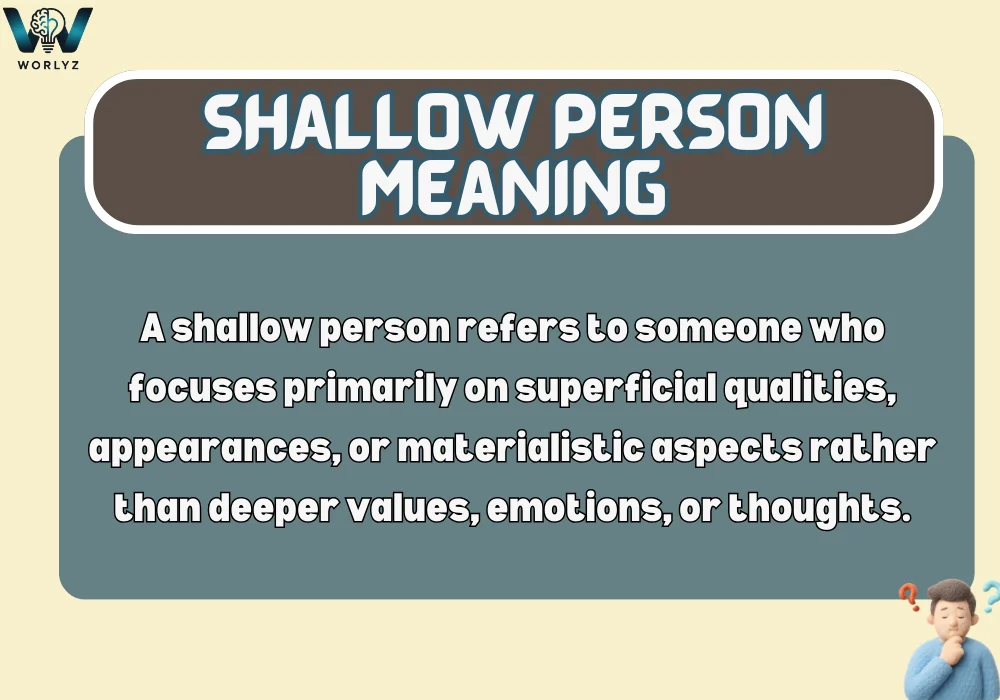
A shallow person refers to someone who focuses primarily on superficial qualities, appearances, or materialistic aspects rather than deeper values, emotions, or thoughts. They often prioritize looks, status, or popularity over character, empathy, or meaningful connections.
In simple terms, a shallow person is more concerned with the surface than the substance.
Origin and Background
The word “shallow” comes from the Old English scealu, meaning “not deep.” Originally, it described water that is low or lacks depth. Over time, the word began to describe people, thoughts, and emotions that lack depth, complexity, or substance.
Thus, calling someone a shallow person is metaphorical, comparing their inner character to shallow water: easily disturbed and lacking profound substance.
Characteristics of a Shallow Person
A shallow person typically shows the following traits:
- Focus on appearances: Prioritizes looks, fashion, or style over personality.
- Materialistic tendencies: Values possessions, wealth, and social status above inner qualities.
- Lack of empathy: Struggles to understand or care about others’ emotions.
- Superficial conversations: Prefers small talk and avoids meaningful topics.
- Easily impressed: Reacts strongly to external displays of success or beauty.
Recognizing these traits can help you navigate relationships and social situations more effectively.
Shallow Person Meaning in Social Context
In Friendships and Relationships
A shallow person in friendships or romantic relationships may:
- Value looks over personality
- Focus on status or social connections
- Avoid emotional depth or vulnerability
Example:
He seemed nice at first, but he’s really a shallow person who only talks about clothes and parties.
In Professional or Networking Situations
In work or networking, a shallow person may:
- Judge colleagues by appearance or title
- Avoid meaningful collaboration or feedback
- Focus more on recognition than contribution
Example:
The meeting revealed some shallow people who only care about titles, not teamwork.
Shallow in Social Media and Pop Culture
Social media often amplifies shallow behavior by valuing appearance, popularity, or viral content over genuine connection.
- Influencers focusing on looks rather than content
- Trending posts emphasizing lifestyle over values
- Shallow comments or superficial judgments online
This use reflects how “shallow” applies to modern digital culture.
Shallow minded person meaning
Simple Definition
A shallow-minded person is someone who does not think deeply about things. They usually focus only on the surface and avoid complex or meaningful ideas.
Key Characteristics
A shallow-minded person may:
- Care only about appearance or looks
- Avoid deep conversations
- Not think carefully before making decisions
- Be easily influenced by others
- Show little interest in learning or understanding more
Example
- Someone who judges others only by clothes or money, without knowing their personality, can be called shallow-minded.
Quick Insight
Being shallow-minded does not always mean a person is bad—it simply means they may not be used to thinking deeply or exploring ideas.
Shallow person meaning for kids
Easy Explanation
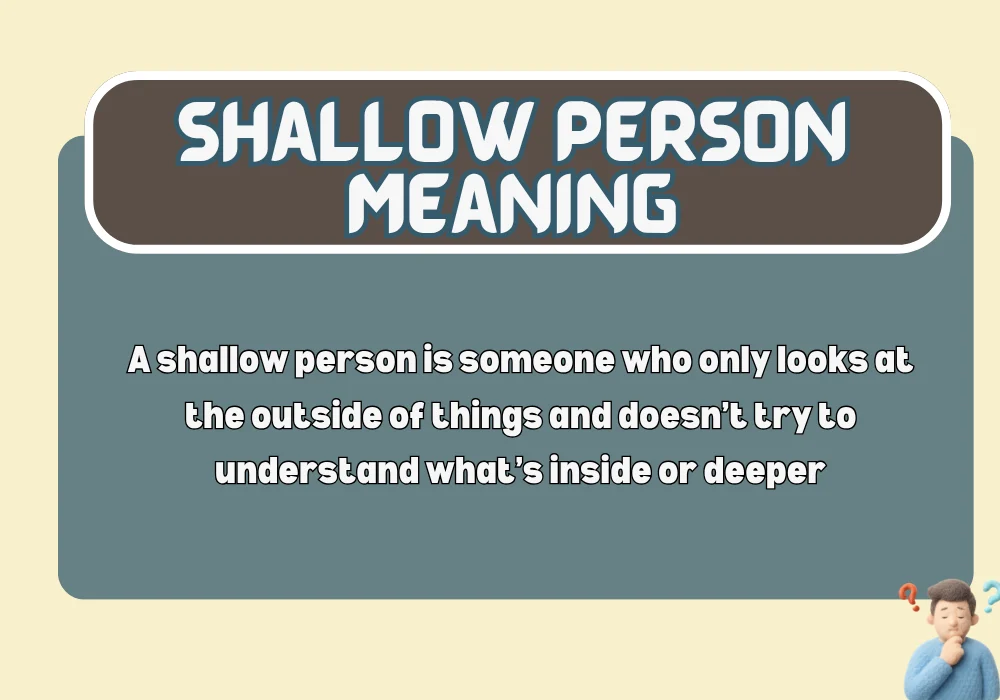
A shallow person is someone who only looks at the outside of things and doesn’t try to understand what’s inside or deeper.
Kid-Friendly Examples
- A child who only wants to play with toys because they look cool, not because they are fun
- Someone who chooses friends only based on appearance
Simple Points
- Focuses on looks, not feelings
- Doesn’t think very deeply
- Misses important details
Easy Sentence
- “He is being shallow because he only cares about how things look, not what they really are.”
Shallow woman meaning
Definition
A shallow woman is a woman who is mainly concerned with surface-level things such as appearance, status, or material items, rather than deeper qualities like personality, values, or emotions.
Common Traits
- Focus on beauty and outward image
- Interest in money, status, or popularity
- Limited interest in deep or meaningful topics
- May judge others quickly based on looks
Important Note
This term can sometimes be unfair or used negatively. It’s important to avoid judging people too quickly, as everyone has different priorities and perspectives.
Shallow person opposite
Opposite Meaning
The opposite of a shallow person is someone who thinks deeply and values meaningful ideas and emotions.
Words for the Opposite
- Deep thinker
- Thoughtful person
- Wise individual
- Insightful person
Traits of a Deep Person
- Thinks carefully before speaking
- Understands emotions and feelings
- Values knowledge and learning
- Looks beyond appearances
Example
- A person who listens carefully, understands others, and thinks deeply about life is the opposite of a shallow person.
Shallow Person Meaning in Simple Language
In everyday terms, a shallow person is someone who:
- Judges people mostly by how they look
- Cares more about things than feelings
- Avoids meaningful conversations
- Prefers short-term impressions over long-term depth
It’s not necessarily about intelligence—it’s about focus and priorities.
Examples of Shallow Person in Conversations
Everyday Conversation Example
She’s beautiful, but she’s kind of a shallow person; she never talks about serious things.
Workplace Context Example
He’s a shallow person who only cares about how his office looks and not his team’s performance.
Social Media Example
People criticize influencers for being shallow when they focus on trends instead of meaningful content.
Relationship Example
Dating someone shallow often leads to frustration because emotional needs are ignored.
Shallow Person Compared to Related Terms
Understanding a shallow person becomes easier when compared to similar concepts.
| Term | Meaning | Key Difference |
|---|---|---|
| Shallow person | Focuses on superficial aspects | Surface-level focus on people or things |
| Superficial | Lacking depth in thought or emotion | Often used to describe actions or conversations |
| Materialistic | Focuses on wealth and possessions | Not necessarily about personality depth |
| Self-absorbed | Focused on oneself | May or may not be shallow toward others |
| egotistical | Inflated self-importance | Includes a need for admiration; deeper psychological pattern |
Shallow behavior often overlaps with these traits but is specifically about lack of emotional or intellectual depth.
Why Understanding Shallow People Matters
Recognizing shallow behavior helps you:
- Choose meaningful friendships and relationships
- Avoid frustration in professional or social settings
- Reflect on your own priorities and depth of character
- Navigate social situations with clarity
It is also useful for self-awareness—ensuring you are not unintentionally shallow yourself.
Psychological and Social Implications
Being labeled as shallow is often negative because it suggests:
- Inability to connect deeply with others
- Prioritization of short-term impressions over long-term relationships
- Potential for social or emotional immaturity
However, some shallow behavior can be situational:
- Casual acquaintances may naturally be shallow
- Early-stage social interactions are often light and surface-level
The key is balance—being shallow is not inherently wrong, but persistent shallowness can limit personal growth and meaningful connections.
Common Mistakes or Misunderstandings
Assuming Shallow Means Unintelligent
Shallow people can be smart; the issue is what they focus on, not how smart they are.
Confusing Shallow With Rude
Being shallow is about lack of depth, not necessarily rudeness or ill intent.
Using Shallow Too Broadly
Not all lighthearted, fun, or appearance-focused behavior is shallow. Context matters.
Shallow Person in Media and Culture
The term is widely used in:
- Movies and TV shows to describe high-maintenance characters
- Books highlighting superficial social interactions
- Songs and lyrics critiquing superficiality
Popular culture often portrays shallow people as:
- Concerned with status, fashion, or gossip
- Lacking empathy or seriousness
- Focused on appearances over character
Related Words and Expressions
When learning about shallow people, you may also encounter:
- Superficial
- Frivolous
- Lightweight
- Surface-level
- Appearance-focused
These words all capture parts of what it means to be shallow.
FAQs:
What does a shallow person mean in simple words?
A shallow person is someone who cares more about appearances, status, or material things than about deeper feelings, thoughts, or values.
Can a shallow person be intelligent?
Yes, shallow people can be smart, but their focus is on surface-level things rather than substance.
Is shallow behavior always negative?
Not always. Situational shallowness is common, but persistent shallow behavior may limit meaningful relationships.
How can you identify a shallow person?
They often prioritize appearances, avoid deep conversations, and focus on material or social status over emotions and character.
Can someone change if they are shallow?
Yes, self-awareness and personal growth can help someone move beyond shallow behavior and develop deeper connections.
Conclusion:
The shallow person meaning reflects a focus on surface-level appearances, materialism, or short-term impressions rather than emotional, intellectual, or moral depth. Recognizing shallow behavior can help you navigate relationships, friendships, and social situations more effectively.
Understanding shallow people also allows for self-reflection, helping ensure your own actions and priorities are grounded in substance. While occasional shallow behavior is natural, cultivating depth in personality, empathy, and thought can strengthen connections and lead to more meaningful interactions.

John is the founder and primary content creator of Worlyz. He has a strong passion for explaining word meanings, language concepts, slang terms, and educational topics in a clear and simple way. John focuses on creating well researched, reader friendly content that helps users easily understand complex words and ideas. Through Worlyz, his goal is to make learning meanings and concepts straightforward and accessible for everyone.