The word impertinent is often used to describe behavior that feels rude, disrespectful, or out of place. You might hear it in conversations, read it in books, or see it used online when someone crosses a social boundary. Understanding the impertinent meaning helps you recognize tone, avoid misunderstandings, and use the word correctly in both formal and casual situations.
Although it sounds like a complex or formal word, impertinent is actually very practical and relatable once you break it down. It can describe speech, behavior, questions, or actions that do not match the situation or show a lack of respect.
What Does Impertinent Mean
Definition
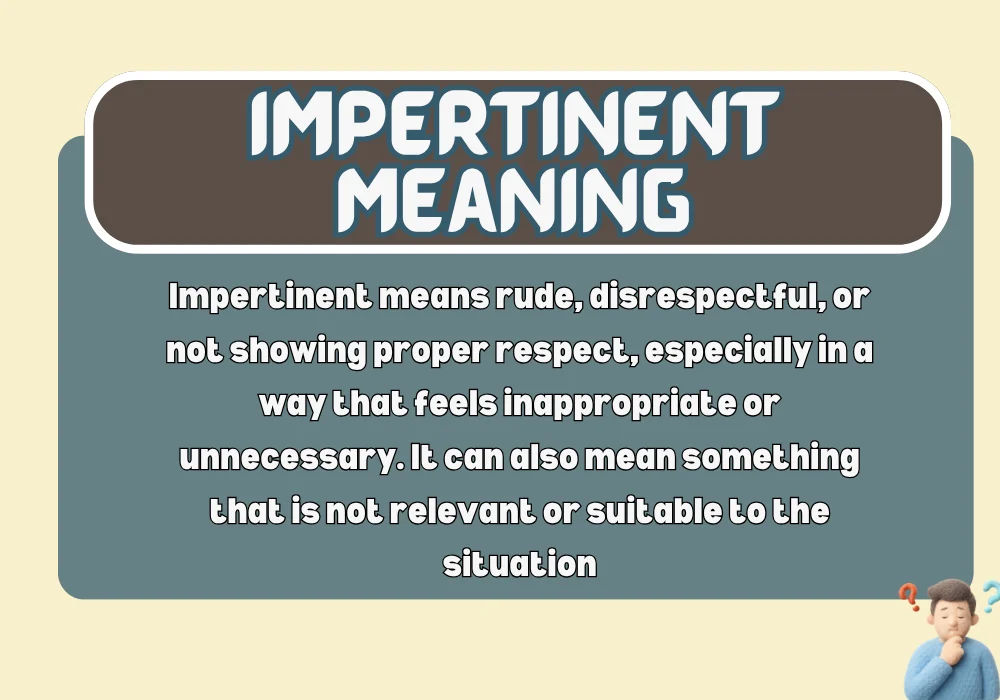
Impertinent means rude, disrespectful, or not showing proper respect, especially in a way that feels inappropriate or unnecessary. It can also mean something that is not relevant or suitable to the situation.
In simple terms, impertinent describes behavior that crosses the line of politeness.
Origin and Background
The word impertinent comes from the Latin word impertinens, which originally meant not relevant or not belonging. Over time, its meaning shifted to describe behavior that is inappropriate or disrespectful.
This explains why impertinent can still carry two meanings:
- Rude or disrespectful behavior
- Something not relevant to the topic
Different Meanings of Impertinent Based on Context
Impertinent as Rude Behavior
The most common use of impertinent describes someone acting in a disrespectful or cheeky way.
Examples:
- Asking overly personal questions
- Speaking to elders or authority figures rudely
- Interrupting in a disrespectful manner
Example sentence:
That was an impertinent comment to make in front of everyone.
Impertinent as Irrelevant or Out of Place
Impertinent can also describe something that does not relate to the situation or topic.
Examples:
- An impertinent question during a serious meeting
- Comments that do not match the discussion
In this sense, it means inappropriate rather than rude.
Impertinent Meaning in Simple Language
In everyday language, impertinent can mean:
- Disrespectful
- Too bold or rude
- Not appropriate for the situation
- Out of place or irrelevant
The meaning depends on tone and context.
Examples of Impertinent in Conversations
Social Situation Example
It was impertinent of him to ask about her salary.
Workplace Example
That comment felt impertinent during the meeting.
Casual Conversation Example
Stop being impertinent and listen carefully.
Relevance Example
That question is impertinent to our discussion.
These examples show how the word can describe both behavior and relevance.
Impertinent Compared to Similar Words
Understanding impertinent becomes easier when compared to similar terms.
| Word | Meaning | Key Difference |
|---|---|---|
| Impertinent | Rude or inappropriate | Can also mean irrelevant |
| Rude | Lacking manners | More general |
| Disrespectful | Showing lack of respect | Stronger tone |
| Cheeky | Slightly rude but playful | Often less serious |
| Irrelevant | Not related | No rudeness implied |
Impertinent often combines disrespect with inappropriateness.
When and Where Impertinent Is Commonly Used
Impertinent is more common in:
- Formal conversations
- Literature and books
- Workplace or professional discussions
- Situations involving respect and boundaries
It is less common in casual slang but still understood widely.
Psychological and Social Perspective of Impertinent Behavior
Impertinent behavior often appears when:
- Someone ignores social boundaries
- A person tries to be overly bold
- There is a lack of awareness of social norms
Such behavior can make others feel uncomfortable, disrespected, or surprised.
Common Mistakes or Misunderstandings
Thinking Impertinent Only Means Rude
Impertinent can also mean irrelevant or out of place, not just rude.
Confusing Impertinent With Confident
Confidence is positive, but impertinence crosses into disrespect.
Using It Too Casually
Impertinent is slightly formal, so it may sound unusual in very casual conversations.
Impertinent in Modern Usage
Today, impertinent may appear in:
- Online debates
- Professional emails
- Articles and formal writing
- Discussions about behavior and etiquette
Even though it is not slang, it remains useful for describing inappropriate behavior clearly.
Related Words and Expressions
When exploring the impertinent meaning, you may also come across:
- Insolent
- Bold
- Disrespectful
- Inappropriate
- Uncalled for
Each carries a slightly different tone but relates to similar ideas.
FAQs:
What does impertinent mean in simple words?
Impertinent means being rude, disrespectful, or not appropriate for the situation.
Can impertinent mean irrelevant?
Yes, impertinent can also mean something that is not related or appropriate to the topic.
Is impertinent a strong word?
It is moderately strong and usually used in formal or serious situations.
What is an example of impertinent behavior?
Asking personal or inappropriate questions can be considered impertinent.
Is impertinent the same as rude?
Not exactly. Impertinent can mean rude, but it can also mean irrelevant or out of place.
Conclusion:
The impertinent meaning includes both disrespectful behavior and actions that are inappropriate or irrelevant to a situation. It is a versatile word that helps describe when someone crosses social boundaries or speaks out of place.
By understanding its different uses and contexts, you can recognize impertinent behavior more easily and use the word accurately in both formal and everyday communication.

John is the founder and primary content creator of Worlyz. He has a strong passion for explaining word meanings, language concepts, slang terms, and educational topics in a clear and simple way. John focuses on creating well researched, reader friendly content that helps users easily understand complex words and ideas. Through Worlyz, his goal is to make learning meanings and concepts straightforward and accessible for everyone.