Understanding everyday words can make communication clearer and more effective. One such word that appears frequently in conversations, writing, and online messages is unfortunately. People often use it when sharing bad news, expressing disappointment, or describing an unwanted situation. Knowing how to use this word correctly can help you sound more natural and polite in English conversations.
The word unfortunately is common in emails, social media posts, storytelling, and even formal writing. It signals that something negative happened or that a situation did not turn out as hoped. Learning its meaning, origin, and usage can help you communicate your thoughts more clearly.
What Does Unfortunately Mean? Definition and Origin:
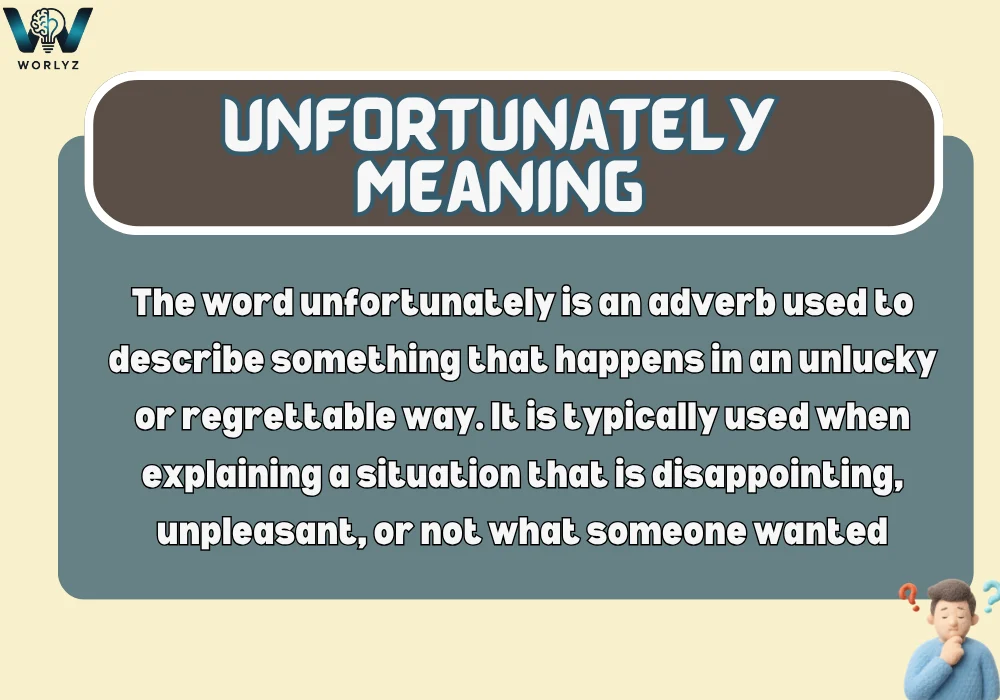
The word unfortunately is an adverb used to describe something that happens in an unlucky or regrettable way. It is typically used when explaining a situation that is disappointing, unpleasant, or not what someone wanted.
In simple terms, unfortunately means that something bad or disappointing happened.
- Unfortunately means in a way that causes sadness, regret, or disappointment.
The word is formed from three parts:
- Un meaning not
- Fortunate meaning lucky or favorable
- Ly which turns the word into an adverb
So the literal meaning becomes not in a lucky way or in an unlucky manner.
The word comes from the older English word fortunate, which itself has roots in the Latin word fortuna, meaning luck or fate. Over time, unfortunately became widely used to politely introduce negative information in speech and writing.
People often use it at the beginning of a sentence when explaining a problem or unexpected situation.
Example:
Unfortunately, the meeting was canceled due to bad weather.
How to Use Unfortunately in Texts or Chat
The word unfortunately appears frequently in everyday communication. It can be used in both casual and formal situations. In texting, emails, or conversations, it helps soften bad news and makes the message sound more polite.
Common situations where unfortunately is used include:
- Sharing disappointing news
- Explaining a problem
- Talking about an unexpected negative outcome
- Politely declining something
Here are several ways people commonly use unfortunately.
Beginning of a sentence
This is the most common placement.
Example:
Unfortunately, I cannot attend the event tonight.
In the middle of a sentence
Example:
I wanted to finish the project today, but unfortunately I ran out of time.
In casual conversation or texting
Example:
Sorry, unfortunately I forgot to bring the tickets.
Using unfortunately shows empathy and awareness that the situation may disappoint others.
Examples of Unfortunately in Conversations
Understanding how people use unfortunately in real conversations can make it easier to use naturally.
Below are several common examples.
Example 1
Friend 1: Are you coming to the party tonight?
Friend 2: Unfortunately, I have to work late.
Example 2
Student: Did we pass the exam?
Teacher: Unfortunately, many students did not meet the required score.
Example 3
Text message
Person 1: Can you send the file today?
Person 2: Unfortunately, my laptop stopped working.
Example 4
Workplace conversation
Manager: Can we launch the product this week?
Employee: Unfortunately, the final tests are not finished yet.
Example 5
Travel situation
Traveler: Is the flight still on time?
Airport staff: Unfortunately, the flight has been delayed.
These examples show how the word is often used to introduce disappointing news politely.
Comparison Table: Unfortunately vs Fortunately
The word unfortunately is often paired with its opposite, fortunately. Understanding the difference helps avoid confusion.
| Word | Meaning | Example |
|---|---|---|
| Unfortunately | Something bad or disappointing happened | Unfortunately, the store was closed |
| Fortunately | Something good happened despite difficulty | Fortunately, we arrived before the storm |
Example comparison:
Unfortunately, we missed the bus.
Fortunately, another one arrived ten minutes later.
This contrast is very common in storytelling and writing.
Common Mistakes or Misunderstandings
Although unfortunately is a simple word, people sometimes misuse it or place it incorrectly in sentences.
Here are some common mistakes to avoid.
Using it without a negative situation
The word should only describe something disappointing or unlucky.
Incorrect example:
Unfortunately, I won a free vacation.
Correct example:
Fortunately, I won a free vacation.
Using it too frequently
Repeating unfortunately many times in a paragraph can make writing sound negative or repetitive.
Example of repetition:
Unfortunately, the event was canceled. Unfortunately, the weather was bad. And Unfortunately, many people were disappointed.
Better version:
Unfortunately, the event was canceled because of bad weather, which disappointed many people.
Incorrect placement
Sometimes people place unfortunately in a confusing position.
Incorrect:
I unfortunately will attend the meeting.
Correct:
Unfortunately, I will attend the meeting.
Clear placement improves readability.
Different Contexts Where Unfortunately Is Used
The word appears in many types of communication.
Everyday conversations
People often use unfortunately when explaining personal problems.
Example:
Unfortunately, I lost my phone yesterday.
Professional communication
In emails or workplace discussions, unfortunately helps deliver negative information politely.
Example:
Unfortunately, your application was not selected this time.
Customer service
Businesses use unfortunately to explain issues or delays.
Example:
Unfortunately, the item is currently out of stock.
Social media posts
Users sometimes use the word when sharing disappointing updates.
Example:
Unfortunately, the concert has been postponed.
Related Words and Expressions
Several words carry a similar meaning to unfortunately. Knowing these alternatives can improve vocabulary and make writing more interesting.
Synonyms
- Sadly
- Regrettably
- Unluckily
- Disappointingly
- Sadly enough
Example:
Sadly, the team lost the final match.
Informal alternatives
In casual speech, people sometimes use simpler expressions instead.
Examples:
- That is too bad
- Sadly it did not work
- Bad news
- It did not go well
Example in casual chat:
Bad news, the game got canceled.
Examples of Unfortunately in Storytelling
The word unfortunately is often used in stories because it helps transition from a positive situation to a negative one.
Example:
We planned a beautiful outdoor picnic at the park. Unfortunately, it started raining just as we arrived.
Another example:
The team trained hard for the championship. Unfortunately, their best player was injured before the final match.
In storytelling, the word creates emotional impact and helps readers understand turning points in the story.
FAQs:
What does unfortunately mean in simple words?
Unfortunately means something bad, disappointing, or unlucky happened.
Is unfortunately a positive or negative word?
Unfortunately is a negative word because it introduces bad news or an unfortunate situation.
Where should unfortunately be placed in a sentence?
It is most commonly placed at the beginning of a sentence, such as Unfortunately, the event was canceled.
What is the opposite of unfortunately?
The opposite word is fortunately, which is used when something good or lucky happens.
Can unfortunately be used in formal writing?
Yes, unfortunately is commonly used in formal writing, professional emails, and academic discussions when explaining negative outcomes.
Conclusion:
The word unfortunately is a useful English adverb that helps people politely introduce disappointing or negative information. It is commonly used in everyday conversations, emails, storytelling, and professional communication.
By understanding its meaning, origin, and proper usage, you can communicate difficult news more clearly and respectfully. Learning when and how to use unfortunately also improves writing style and conversational skills.
Now that you understand the meaning and usage of unfortunately, try using it naturally in conversations or writing. Share your favorite English expressions or common words you would like to learn next.

John is the founder and primary content creator of Worlyz. He has a strong passion for explaining word meanings, language concepts, slang terms, and educational topics in a clear and simple way. John focuses on creating well researched, reader friendly content that helps users easily understand complex words and ideas. Through Worlyz, his goal is to make learning meanings and concepts straightforward and accessible for everyone.