You have probably heard someone say, my fight or flight kicked in, during a stressful moment. This phrase is used everywhere today, from therapy conversations to social media captions and even casual chats. Understanding the fight or flight meaning helps you make sense of your own reactions during fear, stress, or pressure.
Whether it happens before an exam, during an argument, or in a sudden emergency, fight or flight explains why your body reacts before your mind has time to think. Let’s break it down in a simple, real-world way.
What Does Fight or Flight Mean
Simple Definition
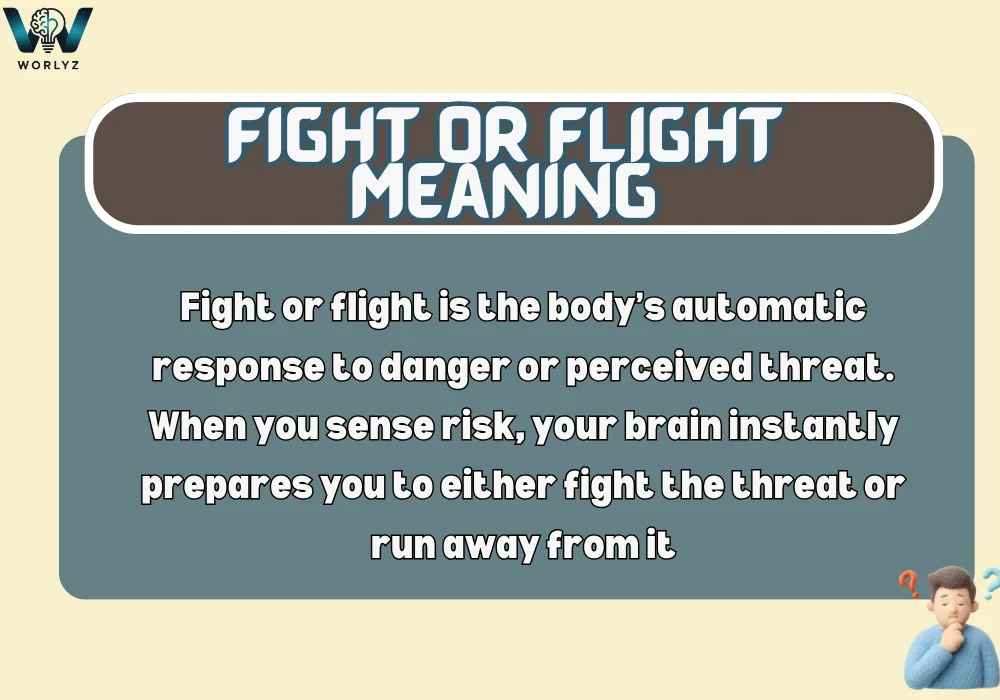
Fight or flight is the body’s automatic response to danger or perceived threat. When you sense risk, your brain instantly prepares you to either fight the threat or run away from it.
This reaction happens without conscious thought. It is fast, instinctive, and designed to protect you.
Where the Term Comes From
The concept of fight or flight was first identified by physiologist Walter Cannon in the early 1900s. He observed that humans and animals share a built-in survival response that activates during danger.
Even though modern life rarely involves physical threats like predators, the same response still activates during emotional or mental stress.
How the Fight or Flight Response Works
What Happens in the Body
When fight or flight is triggered, your brain sends a signal to release stress hormones like adrenaline and cortisol. This causes physical changes such as:
- Faster heart rate
- Rapid breathing
- Tight muscles
- Sharper focus
- Reduced digestion
All of this happens to prepare your body for immediate action.
Why It Feels So Intense
The body does not distinguish between real danger and perceived danger. A loud noise, confrontation, deadline, or embarrassing moment can all trigger the same response.
That is why fight or flight can feel overwhelming even in non-life-threatening situations.
Fight vs Flight Explained in Simple Terms
The Fight Response
The fight response pushes you toward confrontation or control. You may feel:
- Anger or irritation
- A need to argue or defend yourself
- Increased confidence or aggression
Example:
Snapping back during an argument without thinking.
The Flight Response
The flight response urges you to escape or avoid the situation. You may feel:
- Anxiety or panic
- A desire to leave or hide
- Trouble speaking or thinking clearly
Example:
Wanting to walk away or shut down during conflict.
Fight or Flight Meaning in Everyday Life
Fight or flight is not limited to extreme situations. It shows up in daily life more often than people realize.
Common Real-Life Triggers
- Public speaking
- Job interviews
- Exams or deadlines
- Relationship conflicts
- Sudden loud noises
- Social pressure
Example:
Your heart races before presenting at work, even though there is no physical danger.
How Fight or Flight Is Used in Modern Conversations
Today, fight or flight is often used casually to describe emotional reactions.
Common Text or Chat Examples
My fight or flight kicked in when my boss called me
That jump scare triggered my fight or flight
I froze because my fight or flight activated
In modern language, it is sometimes used humorously, but it still refers to a real biological response.
Is Fight or Flight Slang
No, fight or flight is not slang. It is a scientific term that has become popular in everyday speech because people relate to it.
Fight or Flight vs Freeze Response
Many people think fight or flight are the only options, but there is a third common response.
The Freeze Response
Freeze happens when the body feels overwhelmed and does neither fight nor run. Signs include:
- Feeling stuck or numb
- Inability to speak
- Mental shutdown
Example:
Going silent during confrontation even though you want to respond.
Common Misunderstandings About Fight or Flight
It Only Happens During Danger
False. It can happen during emotional stress, not just physical threats.
It Means You Are Weak
False. Fight or flight is a survival mechanism shared by all humans.
You Can Always Control It
Not always. The response happens automatically before logic kicks in.
How to Calm the Fight or Flight Response
While you cannot stop it instantly, you can learn to manage it.
Helpful Techniques
- Slow, deep breathing
- Grounding techniques like naming objects around you
- Relaxing muscle tension
- Stepping away from the trigger when possible
With practice, the body learns that not every stressor is a threat.
Related Psychological Terms You May See
If you are learning about fight or flight, you may also come across:
- Stress response
- Anxiety response
- Panic response
- Nervous system activation
- Freeze response
These terms are often connected and help explain how the body reacts to stress.
FAQs:
What does fight or flight mean in simple words?
Fight or flight means your body’s automatic reaction to danger that prepares you to either confront the threat or escape it.
Is fight or flight a real medical response?
Yes, it is a real biological and psychological response controlled by the nervous system.
Can fight or flight be triggered without danger?
Yes, emotional stress, anxiety, or pressure can trigger the same response even without physical danger.
Is fight or flight the same as anxiety?
No, but anxiety can activate the fight or flight response. They are related but not identical.
Can you stop fight or flight once it starts?
You cannot stop it instantly, but breathing and grounding techniques can help calm it down.
Why does fight or flight happen so fast?
It happens quickly because the brain prioritizes survival and reacts before logical thinking.
Conclusion:
The fight or flight meaning explains why your body reacts instantly to stress, fear, or pressure. It is a natural survival response designed to protect you, even when the situation is not physically dangerous.
Understanding this response helps you recognize what is happening inside your body and respond with awareness instead of confusion. With practice and knowledge, fight or flight becomes something you can manage rather than fear.

John is the founder and primary content creator of Worlyz. He has a strong passion for explaining word meanings, language concepts, slang terms, and educational topics in a clear and simple way. John focuses on creating well researched, reader friendly content that helps users easily understand complex words and ideas. Through Worlyz, his goal is to make learning meanings and concepts straightforward and accessible for everyone.