The word amalgamate may sound formal or complex, but it is actually used in many everyday and professional situations. You might come across it in business news, academic writing, or even casual discussions about combining ideas or groups. Understanding the amalgamate meaning helps you use the word correctly and recognize it when it appears in different contexts.
At its core, amalgamate is about bringing things together, but the way it is used can vary depending on whether you are talking about companies, ideas, cultures, or materials. This guide explains everything in a clear and practical way.
What Does Amalgamate Mean
Definition
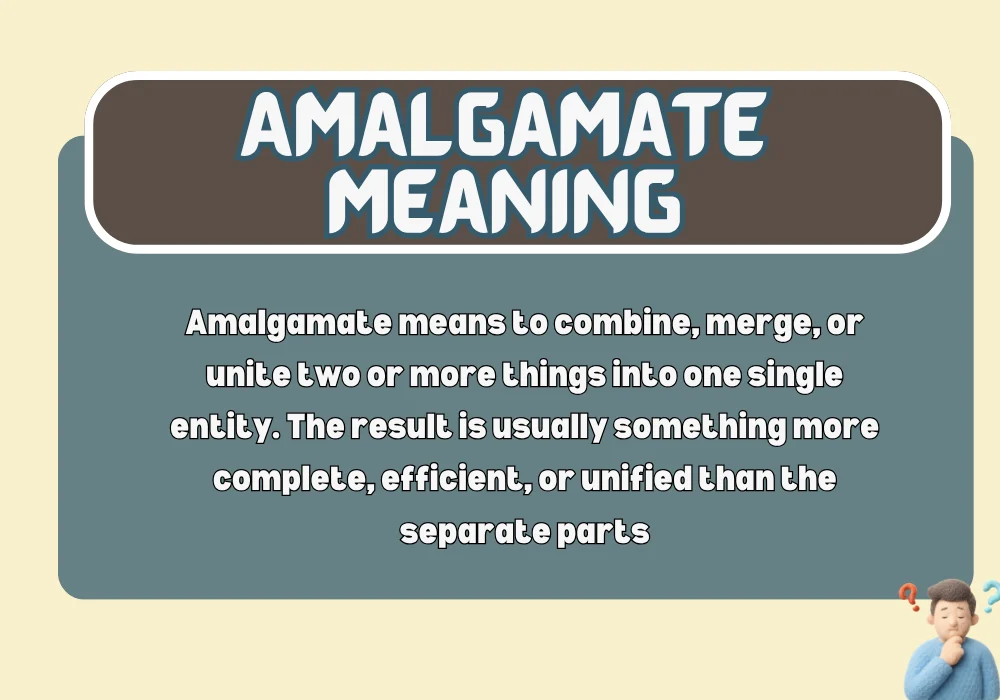
Amalgamate means to combine, merge, or unite two or more things into one single entity. The result is usually something more complete, efficient, or unified than the separate parts.
In simple terms, amalgamate means:
- To mix together
- To join into one
- To form a single unit from multiple parts
Origin and Background
The word amalgamate comes from the term amalgam, which originally referred to a mixture of metals, especially mercury with another metal. Over time, the meaning expanded beyond chemistry to include combining organizations, ideas, or systems.
This history explains why amalgamate often suggests a thorough and complete merging rather than a simple connection.
Different Meanings of Amalgamate Based on Context
Amalgamate in Business and Organizations
In business, amalgamate is commonly used to describe companies or groups merging into one.
Examples include:
- Two companies amalgamate to form a larger corporation
- Departments amalgamate to improve efficiency
This usage often appears in news, finance, and corporate discussions.
Amalgamate in Ideas and Concepts
Amalgamate can also describe combining different ideas, styles, or approaches.
Examples:
- A writer may amalgamate different storytelling styles
- A project may amalgamate technology and creativity
Here, the word highlights innovation through blending.
Amalgamate in Science and Materials
In scientific or technical contexts, amalgamate refers to mixing substances, especially metals.
Examples:
- Metals amalgamate to form a new compound
- Chemicals amalgamate under certain conditions
This reflects the original meaning of the word.
Amalgamate in Culture and Society
Amalgamate can describe the blending of cultures, traditions, or communities.
Examples:
- Cities often amalgamate different cultures
- Traditions can amalgamate over time
This usage emphasizes diversity and unity.
Amalgamate Meaning in Simple Language
In everyday language, amalgamate means:
- To bring things together into one
- To mix or combine completely
- To create something unified from different parts
It often suggests a deeper or more complete combination than just joining.
Examples of Amalgamate in Conversations
Business Example
The two companies decided to amalgamate to increase their market reach.
Creative Example
The artist amalgamates modern and traditional styles in her work.
Social Example
The community has amalgamated different cultures over the years.
Simple Everyday Example
He tried to amalgamate all his ideas into one plan.
These examples show how the word can be used in both formal and casual situations.
Amalgamate Compared to Similar Words
Understanding amalgamate becomes easier when compared with similar terms.
| Word | Meaning | Key Difference |
|---|---|---|
| Amalgamate | Combine into one completely | Strong, formal merging |
| Merge | Join together | Common in business |
| Combine | Put together | General and flexible |
| Blend | Mix smoothly | Often used for ideas or materials |
| Unite | Bring together as one | Emphasizes harmony |
Amalgamate usually suggests a more thorough and structured combination.
When to Use Amalgamate
You can use amalgamate when:
- Talking about formal or large-scale merging
- Describing a deep combination of elements
- Writing in academic or professional contexts
It is less commonly used in very casual conversation but still understood.
Common Mistakes or Misunderstandings
Using Amalgamate for Simple Joining
Amalgamate implies a deeper combination, not just placing things together.
Confusing Amalgamate With Merge
While similar, amalgamate often sounds more formal and complete.
Overusing the Word in Casual Speech
In everyday conversation, simpler words like combine may sound more natural.
Amalgamate in Modern Usage
Today, amalgamate is frequently used in:
- Business and finance news
- Academic writing
- Cultural discussions
- Technology and innovation topics
It is especially useful when describing transformation through combination.
Related Words and Expressions
When learning the amalgamate meaning, you may also encounter:
- Integration
- Consolidation
- Fusion
- Combination
- Unification
Each word is similar but has its own tone and context.
FAQs:
What does amalgamate mean in simple words?
Amalgamate means to combine or merge different things into one unified whole.
Is amalgamate the same as merge?
They are similar, but amalgamate often sounds more formal and implies a complete blending.
Can ideas be amalgamated?
Yes, ideas, styles, and concepts can be amalgamated to create something new.
Where is the word amalgamate commonly used?
It is commonly used in business, academic writing, and discussions about culture or innovation.
Is amalgamate a formal word?
Yes, amalgamate is generally considered more formal than words like combine or mix.
Conclusion:
The amalgamate meaning centers around the idea of combining different elements into a single, unified whole. Whether used in business, science, culture, or everyday situations, the word reflects a deep and meaningful merging process.
By understanding how amalgamate works in different contexts, you can use it more accurately and recognize its significance in both formal and modern communication.

John is the founder and primary content creator of Worlyz. He has a strong passion for explaining word meanings, language concepts, slang terms, and educational topics in a clear and simple way. John focuses on creating well researched, reader friendly content that helps users easily understand complex words and ideas. Through Worlyz, his goal is to make learning meanings and concepts straightforward and accessible for everyone.