The word interrupt is used in everyday conversations, classrooms, workplaces, and even online chats. It may seem simple, but it carries different meanings depending on the situation. Understanding the interrupt meaning helps you communicate more clearly and avoid misunderstandings, especially in social or professional settings.
From stopping someone mid-sentence to breaking the flow of an activity, interrupt is a word that describes sudden pauses or disruptions. It can be used in both negative and neutral ways, depending on intent and context.
What Does Interrupt Mean
Definition
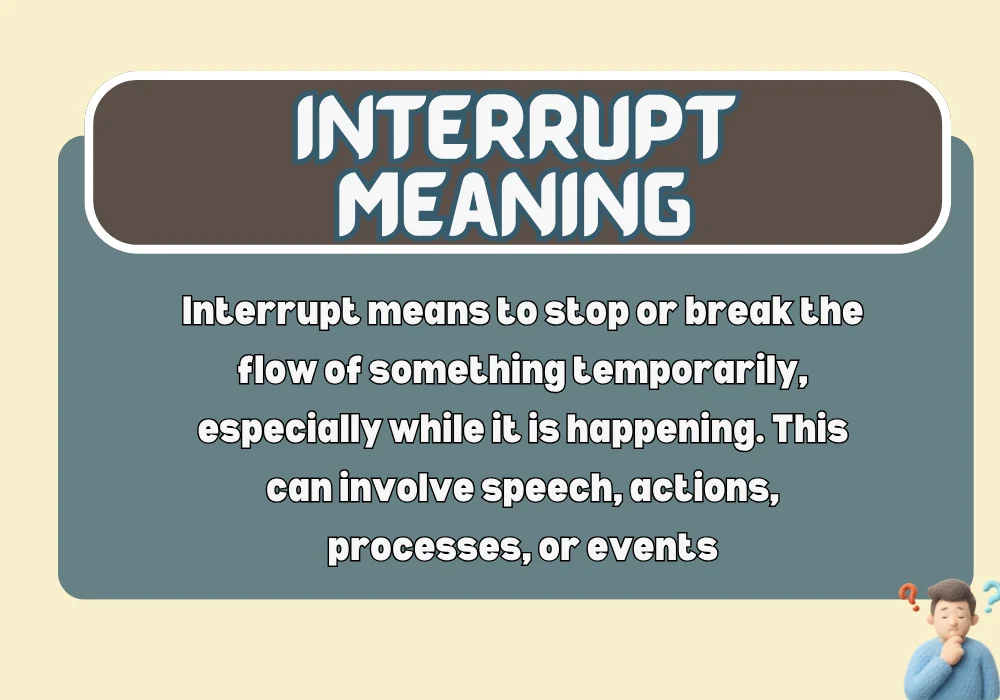
Interrupt means to stop or break the flow of something temporarily, especially while it is happening. This can involve speech, actions, processes, or events.
In simple terms, interrupt means cutting in before something is finished.
Origin and Background
The word interrupt comes from the Latin word interrumpere, which means to break apart or break into. It combines:
- inter meaning between
- rumpere meaning to break
This origin reflects the idea of stopping something in the middle.
Different Meanings of Interrupt Based on Context
Interrupt in Conversation
One of the most common uses of interrupt is in speaking situations. It happens when someone starts talking before the other person has finished.
Examples:
- Interrupting someone during a discussion
- Cutting in while someone is explaining something
This type of interruption is often considered rude if done frequently.
Interrupt in Activities or Processes
Interrupt can also refer to stopping an activity or process temporarily.
Examples:
- A phone call interrupting your work
- Rain interrupting a sports match
- A power cut interrupting a movie
In these cases, the interruption is usually unintentional.
Interrupt in Technology and Systems
In technical contexts, interrupt refers to a signal that temporarily stops a process so another task can be handled.
Examples:
- Computer interrupts that pause operations
- System alerts interrupting ongoing tasks
This usage is more common in IT and computing fields.
Interrupt Meaning in Simple Language
In everyday language, interrupt means:
- Stopping something suddenly
- Breaking someone’s flow
- Pausing an activity before it finishes
It usually happens quickly and unexpectedly.
Examples of Interrupt in Conversations
Everyday Conversation Example
Please do not interrupt me while I am speaking.
Work Environment Example
The meeting was interrupted by an urgent phone call.
Casual Situation Example
Sorry to interrupt, but I need to ask something.
Digital Communication Example
Notifications keep interrupting my focus.
These examples show how interrupt can apply to different situations.
Interrupt Compared to Similar Words
Understanding interrupt becomes easier when compared to similar terms.
| Word | Meaning | Key Difference |
|---|---|---|
| Interrupt | Stop something temporarily | Often sudden and brief |
| Disturb | Bother or distract | Focus on annoyance |
| Disrupt | Break completely | More serious impact |
| Pause | Stop temporarily | Usually intentional |
| Break | Stop or separate | Can be permanent |
Interrupt usually suggests a quick and temporary stop.
Social and Emotional Impact of Interrupting
Interrupting someone during conversation can affect communication and relationships.
Common effects include:
- Making others feel unheard
- Creating frustration or tension
- Breaking the flow of ideas
However, not all interruptions are negative. Some are necessary, especially in urgent situations.
When Interrupting Is Acceptable
Interrupting may be acceptable when:
- There is an emergency
- You need clarification immediately
- Time is limited
- The conversation is going off track
Polite phrases can help soften the interruption.
Examples:
- Sorry to interrupt, but I need to add something
- Can I quickly jump in here
Common Mistakes or Misunderstandings
Thinking Interrupt Is Always Rude
Interrupting is often seen as rude, but it depends on timing and intention.
Confusing Interrupt With Disrupt
Interrupt is usually temporary, while disrupt suggests a bigger and longer impact.
Overusing Interruptions in Conversations
Frequent interruptions can harm communication and relationships.
Interrupt in Everyday Expressions
The word interrupt appears in many common phrases:
- Do not interrupt me
- Sorry to interrupt
- Constant interruptions
- Interrupt the flow
These phrases are widely used in both formal and informal settings.
Related Words and Concepts
When learning the interrupt meaning, you may also encounter:
- Interfere
- Disturb
- Pause
- Break
- Disrupt
Each word has a slightly different tone and usage.
FAQs:
What does interrupt mean in simple words?
Interrupt means stopping something before it is finished, usually for a short time.
Is interrupt always negative?
No, interrupt can be neutral or necessary depending on the situation.
How can you interrupt politely?
You can use phrases like sorry to interrupt or may I add something to be polite.
What is the difference between interrupt and disrupt?
Interrupt is usually temporary, while disrupt suggests a more serious or lasting effect.
Can events interrupt activities?
Yes, events like phone calls, weather, or technical issues can interrupt activities.
Conclusion:
The interrupt meaning centers around stopping or breaking the flow of something temporarily. Whether it happens in conversation, daily activities, or technical systems, interrupt describes a sudden pause that can be either helpful or disruptive depending on the situation.
By understanding how interrupt works in different contexts, you can communicate more effectively, avoid unnecessary interruptions, and handle them more politely when they occur.

Alex is the owner and founder of Worlyz. He is passionate about explaining word meanings, language concepts, slang terms, and educational topics in a clear and simple manner. Alex focuses on creating high quality, well researched, and user focused content that helps readers understand complex words easily. Through Worlyz, his goal is to make learning language meanings and concepts accessible and reliable for everyone.