The word headwinds is often used in news, business discussions, finance reports, and even everyday conversations. At first glance, it sounds like a weather-related term, but in most cases, it carries a deeper, metaphorical meaning. Understanding the headwinds meaning helps you interpret conversations about challenges, obstacles, and slow progress more clearly.
Whether you hear it in economic updates, workplace discussions, or social media posts, headwinds usually signal something making progress more difficult. This detailed guide explains the meaning, usage, and real-life applications of the word in a simple and practical way.
What Does Headwinds Mean
Definition
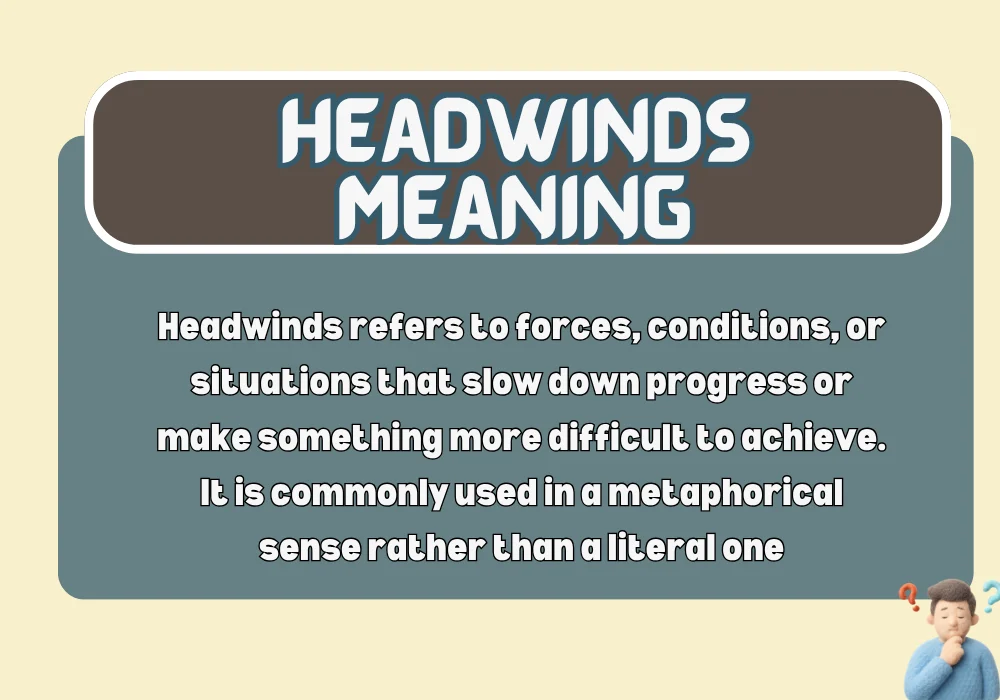
Headwinds refers to forces, conditions, or situations that slow down progress or make something more difficult to achieve. It is commonly used in a metaphorical sense rather than a literal one.
In simple terms, headwinds are obstacles or challenges that push against you.
Literal Meaning
Originally, headwinds comes from aviation and travel. A headwind is a wind that blows directly against the direction you are moving, making travel slower and harder.
Example:
A plane flying into strong headwinds takes longer to reach its destination.
This physical meaning is what led to its modern metaphorical use.
Origin of the Metaphor
Over time, people began using headwinds to describe difficult conditions in life, business, or the economy. Just like wind can slow down a plane, challenges can slow down progress.
This is why the word is now widely used in professional and everyday language.
Different Meanings of Headwinds Based on Context
Headwinds in Business and Economy
In business, headwinds describe factors that negatively affect growth, profits, or performance.
Examples include:
- Rising costs
- Inflation
- Market competition
- Economic slowdown
Example sentence:
The company is facing strong headwinds due to declining sales.
Headwinds in Personal Life
Headwinds can also describe personal challenges or difficult situations.
Examples:
- Financial struggles
- Health issues
- Career obstacles
Example:
She overcame many headwinds to achieve success.
Headwinds in General Conversation
In everyday language, headwinds simply mean anything making a situation harder.
Example:
We are facing headwinds, but we will keep moving forward.
Headwinds Meaning in Simple Language
In modern, simple terms, headwinds means:
- Problems slowing you down
- Difficult conditions
- Resistance or pressure
It often suggests that progress is still possible, but harder than usual.
Examples of Headwinds in Conversations
Business Example
The startup is dealing with financial headwinds this year.
Personal Example
Despite many headwinds, he stayed focused on his goals.
News or Media Example
The economy is facing global headwinds.
Casual Conversation Example
We hit some headwinds, but things are improving now.
These examples show how widely the word can be used.
Headwinds Compared to Similar Words
Understanding headwinds becomes easier when compared to similar terms.
| Word | Meaning | Key Difference |
|---|---|---|
| Headwinds | Forces slowing progress | Suggests ongoing resistance |
| Obstacles | Barriers or difficulties | More general |
| Challenges | Difficult situations | Neutral tone |
| Setbacks | Temporary failures | Focus on delay |
| Barriers | Blocks preventing movement | Stronger limitation |
Headwinds usually imply continuous pressure rather than a complete stop.
Opposite Meaning of Headwinds
The opposite of headwinds is tailwinds.
Tailwinds Meaning
Tailwinds are forces that help progress and make things easier.
Example:
The company benefited from strong tailwinds in the market.
Why Headwinds Is Common in Modern Language
The word headwinds is popular because:
- It sounds professional and clear
- It explains difficulty without being too negative
- It is widely used in business and media
People prefer it because it suggests challenges without implying failure.
Common Mistakes or Misunderstandings
Thinking Headwinds Means Failure
Headwinds do not mean failure. They only indicate difficulty or resistance.
Using Headwinds in Positive Contexts
Headwinds should not be used for positive situations. It always implies challenge.
Confusing Headwinds With Obstacles
Headwinds are ongoing pressures, while obstacles can be one-time problems.
Headwinds in Modern Usage
Today, headwinds appears frequently in:
- Business reports
- Economic news
- Corporate meetings
- Motivational content
It is especially common in professional communication because it sounds balanced and thoughtful.
Related Words and Expressions
When learning the headwinds meaning, you may also come across:
- Tailwinds
- Resistance
- Pressure
- Difficult conditions
- Roadblocks
These terms share similar ideas but vary in tone and intensity.
FAQs:
What does headwinds mean in simple words?
Headwinds means challenges or conditions that make progress slower or more difficult.
Is headwinds a positive or negative word?
Headwinds is usually negative because it describes difficulties or resistance.
What is the opposite of headwinds?
The opposite of headwinds is tailwinds, which means conditions that help progress.
Can headwinds be used in personal situations?
Yes, headwinds can describe personal challenges such as financial or emotional difficulties.
Why is headwinds used in business language?
It is used because it clearly describes challenges without sounding overly negative or dramatic.
Conclusion:
The headwinds meaning is all about challenges that slow progress but do not stop it completely. Whether used in business, personal life, or everyday conversation, it describes resistance that makes success harder to achieve.
By understanding how headwinds works in different contexts, you can use the word more effectively and better understand discussions where it appears.

John is the founder and primary content creator of Worlyz. He has a strong passion for explaining word meanings, language concepts, slang terms, and educational topics in a clear and simple way. John focuses on creating well researched, reader friendly content that helps users easily understand complex words and ideas. Through Worlyz, his goal is to make learning meanings and concepts straightforward and accessible for everyone.