The word elicit is commonly used in conversations, writing, psychology, education, and online discussions, yet many people confuse it with similar words like “illicit” or misunderstand how it should be used. Understanding the elicit meaning helps you communicate more clearly and recognize the word correctly in both formal and casual situations.
Whether you see it in articles, social media discussions, interviews, or classroom settings, elicit is a useful word that focuses on drawing out a response, reaction, or information from someone. This guide explains the meaning in simple language with examples, comparisons, and practical usage.
What Does Elicit Mean
Definition
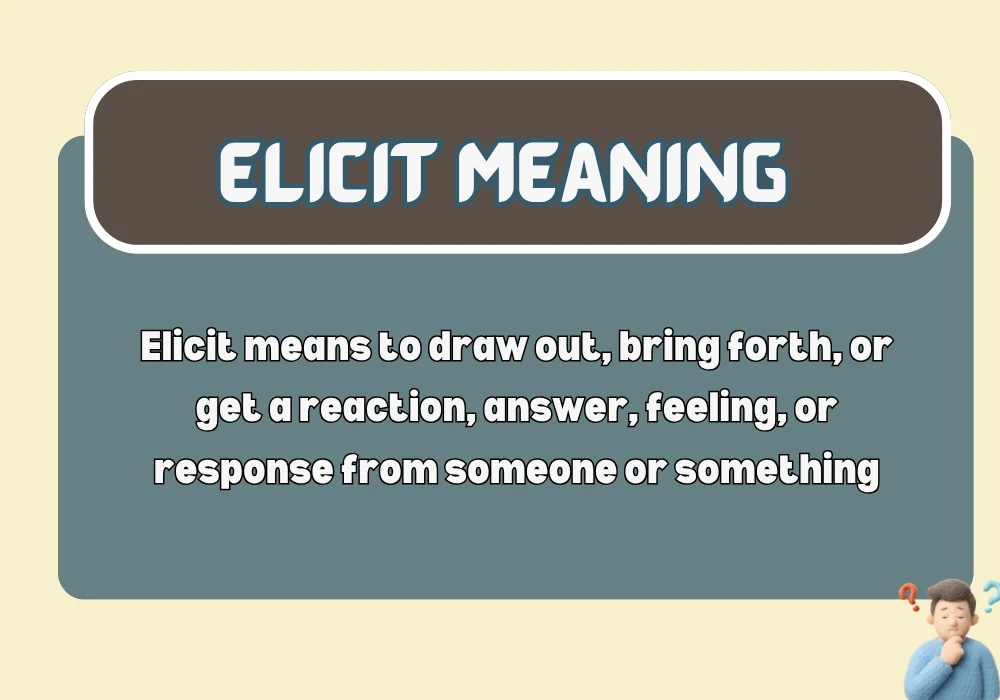
Elicit means to draw out, bring forth, or get a reaction, answer, feeling, or response from someone or something.
In simple words, elicit is used when something causes another thing to happen naturally.
Examples:
- A question can elicit an answer
- A joke can elicit laughter
- A speech can elicit emotions
The word often involves communication, reactions, or emotional responses.
Origin of the Word
The word elicit comes from the Latin word elicere, meaning “to draw out” or “bring forth.” It entered English with the same general idea of causing a response or extracting information.
This origin explains why elicit is usually connected with reactions, answers, or emotions.
How Elicit Is Used in Different Contexts
Elicit in Everyday Conversation
In normal conversation, elicit is often used when discussing reactions or responses.
Examples:
- The movie elicited tears from the audience
- Her comment elicited laughter from everyone
Here, elicit describes causing a reaction naturally.
Elicit in Education and Psychology
Teachers, researchers, and psychologists often use elicit when discussing information or emotional responses.
Examples:
- The teacher tried to elicit answers from students
- Certain memories can elicit strong emotions
In these contexts, elicit means encouraging or drawing out something from people.
Elicit in Writing and Media
Writers and journalists use elicit when talking about reactions from audiences.
Examples:
- The article elicited public debate
- The interview elicited surprising responses
This usage is common in professional writing.
Elicit Meaning in Simple Language
In everyday simple terms, elicit means:
- To cause a reaction
- To bring out an answer or emotion
- To get information from someone
The word usually involves interaction between people, ideas, or situations.
Examples of Elicit in Conversations
Everyday Example
His funny story elicited loud laughter.
School Example
The teacher asked questions to elicit discussion.
Emotional Example
That memory always elicits sadness.
Online Conversation Example
Her post elicited thousands of comments.
These examples show how elicit works naturally in different settings.
Elicit Compared to Similar Words
Many people confuse elicit with similar-looking or related words. Understanding the differences makes usage much easier.
| Word | Meaning | Key Difference |
|---|---|---|
| Elicit | Draw out a response | Focuses on causing reactions |
| Evoke | Bring a feeling or memory | More emotional |
| Extract | Remove something physically or directly | More forceful |
| Encourage | Support or motivate | Less direct |
| Illicit | Illegal or forbidden | Completely different meaning |
One of the most common mistakes is confusing elicit with illicit because they sound similar.
Common Situations Where Elicit Is Used
Asking Questions
Teachers and interviewers use elicit to get answers or opinions.
Emotional Reactions
Movies, music, and stories can elicit feelings.
Social Media and Online Content
Posts and videos often elicit reactions from viewers.
Professional Communication
Businesses may use surveys to elicit customer feedback.
Common Mistakes or Misunderstandings
Confusing Elicit With Illicit
This is the biggest mistake.
- Elicit means to draw out a response
- Illicit means illegal or forbidden
Example:
Correct: The speech elicited applause
Incorrect: The speech illicit applause
Using Elicit for Physical Objects
Elicit is mainly used for reactions, answers, emotions, or responses, not physical items.
Thinking Elicit Is Only Formal
While common in formal writing, elicit is also used in normal conversation and online discussions.
Elicit in Chat and Online Communication
Although elicit is not internet slang, it appears in:
- Social media discussions
- Debate forums
- Educational chats
- Professional messages
Example:
That tweet elicited strong reactions online.
In chat contexts, elicit usually refers to getting reactions, comments, or emotional responses.
Related Words and Expressions
When exploring the elicit meaning, you may also encounter:
- Evoke
- Inspire
- Trigger
- Encourage
- Prompt
Each shares similarities but differs slightly in tone or context.
FAQs:
What does elicit mean?
Elicit means to draw out or cause a reaction, response, emotion, or answer from someone.
Is elicit slang?
No, elicit is not slang. It is a standard English word commonly used in both formal and casual communication.
Where is elicit used?
Elicit is used in conversations, education, psychology, writing, social media, and professional communication.
What does elicit mean in chat?
In chat or online discussions, elicit usually means causing reactions, comments, or emotional responses from people.
What is the difference between elicit and illicit?
Elicit means drawing out a response, while illicit means illegal or forbidden.
Conclusion:
The elicit meaning centers around bringing out reactions, answers, emotions, or responses. Whether used in conversations, education, media, or online communication, elicit is an important word that helps describe how people respond to questions, ideas, and experiences.
By understanding the correct meaning and usage of elicit, you can avoid common mistakes and communicate more clearly in both formal and everyday situations.

Hi, I’m Mike Grobgaard, founder of Lexonr. I write about meanings, internet slang, biblical terms, and modern expressions in a simple yet engaging way. My goal is to help readers understand the deeper story behind every word they search for.