The word vicariously is often used in conversations, books, movies, psychology discussions, and online content. Even though it sounds formal, many people use it in everyday speech without fully understanding what it means. Learning the vicariously meaning helps you use the word naturally and understand it when it appears in social media posts, songs, or conversations.
You may hear someone say they are “living vicariously” through another person or enjoying an experience vicariously through someone else’s story. The word usually connects to emotions, imagination, and shared experiences.
This guide explains the meaning of vicariously in simple language with examples, comparisons, and modern usage.
What Does Vicariously Mean
Definition
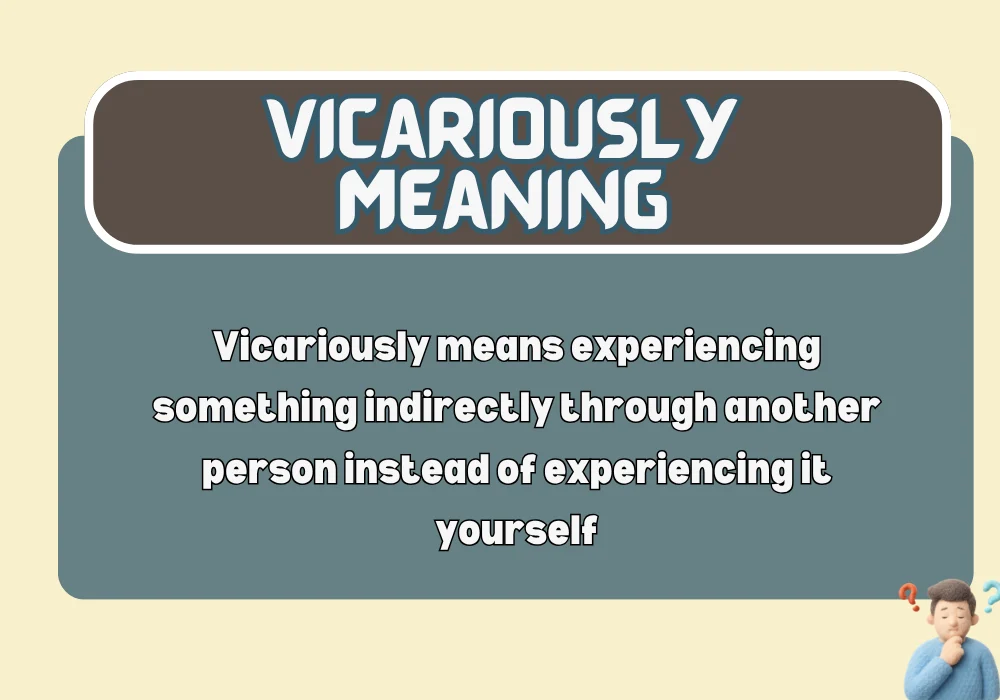
Vicariously means experiencing something indirectly through another person instead of experiencing it yourself.
In simple terms, it describes feeling or enjoying something by watching, hearing about, or imagining another person’s experience.
Origin of the Word
The word vicariously comes from the Latin word vicarius, meaning substitute or replacement. Over time, the meaning evolved into experiencing emotions or situations through someone else.
This is why the word often relates to empathy, imagination, or emotional connection.
How Vicariously Is Used in Everyday Language
Living Through Someone Else
One of the most common uses of vicariously is when someone experiences excitement or happiness through another person’s life.
Example:
She travels the world, and I live vicariously through her photos.
This means the person enjoys the feeling of travel indirectly by seeing someone else’s experiences.
Emotional Experiences
People can also feel emotions vicariously.
Examples include:
- Feeling nervous while watching a competition
- Feeling proud of someone else’s achievement
- Feeling emotional during a movie scene
In these situations, the emotions are indirect but still powerful.
Entertainment and Media
Many people experience adventure or excitement vicariously through:
- Movies
- Video games
- Sports
- Social media influencers
- Books and stories
This explains why audiences become emotionally connected to fictional characters or celebrities.
Vicariously Meaning in Simple Language
In everyday simple language, vicariously means:
- Experiencing something through someone else
- Feeling emotions indirectly
- Enjoying another person’s experiences as if they were your own
The word usually involves imagination or emotional connection.
Examples of Vicariously in Conversations
Everyday Conversation Example
I live vicariously through my friend’s travel adventures.
Social Media Example
People watch luxury lifestyle videos to experience wealth vicariously.
Sports Example
Fans experience victories and losses vicariously through their favorite teams.
Family Example
Parents often live vicariously through their children’s achievements.
These examples show how common the concept is in modern life.
Vicariously Compared to Similar Words
Understanding vicariously becomes easier when compared with similar terms.
| Word | Meaning | Key Difference |
|---|---|---|
| Vicariously | Experiencing indirectly through others | Emotional connection |
| Indirectly | Not directly involved | More general |
| Empathetically | Sharing another’s feelings | Focuses on empathy |
| Imaginatively | Created in the mind | Not always connected to others |
| Symbolically | Representing something | Less emotional |
Vicariously specifically involves another person’s experience.
How Vicariously Is Used Online and in Modern Culture
The word appears frequently in:
- YouTube videos
- Travel content
- Celebrity culture
- Reality shows
- Gaming streams
- Social media captions
Examples:
- Living vicariously through influencers
- Watching gamers play for excitement
- Experiencing luxury lifestyles online
Modern internet culture makes vicarious experiences more common than ever.
Psychological Meaning of Vicariously
In psychology, vicarious experiences help people:
- Learn through observation
- Feel emotional connection
- Understand situations without direct involvement
For example:
Children may learn behavior by watching adults, which is called vicarious learning.
Common Mistakes or Misunderstandings
Thinking Vicariously Means Copying Someone
Vicariously is about experiencing emotions indirectly, not necessarily copying behavior.
Assuming It Is Always Negative
Living vicariously can be positive, inspiring, or comforting.
Using It in the Wrong Context
The word fits emotional or observational situations better than physical actions.
Related Words and Expressions
When exploring the vicariously meaning, you may also encounter:
- Indirectly
- Empathy
- Secondhand experience
- Through someone else
- Observational learning
These ideas connect closely to the meaning of vicariously.
FAQs:
What does vicariously mean?
Vicariously means experiencing something indirectly through another person’s experiences or emotions.
Is vicariously slang?
No, vicariously is not slang. It is a standard English word commonly used in conversations, psychology, and media.
Where is vicariously used?
Vicariously is used in everyday conversations, books, psychology, movies, social media, and entertainment discussions.
What does vicariously mean in chat?
In chat, vicariously usually means enjoying or feeling something through another person’s story, photos, or experiences.
Can someone live vicariously through another person?
Yes, living vicariously means experiencing excitement or fulfillment through someone else’s life or achievements.
Is vicariously a positive or negative word?
It can be both depending on context, but it is often neutral or positive.
Conclusion:
The vicariously meaning centers around experiencing emotions, excitement, or situations indirectly through someone else. Whether through movies, social media, sports, or personal relationships, people often connect emotionally to experiences they are not directly part of.
Understanding how vicariously works helps you recognize its emotional depth and use it naturally in conversations. It is a powerful word that reflects how humans connect through observation, imagination, and shared feelings.

Hi, I’m Mike Grobgaard, founder of Lexonr. I write about meanings, internet slang, biblical terms, and modern expressions in a simple yet engaging way. My goal is to help readers understand the deeper story behind every word they search for.