If you have ever watched an Italian movie, traveled to Europe, or chatted with someone who speaks Italian, you have probably heard the word grazie. It is short, polite, and used everywhere. Understanding the grazie meaning helps you communicate more naturally, show good manners, and avoid awkward moments when interacting with Italian speakers online or offline.
In modern chats, travel conversations, and social media comments, grazie appears just as often as thank you does in English. Knowing how and when to use it correctly makes your language sound more natural and respectful.
What Does Grazie Mean
Definition
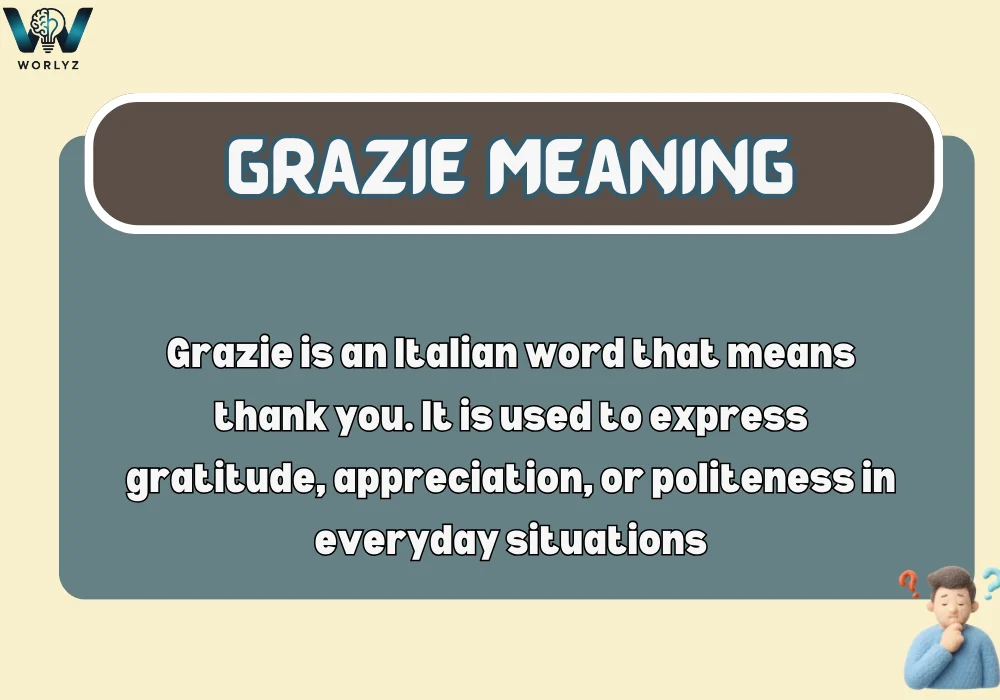
Grazie is an Italian word that means thank you. It is used to express gratitude, appreciation, or politeness in everyday situations.
In simple terms, grazie is the Italian equivalent of saying thanks.
Origin of the Word
The word grazie comes from the Latin word gratia, which means grace, favor, or kindness. Over time, it became a standard way in Italian to acknowledge kindness or help from others.
This origin explains why grazie feels polite and warm rather than formal or distant.
How Grazie Is Used in Daily Conversation
Common Situations Where Grazie Is Used
Grazie is extremely versatile and can be used in almost any situation where gratitude is appropriate.
- After receiving help
- When someone gives you something
- At restaurants and shops
- In emails or messages
- In casual and formal conversations
Example:
Grazie for your help today
Grazie mille for the recommendation
Is Grazie Formal or Informal
Grazie works in both formal and informal situations. It is safe to use with friends, strangers, coworkers, and even in professional settings.
If you want to sound more polite or enthusiastic, you can add words like:
- Grazie mille meaning thank you very much
- Tante grazie meaning many thanks
Grazie Meaning in Modern Chats and Social Media
Although grazie is a traditional word, it is widely used in modern texting and online communication.
Common Online Uses
- Instagram comments
- WhatsApp and Messenger chats
- Emails and DMs
- Travel forums
- Gaming and community chats
Example chat usage:
Grazie for the quick reply
Grazie everyone for the support
In mixed-language chats, people often use grazie instead of thank you to sound friendly or international.
Examples of Grazie in Conversations
Casual Conversation
Here is the file you asked for
Grazie, that helps a lot
Travel Situation
Your table is ready
Grazie
Online Message
Thanks for sharing the guide
Grazie, appreciate it
Polite Ending
Grazie and have a great day
These examples show how naturally grazie fits into everyday communication.
Common Mistakes or Misunderstandings
Thinking Grazie Is Always Formal
Grazie is neutral and works in almost every situation, not just formal ones.
Overusing English Thank You with Italians
While English speakers understand thank you, using grazie shows cultural awareness and respect.
Mispronouncing Grazie
Grazie is pronounced as grah-tsyeh, not grah-zee. The ending sound is soft, not sharp.
Related Words and Variations
If you are learning the grazie meaning, you may also see these related expressions:
- Grazie mille meaning thank you very much
- Molte grazie meaning many thanks
- Grazie di cuore meaning heartfelt thanks
- Prego meaning you’re welcome
These variations help express different levels of appreciation.
FAQs:
What does grazie mean in English?
Grazie means thank you in English and is used to express gratitude or appreciation.
Is grazie used only in Italy?
Grazie is used in Italy and also in other places where Italian is spoken, as well as by Italian speakers worldwide.
Can grazie be used in formal situations?
Yes, grazie is appropriate for both formal and informal conversations.
What is the difference between grazie and grazie mille?
Grazie means thank you, while grazie mille means thank you very much and sounds more enthusiastic.
How do you reply to grazie?
The most common reply is prego, which means you’re welcome.
Conclusion:
The grazie meaning is simple but powerful. It represents gratitude, politeness, and cultural respect in Italian communication. Whether you are traveling, chatting online, or learning a new language, using grazie correctly makes your interactions smoother and more natural.
By understanding how and when to use grazie, you can communicate with confidence and show appreciation in a way that feels authentic. Small words like grazie often make the biggest difference in everyday conversations.
Feel free to share another word or phrase you want explained next.

John is the founder and primary content creator of Worlyz. He has a strong passion for explaining word meanings, language concepts, slang terms, and educational topics in a clear and simple way. John focuses on creating well researched, reader friendly content that helps users easily understand complex words and ideas. Through Worlyz, his goal is to make learning meanings and concepts straightforward and accessible for everyone.