Understanding the esteem meaning is important because this word appears often in everyday conversations, personal development discussions, and online communication. Whether someone talks about self-esteem, respect for others, or admiration in relationships, the word carries a powerful emotional meaning.
In simple terms, esteem relates to respect, value, or admiration that a person feels toward themselves or toward someone else. In modern communication, the word is commonly used in psychology, education, and social discussions. Knowing its meaning can help you understand conversations about confidence, relationships, and personal growth.
What Does Esteem Mean? Definition and Origin
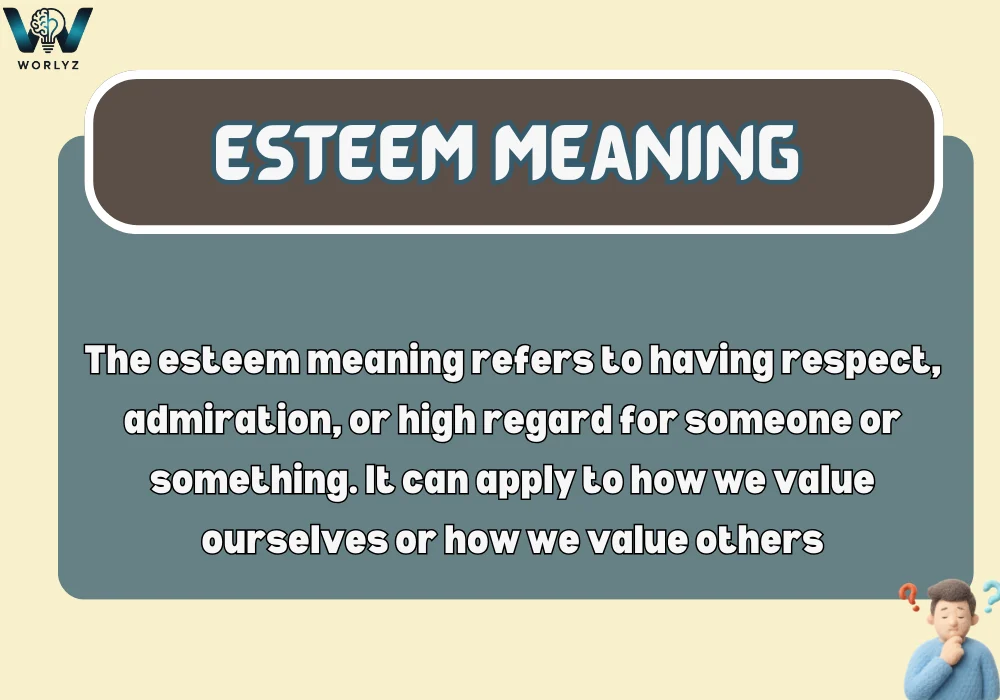
The esteem meaning refers to having respect, admiration, or high regard for someone or something. It can apply to how we value ourselves or how we value others.
At its core, esteem is about recognizing worth or importance.
Common definitions include:
- Respect or admiration for someone
- High regard for a person’s qualities or achievements
- A sense of personal value or confidence
For example:
- She is highly esteemed by her colleagues.
- A healthy level of self-esteem helps people handle criticism better.
Word Origin
The word esteem comes from the Latin word aestimare, which means to value, estimate, or judge the worth of something. Over time, the word entered Old French and later English, where it became associated with respect and admiration.
Today, the word is widely used in both formal and casual contexts, especially in discussions about mental health and relationships.
Different Forms of the Word
Esteem can appear in several related forms:
| Word Form | Meaning | Example |
|---|---|---|
| Esteem | Respect or admiration | I esteem her honesty |
| Esteemed | Highly respected | An esteemed professor spoke at the event |
| Self-esteem | Confidence in oneself | Confidence grows with healthy self-esteem |
| Esteeming | Showing respect | He is esteeming her efforts |
How to Use Esteem in Conversations
Understanding the esteem meaning also involves knowing how to use the word naturally in everyday conversations.
People use the word in situations where respect, appreciation, or admiration is involved.
Common situations include:
- Talking about personal confidence
- Showing respect for someone’s achievements
- Discussing mental health and self-worth
- Expressing professional respect
- Teachers hold hardworking students in high esteem.
- Building self-esteem takes time and positive habits.
- Many employees esteem leaders who treat people fairly.
Situations Where Esteem Is Commonly Used
You might see the word in:
- Personal development books
- School and psychology discussions
- Social media posts about confidence
- Workplace communication
- Motivational speeches
For example, on social media someone might write:
Protect your self-esteem by surrounding yourself with supportive people.
Examples of Esteem in Everyday Conversations
Here are some realistic examples showing how the word appears in real conversations.
Example 1: Workplace Conversation
Person A: Our manager is respected by everyone.
Person B: Yes, people really hold her in high esteem.
Example 2: Personal Growth Discussion
Friend 1: I want to improve my confidence.
Friend 2: Working on your self-esteem can really help.
Example 3: School Setting
Teacher: Students who respect themselves usually show better discipline and self-esteem.
Example 4: Online Discussion
User 1: Confidence is important.
User 2: True. Healthy self-esteem makes a big difference in life.
These examples show that esteem often appears in positive or respectful contexts.
Types of Esteem and Their Meanings
The concept of esteem can appear in different forms depending on the situation.
1. Self-Esteem
Self-esteem refers to how much a person values themselves.
High self-esteem often leads to:
- Confidence
- Emotional resilience
- Positive decision making
Low self-esteem may lead to:
- Self-doubt
- Fear of failure
- Negative self-talk
2. Social Esteem
Social esteem refers to the respect a person receives from others.
For example:
- A respected teacher may be held in high esteem by students.
- A community leader might earn social esteem through service.
3. Professional Esteem
Professional esteem refers to respect earned in a workplace or career.
Example:
- Experienced doctors are often held in high esteem by their colleagues.
Comparison Table: Esteem vs Similar Words
Sometimes people confuse esteem with other words like respect, admiration, or confidence. While they are related, they are not exactly the same.
| Word | Meaning | Difference from Esteem |
|---|---|---|
| Respect | Feeling admiration for someone | Respect is a broader concept |
| Admiration | Strong approval or appreciation | Often more emotional |
| Confidence | Belief in abilities | Focuses on ability, not value |
| Self-esteem | Personal self-value | Specific type of esteem |
This comparison helps clarify how esteem fits within related concepts.
Common Mistakes or Misunderstandings
Even though the word is simple, people sometimes misunderstand how to use it.
Here are some common mistakes.
Confusing Esteem with Ego
Some people think high self-esteem means arrogance, but that is not true.
Healthy self-esteem means:
- Recognizing your worth
- Respecting others
- Maintaining balance
Ego, on the other hand, often involves overconfidence or superiority.
Using Esteem Only for Self-Esteem
Another mistake is thinking the word only applies to personal confidence.
In reality, esteem can also refer to respect for others.
For example:
- She is esteemed by her community.
Overusing the Word
Sometimes people use the word too frequently when simpler words like respect might sound more natural.
Related Words and Similar Expressions
Several words are closely connected to the esteem meaning.
Synonyms include:
- Respect
- Regard
- Appreciation
- Admiration
- Honor
Related phrases include:
- Hold someone in high esteem
- Self-esteem
- Esteemed colleague
- Mutual respect
These phrases often appear in formal writing, speeches, and professional communication.
Why Self-Esteem Matters in Everyday Life
One of the most important uses of the word is in discussions about self-esteem.
Psychologists often emphasize the importance of healthy self-esteem because it affects many parts of life.
Benefits of healthy self-esteem include:
- Better relationships
- Stronger confidence
- Improved decision making
- Emotional stability
- Greater motivation
People with healthy self-esteem often feel more comfortable expressing their opinions and pursuing goals.
Tips for Building Healthy Self-Esteem
Improving self-esteem takes time, but small habits can make a big difference.
Helpful strategies include:
- Focus on your strengths instead of weaknesses.
- Avoid constant comparison with others.
- Set realistic goals and celebrate progress.
- Spend time with supportive people.
- Practice positive self-talk.
These habits gradually help build confidence and personal value.
FAQs About Esteem Meaning:
What does esteem mean in simple words?
Esteem means respect, admiration, or value for someone or something. It can also refer to how much a person values themselves.
What is the difference between esteem and respect?
Respect is a general feeling of admiration, while esteem usually implies a higher level of appreciation or regard.
What is self-esteem?
Self-esteem is the confidence and value a person feels about themselves. It reflects how positively or negatively someone views their own worth.
Can esteem be used in professional settings?
Yes. The word is commonly used in professional contexts to show respect for someone’s work, achievements, or character.
Why is self-esteem important?
Self-esteem affects confidence, decision making, and emotional health. Healthy self-esteem helps people handle challenges and build positive relationships.
Conclusion:
The esteem meaning centers on the idea of respect, value, and admiration. Whether it refers to how we see ourselves or how we view others, the word plays an important role in conversations about relationships, personal growth, and social respect.
Understanding this word helps improve communication, especially in discussions about confidence and emotional well-being. When people build healthy self-esteem and respect others, it often leads to stronger relationships and a more positive outlook on life.
If you enjoy learning the meanings of everyday words and expressions, share your favorite term or abbreviation in the comments and keep expanding your vocabulary.

John is the founder and primary content creator of Worlyz. He has a strong passion for explaining word meanings, language concepts, slang terms, and educational topics in a clear and simple way. John focuses on creating well researched, reader friendly content that helps users easily understand complex words and ideas. Through Worlyz, his goal is to make learning meanings and concepts straightforward and accessible for everyone.