The word forgive is simple, but its meaning carries deep emotional, psychological, and social importance. You may hear it in personal conversations, religious teachings, movies, or even everyday texting. Understanding the forgive meaning helps you not only use the word correctly but also understand its impact in real-life situations.
Forgiveness is more than just a word—it represents a choice, a process, and often a powerful emotional shift. Whether used in relationships, self-growth, or communication, forgive holds strong value across cultures and contexts.
What Does Forgive Mean
Definition
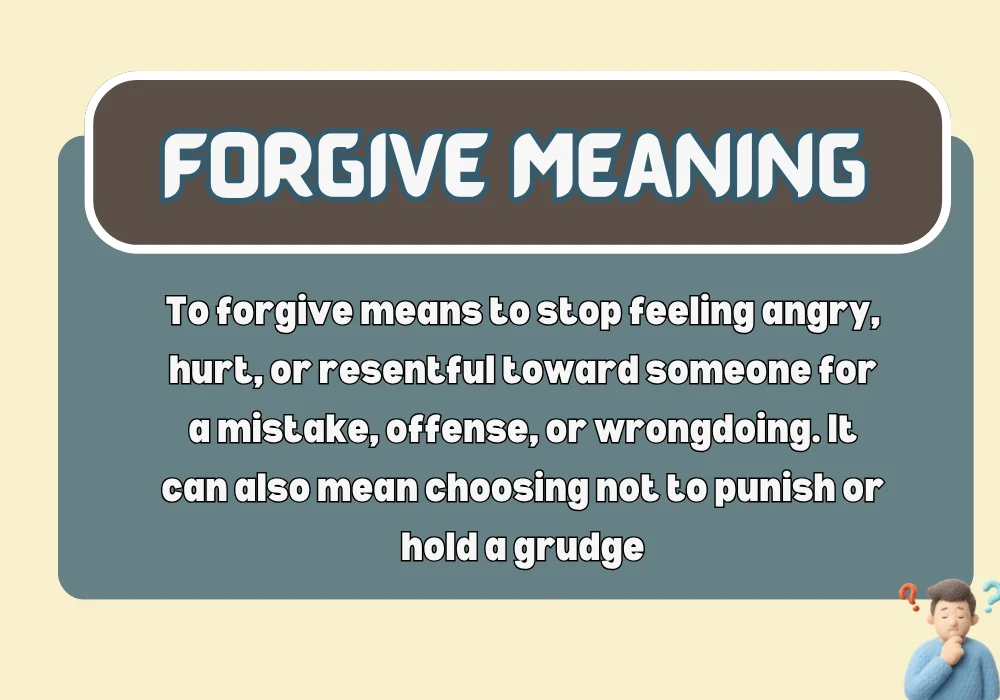
To forgive means to stop feeling angry, hurt, or resentful toward someone for a mistake, offense, or wrongdoing. It can also mean choosing not to punish or hold a grudge.
In simple terms, forgiving is about letting go of negative feelings connected to a situation or person.
Origin and Background
The word forgive comes from Old English forgiefan, which means to give up resentment or to grant pardon. Historically, it has been used in both everyday life and religious teachings.
Over time, the meaning has remained consistent, focusing on:
- Letting go of anger
- Releasing blame
- Moving toward peace
Different Meanings of Forgive Based on Context
Forgive in Personal Relationships
In relationships, forgive means letting go of hurt caused by someone’s actions.
Examples:
- Forgiving a friend after an argument
- Forgiving a partner after a misunderstanding
This type of forgiveness helps rebuild trust and maintain relationships.
Forgive in Emotional and Mental Context
Forgiveness can also be an internal process where a person releases emotional pain.
Examples:
- Forgiving someone who hurt you in the past
- Letting go of resentment for personal peace
This form focuses on emotional healing rather than the other person.
Forgive in Religious or Moral Context
In many traditions, forgiveness is seen as a moral or spiritual act.
Examples:
- Asking for forgiveness in prayer
- Believing in divine forgiveness
In this context, forgive is linked to compassion, mercy, and personal growth.
Forgive in Self-Reflection
Forgiveness is not always about others. It can also mean forgiving yourself.
Examples:
- Forgiving yourself for past mistakes
- Accepting your imperfections
Self-forgiveness is important for mental well-being and growth.
Forgive Meaning in Simple Language
In everyday terms, forgive means:
- Letting go of anger
- Moving past a mistake
- Choosing peace over resentment
- Giving someone another chance
It is a conscious decision rather than an automatic reaction.
Examples of Forgive in Conversations
Personal Conversation Example
I forgive you, but I need time to rebuild trust.
Emotional Context Example
She finally forgave herself and moved on.
Casual Conversation Example
You should forgive and focus on your future.
Supportive Advice Example
Forgiving does not mean forgetting, it means letting go.
These examples show how forgive is used in different emotional and social situations.
Forgive Compared to Similar Words
Understanding forgive becomes easier when compared with related terms.
| Word | Meaning | Key Difference |
|---|---|---|
| Forgive | Let go of anger or blame | Emotional release |
| Pardon | Officially excuse wrongdoing | Formal or legal tone |
| Excuse | Overlook a minor mistake | Less emotional |
| Forget | Stop remembering | Not the same as forgiving |
| Reconcile | Restore relationship | Focus on rebuilding |
Forgive focuses on emotional release, not necessarily restoring the relationship.
Psychological Importance of Forgiveness
Forgiveness plays a major role in mental health and emotional well-being.
Benefits include:
- Reduced stress and anxiety
- Improved emotional balance
- Better relationships
- Increased inner peace
Holding onto anger can be mentally exhausting, while forgiveness helps create relief and clarity.
Common Misunderstandings About Forgive
Thinking Forgiveness Means Forgetting
Forgiving does not mean you forget what happened. It means you release the emotional burden.
Believing Forgiveness Means Accepting Behavior
Forgiveness does not justify or approve wrongdoing.
Assuming Forgiveness Is Instant
Forgiveness is often a process that takes time, reflection, and effort.
Forgive in Everyday Expressions
The word forgive appears in many common phrases:
- Forgive and forget
- Please forgive me
- Learn to forgive
- Seek forgiveness
These expressions show how central forgiveness is in communication.
Related Words and Concepts
When learning the forgive meaning, you may also encounter:
- Mercy
- Compassion
- Apology
- Healing
- Acceptance
Each of these connects to the idea of emotional release and understanding.
FAQs:
What does forgive mean in simple words?
Forgive means letting go of anger or resentment toward someone who has hurt you.
Is forgiving the same as forgetting?
No, forgiving means releasing anger, while forgetting means losing memory of the event.
Why is forgiveness important?
Forgiveness helps reduce stress, improve mental health, and support emotional healing.
Can you forgive someone without trusting them again?
Yes, forgiveness does not always mean rebuilding trust or continuing the relationship.
What is self-forgiveness?
Self-forgiveness means accepting your mistakes and letting go of guilt to move forward.
Conclusion:
The forgive meaning goes beyond simply saying sorry or accepting an apology. It represents a deeper emotional process of letting go, healing, and choosing peace over resentment. Whether directed toward others or yourself, forgiveness is a powerful step toward personal growth.
By understanding forgiveness in different contexts, you can use the word more meaningfully and apply its concept in real-life situations for better emotional well-being and stronger relationships.

Alex is the owner and founder of Worlyz. He is passionate about explaining word meanings, language concepts, slang terms, and educational topics in a clear and simple manner. Alex focuses on creating high quality, well researched, and user focused content that helps readers understand complex words easily. Through Worlyz, his goal is to make learning language meanings and concepts accessible and reliable for everyone.