The word ghost is widely recognized, but its meaning goes beyond spooky stories and Halloween. You may hear it in conversations, on social media, in music, or even in professional contexts. Understanding the ghost meaning helps you interpret its use in everyday language, pop culture, and even slang.
From supernatural spirits to modern texting slang, ghost is a versatile word that carries both literal and figurative meanings. This article explains all the different ways ghost is used, with examples, comparisons, and cultural context.
What Does Ghost Mean
Definition
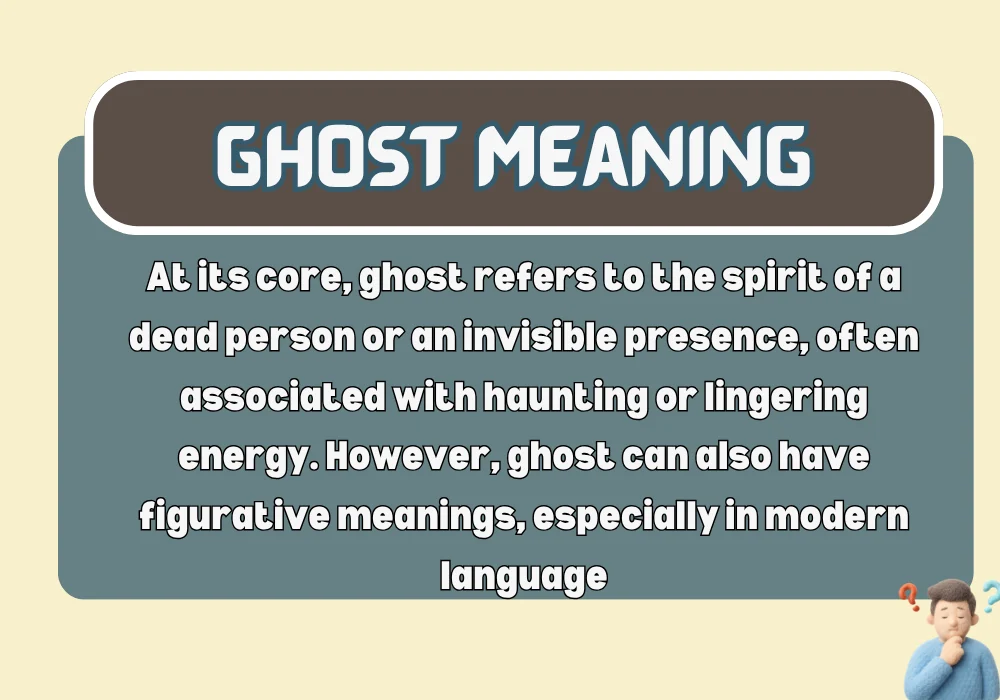
At its core, ghost refers to the spirit of a dead person or an invisible presence, often associated with haunting or lingering energy. However, ghost can also have figurative meanings, especially in modern language.
Depending on context, ghost can mean:
- A supernatural being
- Someone who disappears suddenly without explanation
- An invisible or unnoticed presence
Origin and Background
The word ghost comes from the Old English gāst, meaning spirit, soul, or breath. Historically, ghost referred to both the human soul and spiritual beings believed to interact with the living.
Over time, the word expanded into metaphorical uses: disappearing from situations, avoiding communication, or leaving a lasting but invisible impression.
Different Meanings of Ghost Based on Context
Ghost as a Supernatural Being
Traditionally, ghost refers to the spirit of someone who has died but appears or lingers in the physical world.
Examples:
- A haunted house with resident ghosts
- Seeing a ghost in folklore or movies
- Spiritual ghosts in cultural rituals
This meaning is rooted in myths, religions, and storytelling traditions.
Ghost as Slang in Modern Language
In contemporary slang, especially texting and social media, ghost is used to describe suddenly cutting off communication with someone without explanation.
Examples:
- He ghosted me after our third date.
- She’s ghosting her coworkers by ignoring emails.
- Ghosting is common in online dating.
This usage is figurative but widely recognized in casual conversation.
Ghost as a Figurative Concept
Ghost can also describe something invisible, unnoticed, or lingering.
Examples:
- The ghost of his past mistakes
- A ghost town (a deserted city or town)
- Ghosting in technology, like ghost images on screens
In these cases, ghost conveys absence, invisibility, or haunting effects.
Ghost Meaning in Simple Language
In everyday terms, ghost can mean:
- A spirit of someone who has died
- Someone who disappears without notice
- Something invisible or lingering
- A metaphor for absence or loss
The word is highly flexible, with the exact meaning depending on context.
Examples of Ghost in Conversations
Supernatural Context Example
The old castle is said to be full of ghosts.
Slang / Social Example
I can’t believe he ghosted me after all our messages.
Figurative Example
This office feels like a ghost town on weekends.
Technology Example
The screen had a ghost image that wouldn’t disappear.
These examples show how ghost adapts across multiple contexts, from spooky stories to everyday life.
Ghost Compared to Similar Words
Understanding ghost becomes easier when compared to related words.
| Word | Meaning | Key Difference |
|---|---|---|
| Ghost | Spirit or sudden disappearance | Can be literal or figurative |
| Spirit | Soul or supernatural being | More general and formal |
| Phantom | Apparition or illusion | Often eerie or threatening |
| Haunt | To appear repeatedly | Focuses on repeated presence |
| Vanish | To disappear | Emphasizes sudden absence |
Ghost can carry emotional weight, unlike purely neutral words like vanish.
Cultural and Pop Culture Significance of Ghost
Ghosts have fascinated humans for centuries. They appear in:
- Movies and TV shows (like horror and mystery genres)
- Folklore and legends around the world
- Music and literature as metaphors for absence or memory
- Social media slang as a way to describe disappearing communication
Modern ghosting in social media reflects both humor and emotional tension, showing how language evolves over time.
Common Mistakes or Misunderstandings
Thinking Ghost Always Means a Spirit
Ghost doesn’t always refer to the supernatural. Context is key.
Confusing Ghosting with Avoidance in All Cases
Ghosting specifically refers to cutting off communication suddenly, not just politely avoiding someone.
Using Ghost in Formal Writing
Slang ghosting is informal and may not suit academic or professional contexts.
Related Words and Expressions
When exploring ghost meaning, you may also encounter:
- Apparition
- Spirit
- Phantom
- Haunted
- Invisible presence
- Ghosting (modern slang)
These words overlap with ghost but carry slightly different tones or formality levels.
FAQs:
What does ghost mean in simple words?
Ghost can mean the spirit of a dead person, someone who disappears suddenly, or something invisible or lingering.
What does it mean to ghost someone?
To ghost someone means to suddenly stop responding to them without explanation, usually in dating or casual communication.
Can ghost refer to a place?
Yes, ghost can describe empty or deserted places, like a ghost town.
Is ghost always a negative term?
Not necessarily. Ghost can describe neutral absence, mysterious presence, or playful slang.
Where does the word ghost come from?
Ghost comes from Old English gāst, meaning spirit or soul.
Conclusion:
The ghost meaning is broad, covering both supernatural spirits and modern figurative uses. Whether describing haunted locations, sudden disappearances in communication, or unseen lingering effects, ghost is a versatile word that reflects culture, emotion, and human imagination.
Understanding ghost in its various contexts helps you interpret stories, slang, and conversations more accurately. It’s a word that moves effortlessly between folklore, social life, and digital culture, proving its enduring relevance.

John is the founder and primary content creator of Worlyz. He has a strong passion for explaining word meanings, language concepts, slang terms, and educational topics in a clear and simple way. John focuses on creating well researched, reader friendly content that helps users easily understand complex words and ideas. Through Worlyz, his goal is to make learning meanings and concepts straightforward and accessible for everyone.