The word primp is often used in conversations about appearance, grooming, and getting ready before going somewhere important. You may hear it in movies, social media captions, beauty content, or everyday conversations. Understanding the primp meaning helps you use the word naturally and recognize how people use it in both casual and modern communication.
Although primp sounds playful and lighthearted, it has a very specific meaning connected to personal appearance and preparation. Depending on the context, it can describe anything from fixing your hair in the mirror to spending extra time making yourself look polished before an event.
What Does Primp Mean
Definition
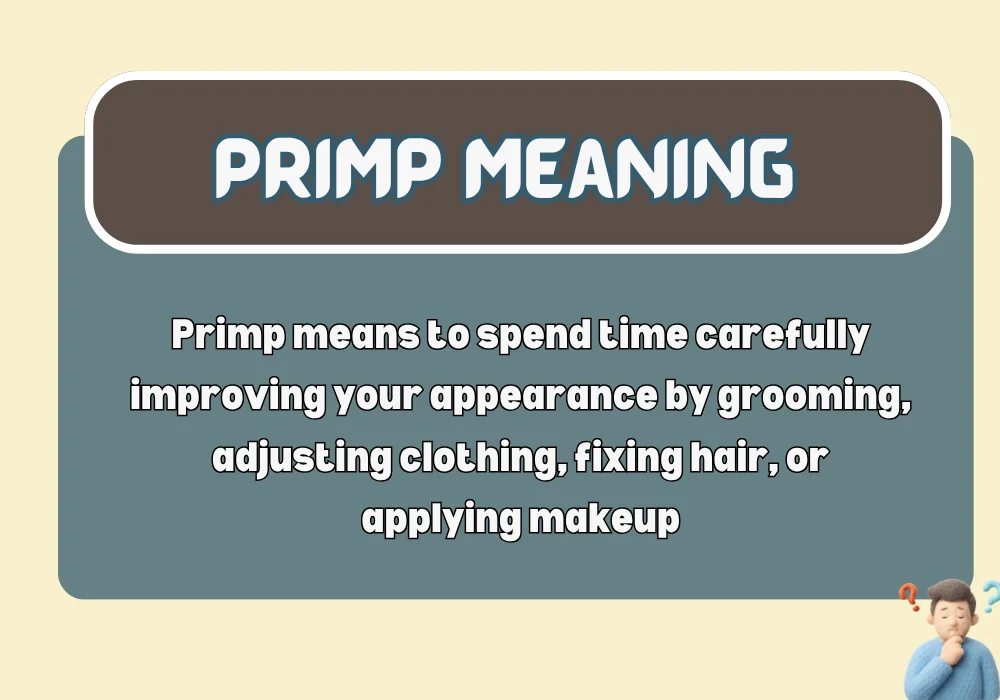
Primp means to spend time carefully improving your appearance by grooming, adjusting clothing, fixing hair, or applying makeup. It usually refers to preparing yourself to look neat, stylish, or attractive.
In simple terms, primp means:
- Getting yourself ready
- Fixing your appearance
- Grooming carefully before going out
Origin of the Word
The word primp originated in American English during the 18th century. It is believed to come from the word prim, which describes someone neat, proper, or overly careful about appearance.
Over time, primp developed into a verb connected to personal grooming and beauty routines.
Different Meanings of Primp Based on Context
Primp in Everyday Conversation
In normal conversation, primp usually describes someone spending extra time preparing their appearance.
Examples:
- Fixing hair before a date
- Adjusting clothes before a photo
- Applying makeup carefully
Example sentence:
She spent an hour primping before the party.
Primp in Fashion and Beauty Culture
Primp is very common in:
- Fashion blogs
- Beauty tutorials
- Makeup videos
- Lifestyle content
It often describes detailed grooming routines.
Example:
The influencer shared her morning primping routine on social media.
Primp in a Humorous or Playful Way
Sometimes primp is used jokingly to describe someone acting extra careful about their looks.
Example:
He keeps primping in front of the mirror like a celebrity.
In these cases, the tone is playful rather than negative.
Primp Meaning in Simple Language
In everyday language, primp means:
- Making yourself look better
- Spending time on grooming
- Preparing your appearance carefully
It often suggests attention to detail and personal style.
How Primp Is Used in Modern Communication
Today, primp appears in:
- Social media captions
- Beauty and fashion content
- Lifestyle blogs
- Casual texting and chats
Example chat messages:
Give me ten minutes to primp before we leave
She is still primping for the video call
The word remains popular because it sounds expressive and fun.
Examples of Primp in Conversations
Everyday Conversation Example
I need a few minutes to primp before dinner.
Social Media Example
Saturday night primping session begins now.
Beauty Context Example
She loves to primp before taking pictures.
Humorous Example
He spent longer primping than everyone else combined.
These examples show how primp naturally fits into daily language.
Primp Compared to Similar Words
Understanding primp becomes easier when compared to similar terms.
| Word | Meaning | Key Difference |
|---|---|---|
| Primp | Groom carefully | Stylish and appearance-focused |
| Groom | Clean or prepare appearance | More general |
| Dress up | Wear nicer clothes | Clothing-focused |
| Prepare | Get ready generally | Broader meaning |
| Beautify | Improve appearance | More formal |
Primp specifically emphasizes personal grooming and appearance adjustments.
Common Situations Where Primp Is Used
Before Social Events
People primp before:
- Parties
- Weddings
- Dates
- Photoshoots
Before Online Content
Many creators primp before:
- Livestreams
- TikTok videos
- Instagram photos
- Video calls
During Daily Grooming
Even simple routines like fixing hair or adjusting clothes can be described as primping.
Common Mistakes or Misunderstandings
Thinking Primp Is Only for Women
Anyone can primp. The word applies to all genders.
Assuming Primp Means Vanity
Primping is not always about vanity. Sometimes it simply means wanting to look neat and presentable.
Using Primp in Formal Writing
Primp is casual and conversational, so it may sound too informal in professional documents.
Cultural and Social Meaning of Primp
Primp often reflects:
- Self-care
- Confidence
- Personal style
- Social preparation
In modern culture, primping is commonly connected to beauty trends, fashion culture, and online presentation.
Related Words and Expressions
When learning the primp meaning, you may also encounter:
- Groom
- Style
- Freshen up
- Dress up
- Get ready
These expressions share similar ideas but vary in tone and detail.
FAQs:
What does primp mean?
Primp means to carefully fix or improve your appearance by grooming, styling, or adjusting clothing and hair.
Is primp slang?
Primp is not exactly slang, but it is an informal and conversational word commonly used in daily speech.
Where is primp used?
Primp is used in conversations about beauty, fashion, grooming, social events, and getting ready before going out.
What does primp mean in chat?
In chat, primp usually means someone is getting ready or fixing their appearance before an event, call, or outing.
Can men use the word primp?
Yes, primp can describe anyone spending time improving or adjusting their appearance.
Is primp a negative word?
Not usually. It is generally playful or neutral, though it can sometimes imply someone is overly focused on appearance.
Conclusion:
The primp meaning centers around grooming, appearance, and preparation. Whether someone is fixing their hair before a date, adjusting their outfit for photos, or preparing for an important event, primp describes the act of making yourself look polished and presentable.
Understanding how primp is used in conversations, beauty culture, and modern communication helps you recognize its tone and use it naturally in everyday language.

Hi, I’m Mike Grobgaard, founder of Lexonr. I write about meanings, internet slang, biblical terms, and modern expressions in a simple yet engaging way. My goal is to help readers understand the deeper story behind every word they search for.