The word syncing is everywhere today—from smartphones and apps to cloud storage, social media, and even casual conversations. You might see messages like syncing data, syncing contacts, or syncing devices, and wonder what it really means. Understanding the syncing meaning helps you use technology more effectively and avoid confusion when things do not work as expected.
Syncing is not just a technical term anymore. It is also used in everyday language to describe coordination, alignment, and connection between people, devices, or systems. This guide explains everything in a simple and practical way.
What Does Syncing Mean
Definition
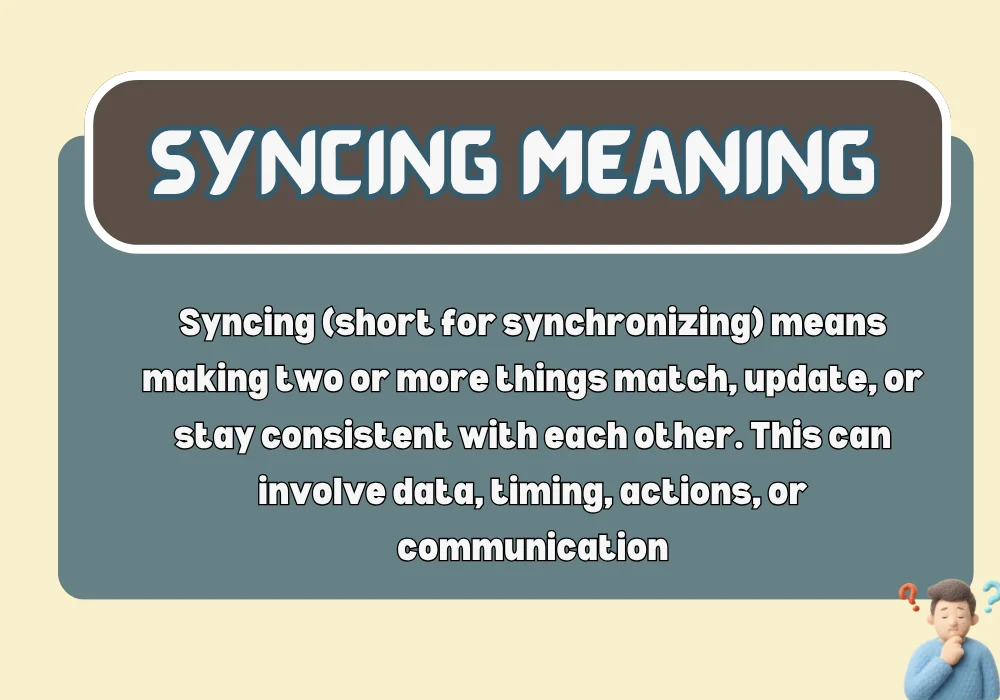
Syncing (short for synchronizing) means making two or more things match, update, or stay consistent with each other. This can involve data, timing, actions, or communication.
In simple terms, syncing ensures everything is up to date and aligned.
Origin and Background
The word syncing comes from synchronize, which has roots in Greek:
- syn meaning together
- chronos meaning time
Originally, it referred to things happening at the same time. Over time, it expanded to include data matching and coordination in technology and daily life.
Different Meanings of Syncing Based on Context
Syncing in Technology
This is the most common use today. In technology, syncing means updating data across devices or platforms so everything stays the same.
Examples include:
- Syncing contacts between phone and email
- Syncing photos to cloud storage
- Syncing messages across devices
If you update something on one device, syncing ensures it appears on others.
Syncing in Communication and Behavior
Syncing can also describe people being aligned in thoughts, actions, or communication.
Examples:
- We are finally syncing on this project
- Their ideas are not syncing
In this sense, syncing means being on the same page.
Syncing in Media and Entertainment
In music and video, syncing refers to matching sound with visuals.
Examples:
- Lip syncing in performances
- Audio syncing with video
This ensures everything feels natural and coordinated.
Syncing Meaning in Simple Language
In everyday terms, syncing means:
- Keeping things updated
- Making things match
- Staying connected or aligned
- Working together smoothly
The meaning depends on whether you are talking about technology or people.
Examples of Syncing in Conversations
Tech Example
My phone is syncing all my photos to the cloud.
Work Example
Let us sync before the meeting so we are clear.
Social Example
We need to sync our plans for the weekend.
Media Example
The audio is not syncing with the video.
These examples show how syncing fits different situations.
How Syncing Works in Technology
To understand syncing better, it helps to know how it works behind the scenes.
Basic Process
- Data is stored on one device or platform
- Changes are detected
- Updates are sent to another device or server
- Both sides match the latest version
This process happens automatically in many apps.
Types of Syncing
- Manual syncing where you start the process yourself
- Automatic syncing where updates happen in the background
- Real time syncing where changes appear instantly
Each type is used depending on the system and purpose.
Syncing Compared to Similar Words
Understanding syncing becomes clearer when compared to related terms.
| Word | Meaning | Key Difference |
|---|---|---|
| Syncing | Making things match or update | Focus on alignment |
| Backup | Saving a copy of data | No matching involved |
| Upload | Sending data to a server | One-way process |
| Transfer | Moving data between devices | No ongoing updates |
| Connect | Linking devices or systems | Does not ensure matching |
Syncing is unique because it keeps everything consistent over time.
Common Problems with Syncing
Syncing does not always work perfectly. Some common issues include:
- Slow internet connection
- Outdated software
- Conflicting data versions
- Sync turned off in settings
Example:
If your contacts are not syncing, one device may not be connected properly.
Why Syncing Is Important
Syncing plays a key role in modern life because it:
- Keeps data consistent across devices
- Saves time by automating updates
- Reduces the risk of losing information
- Improves productivity and organization
Without syncing, managing multiple devices would be much harder.
Common Mistakes or Misunderstandings
Thinking Syncing Is the Same as Backup
Syncing updates data across devices, while backup simply saves a copy.
Assuming Syncing Is Always Instant
Some syncing processes take time depending on internet speed and data size.
Ignoring Sync Settings
Many problems happen because syncing is turned off or not configured properly.
Syncing in Modern Daily Life
Today, syncing is used in:
- Smartphones and apps
- Cloud services
- Work collaboration tools
- Social media platforms
People also use syncing casually to describe coordination in plans and communication.
Related Words and Concepts
When learning the syncing meaning, you may also encounter:
- Synchronization
- Integration
- Update
- Alignment
- Connection
These terms are closely related but not exactly the same.
FAQs:
What does syncing mean in simple words?
Syncing means making two or more things match or stay updated with each other.
Why is syncing important?
Syncing keeps your data consistent across devices and saves time by updating automatically.
Is syncing the same as backup?
No, syncing updates data across devices, while backup creates a separate copy.
Can syncing happen automatically?
Yes, many apps and devices use automatic syncing in the background.
What causes syncing problems?
Common causes include poor internet connection, outdated apps, or incorrect settings.
Conclusion:
The syncing meaning is all about connection, consistency, and alignment. Whether you are updating data across devices, coordinating with others, or matching audio with video, syncing plays an essential role in keeping everything working smoothly.
By understanding how syncing works and where it is used, you can avoid common issues and make better use of modern technology in your daily life.

Alex is the owner and founder of Worlyz. He is passionate about explaining word meanings, language concepts, slang terms, and educational topics in a clear and simple manner. Alex focuses on creating high quality, well researched, and user focused content that helps readers understand complex words easily. Through Worlyz, his goal is to make learning language meanings and concepts accessible and reliable for everyone.