The term winter solstice is often mentioned during the coldest time of the year, especially in discussions about seasons, holidays, and cultural traditions. Many people hear about it but are not fully sure what it actually means or why it is important. Understanding the winter solstice meaning helps you connect science, nature, and tradition in a deeper and more meaningful way.
The winter solstice is not just a date on the calendar. It marks a turning point in the year, influencing daylight, weather patterns, and even human celebrations across different cultures. This detailed guide explains everything you need to know in simple and practical language.
What Does Winter Solstice Mean
Definition
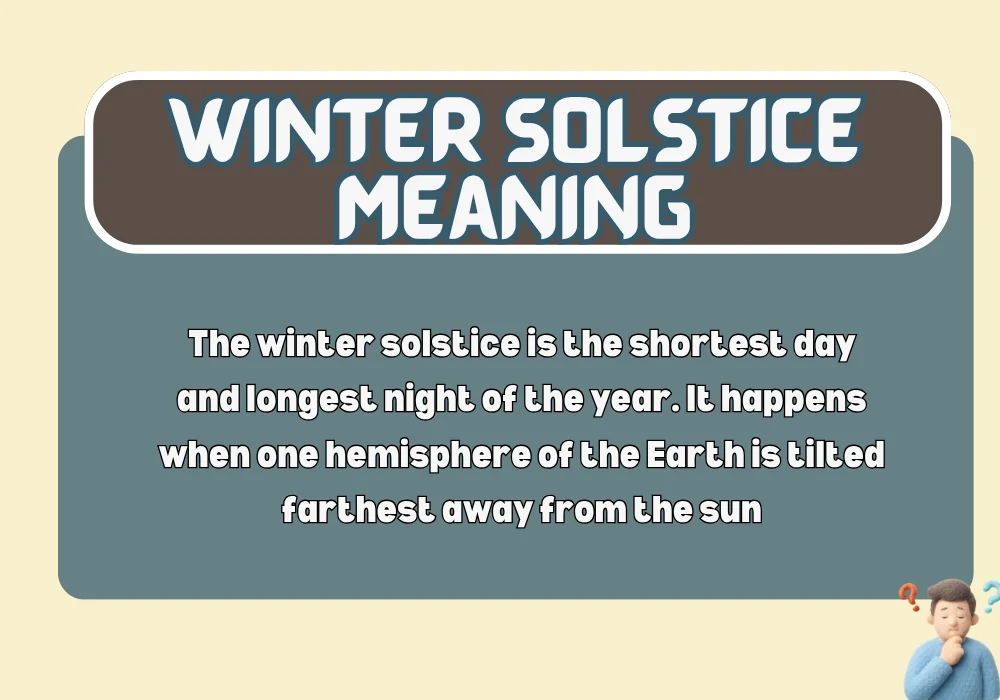
The winter solstice is the shortest day and longest night of the year. It happens when one hemisphere of the Earth is tilted farthest away from the sun.
After the winter solstice:
- Days start getting longer
- Nights gradually become shorter
This makes it an important seasonal milestone.
When Does the Winter Solstice Occur
The winter solstice usually occurs around:
- December 21 or 22 in the Northern Hemisphere
- June 20 or 21 in the Southern Hemisphere
The exact date can vary slightly each year due to Earth’s orbit.
Why the Winter Solstice Happens
Earth’s Tilt Explained
The Earth is tilted at about 23.5 degrees. This tilt is the main reason we experience seasons.
During the winter solstice:
- The Northern Hemisphere is tilted away from the sun
- Sunlight reaches it at a lower angle
- Days become shorter and colder
At the same time, the Southern Hemisphere experiences summer.
Simple Explanation
In everyday language, the winter solstice happens because:
- The sun appears at its lowest point in the sky
- There is less daylight than any other day
- It marks the peak of winter darkness
Winter Solstice Meaning in Simple Language
In simple terms, the winter solstice means:
- The darkest day of the year
- The beginning of longer days ahead
- A natural turning point in the seasons
Even though it is the shortest day, it also signals that more sunlight is coming.
Cultural and Historical Meaning of the Winter Solstice
Ancient Celebrations
For thousands of years, people have celebrated the winter solstice as a symbol of:
- Light returning after darkness
- Renewal and hope
- The cycle of life
Ancient civilizations built monuments aligned with the solstice sunrise or sunset.
Traditional Festivals and Events
Many cultures created festivals around this time, including:
- Yule in Northern Europe
- Dongzhi Festival in China
- Winter celebrations in ancient Rome
These traditions often involved:
- Feasting
- Lighting candles or fires
- Gathering with family
Examples of Winter Solstice in Everyday Conversations
Casual Conversation Example
Today is the winter solstice, so it is the shortest day of the year.
Educational Context Example
Students learn about the winter solstice in science classes when studying seasons.
Social Media Example
Celebrating the winter solstice with candles and warm drinks.
These examples show how the term is used in both casual and informative contexts.
Winter Solstice Compared to Similar Terms
Understanding the winter solstice becomes easier when compared to related seasonal events.
| Term | Meaning | Key Difference |
|---|---|---|
| Winter Solstice | Shortest day of the year | Marks peak of winter |
| Summer Solstice | Longest day of the year | Opposite of winter solstice |
| Equinox | Equal day and night | Occurs twice a year |
| Winter Season | Coldest period of the year | Longer duration |
| Solstice | Sun standing still event | Happens twice yearly |
The winter solstice is unique because it marks the extreme point of darkness.
Scientific Importance of the Winter Solstice
The winter solstice is important in science because it helps:
- Define seasonal changes
- Measure Earth’s movement
- Understand daylight patterns
Astronomers use it to track how the Earth moves around the sun and how sunlight changes throughout the year.
Psychological and Emotional Meaning
The winter solstice can also have emotional meaning for people. The long nights and reduced sunlight can affect mood and energy levels.
However, many people see it as:
- A time for reflection
- A moment of rest and stillness
- A symbol of hope as days begin to grow longer
Modern Relevance of the Winter Solstice
Today, the winter solstice is recognized in:
- Schools and education
- Weather discussions
- Cultural celebrations
- Social media posts
Some people celebrate it quietly, while others use it as a reason to gather with friends and family.
Common Mistakes or Misunderstandings
Thinking It Is the Coldest Day of the Year
The winter solstice is the shortest day, but not always the coldest. Coldest temperatures often come later.
Confusing Solstice With Equinox
Solstice refers to the longest or shortest day, while equinox refers to equal day and night.
Believing It Is Only Cultural
The winter solstice is a scientific event, even though it has cultural meaning.
Related Words and Concepts
When learning the winter solstice meaning, you may also encounter:
- Seasonal cycle
- Earth’s tilt
- Daylight variation
- Solar movement
- Astronomical events
These concepts help explain why the solstice happens.
FAQs:
What does winter solstice mean in simple words?
It means the shortest day and longest night of the year.
Why is the winter solstice important?
It marks the turning point when days begin to get longer again.
Does the winter solstice happen on the same day every year?
No, it usually falls around December 21 or 22 in the Northern Hemisphere.
Is the winter solstice the coldest day?
Not necessarily. The coldest days usually come later in winter.
What happens after the winter solstice?
After the winter solstice, daylight gradually increases each day.
Conclusion:
The winter solstice meaning goes beyond just being the shortest day of the year. It represents a natural turning point in the Earth’s cycle, marking the return of longer days and more sunlight. This makes it both scientifically important and symbolically powerful.
By understanding the winter solstice, you can better appreciate seasonal changes, cultural traditions, and the natural rhythms that shape our lives.

John is the founder and primary content creator of Worlyz. He has a strong passion for explaining word meanings, language concepts, slang terms, and educational topics in a clear and simple way. John focuses on creating well researched, reader friendly content that helps users easily understand complex words and ideas. Through Worlyz, his goal is to make learning meanings and concepts straightforward and accessible for everyone.