The word tacky is commonly used in conversations, social media, texting, and pop culture discussions. While it originally described something cheap or poorly styled, its slang meaning has evolved over time. Understanding the tacky meaning slang helps you recognize how people use it online, in chats, and in everyday conversations.
You may hear someone call an outfit tacky, describe behavior as tacky, or use the word jokingly in memes and comments. Depending on the tone, tacky can sound playful, critical, or even humorous. This guide explains the slang meaning of tacky in a detailed and easy-to-understand way.
What Does Tacky Mean in Slang
Definition
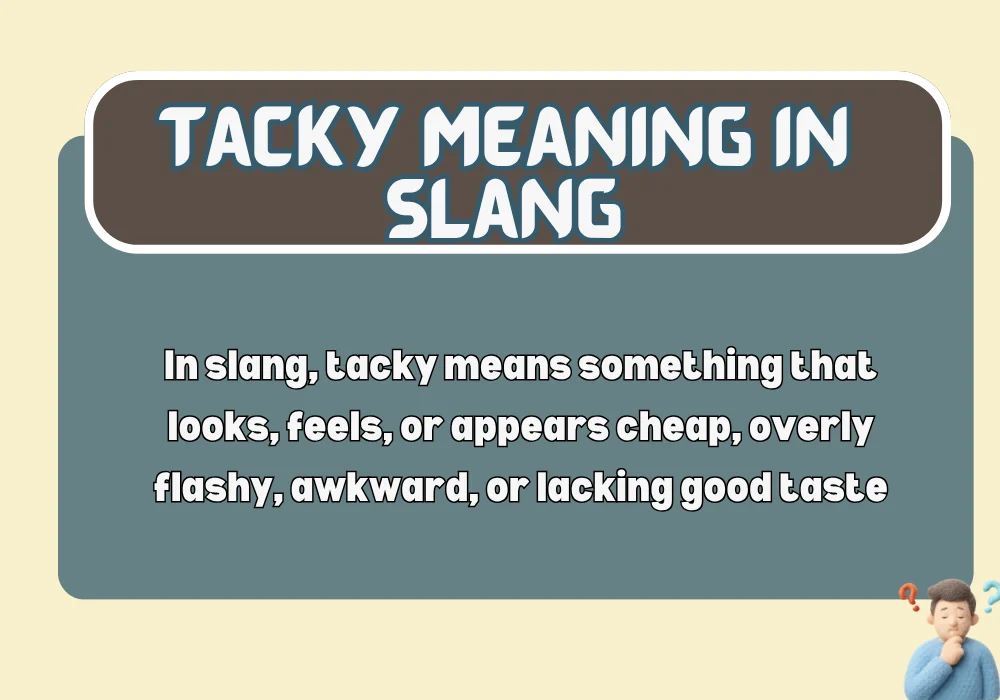
In slang, tacky means something that looks, feels, or appears cheap, overly flashy, awkward, or lacking good taste. It is usually used to criticize style, behavior, decoration, or actions that people see as embarrassing or excessive.
In simple terms, tacky describes something that feels “too much” in an unattractive way.
Origin of the Word
The word tacky originally referred to something sticky or poorly made. Over time, it became associated with things considered low-quality or unfashionable.
As slang developed, tacky became a common casual insult used to describe:
- Fashion choices
- Decorations
- Behavior
- Social situations
Today, it is widely used online and in modern speech.
Different Slang Meanings of Tacky
Tacky in Fashion
One of the most common slang uses of tacky relates to clothing or style.
Examples include:
- Overly shiny outfits
- Mismatched colors
- Excessive accessories
Example:
That jacket is kind of tacky with all the glitter.
Tacky in Behavior
Tacky can also describe actions that seem rude, embarrassing, or socially inappropriate.
Examples:
- Bragging too much
- Acting attention-seeking
- Posting insensitive content online
Example:
It was tacky to talk about money at the dinner table.
Tacky in Decorations or Design
People often use tacky to criticize decoration styles that seem too loud or excessive.
Examples:
- Overdecorated rooms
- Bright clashing colors
- Cheap-looking designs
Example:
The party decorations looked really tacky.
Tacky Meaning in Simple Language
In everyday language, tacky usually means:
- Cheap-looking
- Overdone
- Embarrassing in style or behavior
- Lacking elegance or taste
The word is subjective because what feels tacky to one person may seem fun or stylish to another.
How Tacky Is Used in Texts and Online Chats
Tacky appears frequently in:
- TikTok comments
- Instagram captions
- Group chats
- Fashion discussions
- Meme culture
People often use it casually or humorously rather than seriously.
Example chat messages:
- That wallpaper looks tacky lol
- Posting that was honestly tacky
- Those shoes are so tacky but funny at the same time
The tone often depends on emojis, context, and relationship between people.
Examples of Tacky in Conversations
Fashion Example
Those neon shoes look a little tacky with that outfit.
Social Media Example
People said the influencer’s post felt tacky and attention-seeking.
Decoration Example
The room was full of tacky gold decorations.
Casual Joke Example
Ugly Christmas sweaters are supposed to look tacky.
These examples show how the word can be playful or critical.
Tacky Compared to Similar Slang Words
Understanding tacky becomes easier when compared to similar slang expressions.
| Word | Meaning | Tone |
|---|---|---|
| Tacky | Cheap or tasteless | Casual criticism |
| Cringe | Embarrassing or awkward | Internet slang |
| Trashy | Low-class or messy | Harsher tone |
| Cheesy | Overly corny or dramatic | Lighthearted |
| Gaudy | Excessively flashy | More formal |
Tacky is usually milder and more conversational than trashy.
Common Situations Where Tacky Is Used
Fashion Discussions
People use tacky to judge clothing, makeup, or accessories.
Social Behavior
Tacky can describe rude or socially awkward actions.
Interior Design
The word often appears in decoration or home styling conversations.
Online Humor
Memes and jokes sometimes intentionally celebrate tacky styles for fun.
Common Mistakes or Misunderstandings
Thinking Tacky Always Means Ugly
Something can be tacky without being completely unattractive. It may simply feel excessive or poorly matched.
Using Tacky Too Harshly
Because tacky criticizes taste, it can offend people if used carelessly.
Confusing Tacky With Cheap
Cheap refers to price, while tacky refers more to appearance or style.
Cultural and Internet Usage of Tacky
The word tacky is especially popular in:
- Fashion communities
- Lifestyle content
- Social media trends
- Reality TV discussions
- Meme culture
In some internet trends, people even embrace tacky styles intentionally as humor or nostalgia.
Related Slang Words and Expressions
When learning the tacky meaning slang, you may also encounter:
- Cringe
- Cheesy
- Extra
- Trashy
- Corny
- Gaudy
Each word shares similarities but carries a slightly different tone.
FAQs:
What does tacky mean?
Tacky means something cheap-looking, overly flashy, awkward, or lacking good taste.
Is tacky slang?
Yes, tacky is commonly used as casual slang to criticize style, behavior, or appearance.
Where is tacky used?
Tacky is often used in fashion discussions, social media, texting, lifestyle content, and casual conversations.
What does tacky mean in chat?
In chat, tacky usually describes something embarrassing, tasteless, overly dramatic, or awkward in appearance or behavior.
Can tacky be used jokingly?
Yes, people often use tacky humorously when talking about fashion trends, decorations, or funny situations.
Conclusion:
The tacky meaning slang refers to something considered cheap-looking, excessive, awkward, or lacking style. Whether describing clothes, decorations, behavior, or social media posts, tacky is commonly used as a casual and expressive way to criticize or joke about taste.
Understanding how tacky is used in slang helps you follow online conversations more easily and use the word naturally in modern communication.

Hi, I’m Mike Grobgaard, founder of Lexonr. I write about meanings, internet slang, biblical terms, and modern expressions in a simple yet engaging way. My goal is to help readers understand the deeper story behind every word they search for.