The word maniac is often used in movies, conversations, and online chats, but its meaning can vary depending on context. Sometimes it sounds serious, and other times it is used in a playful or exaggerated way. Understanding the maniac meaning helps you avoid confusion and use the word correctly in both formal and informal situations.
From its original psychological roots to its modern slang usage, maniac has evolved into a flexible term that can describe behavior, personality, or extreme enthusiasm.
What Does Maniac Mean
Definition
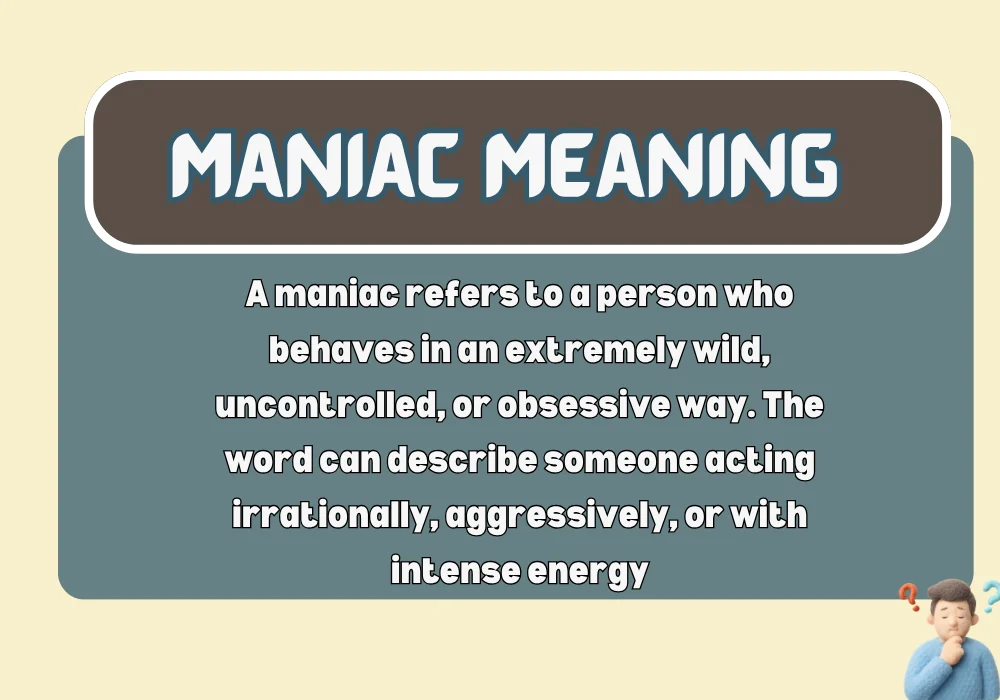
A maniac refers to a person who behaves in an extremely wild, uncontrolled, or obsessive way. The word can describe someone acting irrationally, aggressively, or with intense energy.
Depending on context, it can mean:
- Someone mentally unstable or dangerous
- Someone overly obsessed with something
- Someone acting in a very energetic or exaggerated way
Origin and Background
The word maniac comes from the Greek word maniakos, which relates to madness or frenzy. In earlier usage, it was connected to mental illness, particularly extreme psychological conditions.
Over time, the meaning expanded and softened in casual language. Today, it is often used informally to describe strong behavior rather than actual mental health conditions.
Different Meanings of Maniac Based on Context
Maniac in a Serious or Psychological Context
Originally, maniac referred to someone suffering from severe mental instability or uncontrollable behavior.
Examples:
- A dangerous criminal described as a maniac
- Someone acting completely irrationally
In modern usage, this meaning is less common in everyday conversation and is usually replaced with more accurate terms.
Maniac as an Informal or Slang Term
In casual speech, maniac is often used in a lighter or exaggerated way.
Examples:
- He is a fitness maniac
- She studies like a maniac before exams
Here, maniac means someone who is extremely passionate or obsessed with something.
Maniac as Energetic or Wild Behavior
Maniac can also describe someone acting with intense energy or excitement.
Examples:
- The kids were running around like maniacs
- He was laughing like a maniac
This usage is not negative but highlights extreme energy or lack of control.
Maniac Meaning in Simple Language
In everyday terms, maniac can mean:
- Someone acting wild or out of control
- Someone extremely obsessed with something
- Someone full of intense energy
The tone depends on how and where the word is used.
Maniac meaning slang
What does maniac mean in slang?
In slang, maniac is used to describe someone who is extremely enthusiastic, obsessed, wild, or intense about something. It is usually not meant literally.
Examples of slang usage
- “He’s a fitness maniac.” → Someone obsessed with working out.
- “She’s a shopping maniac.” → Someone who loves shopping excessively.
- “My brother is a gaming maniac.” → Someone who spends a lot of time gaming.
Common meanings
- Very obsessed with something
- Extremely energetic or excited
- Acting in a wild or crazy way
- Passionate to an unusual degree
Examples of Maniac in Conversations
Casual Conversation Example
He drove like a maniac on the highway.
Positive or Playful Example
She is a total coffee maniac and drinks it all day.
Emotional Context Example
He laughed like a maniac after hearing the joke.
Work or Study Context Example
I studied like a maniac before the test.
These examples show how the meaning changes based on tone.
Maniac Compared to Similar Words
Understanding maniac becomes clearer when compared with similar terms.
| Word | Meaning | Key Difference |
|---|---|---|
| Maniac | Extremely wild or obsessed person | Can be negative or playful |
| Wild | Acting irrationally | Broader and more casual |
| Obsessed | Deep focus on something | More neutral |
| Fanatic | Extreme enthusiasm | Often serious or intense |
| Psycho | Mentally unstable person | Strong negative tone |
Maniac often sits between serious and playful depending on context.
Psychological and Social Perspective of Maniac
In modern society, the word maniac is mostly used informally. However, it originally had strong links to mental health. Because of this, it is important to use the word carefully, especially in sensitive situations.
Using maniac jokingly is common among friends, but it may sound offensive if used to describe someone seriously.
Maniac in Pop Culture and Media
The word maniac appears frequently in:
- Movies and TV shows
- Song titles and lyrics
- Social media captions
- Gaming and online communities
In many cases, it is used to describe intense or extreme characters, adding drama or humor.
Common Mistakes or Misunderstandings
Thinking Maniac Always Means Dangerous
In modern usage, maniac often has a playful meaning rather than a serious one.
Using Maniac in Formal Situations
The word is informal and may not be suitable for professional or academic contexts.
Confusing Maniac With Mental Health Terms
Maniac should not be used as a replacement for real psychological terms.
Maniac in Everyday Expressions
The word appears in many common phrases:
- Acting like a maniac
- Running like a maniac
- Working like a maniac
These expressions emphasize intensity or extreme behavior.
Related Words and Concepts
When exploring the maniac meaning, you may also come across:
- Fanatic
- Enthusiast
- Addict (informal use)
- Extremist
- Wild person
Each carries a slightly different tone and level of intensity.
FAQs:
What does maniac mean in simple words?
Maniac means a person who behaves in a very wild, extreme, or obsessed way.
Is maniac always a negative word?
No, it can be negative or playful depending on how it is used.
Can maniac describe someone passionate about something?
Yes, it is often used informally to describe strong passion or obsession.
Is it okay to use maniac in conversation?
Yes, but it should be used carefully, especially in sensitive situations.
What is the difference between maniac and fanatic?
Maniac can describe behavior, while fanatic usually refers to strong devotion to something.
Conclusion:
The maniac meaning has evolved from a serious psychological term to a flexible word used in everyday language. It can describe extreme behavior, strong passion, or high energy depending on context.
By understanding its different meanings and tones, you can use maniac appropriately in conversations and avoid misunderstandings.

John is the founder and primary content creator of Worlyz. He has a strong passion for explaining word meanings, language concepts, slang terms, and educational topics in a clear and simple way. John focuses on creating well researched, reader friendly content that helps users easily understand complex words and ideas. Through Worlyz, his goal is to make learning meanings and concepts straightforward and accessible for everyone.