The word charm is simple, but its meaning can change a lot depending on how and where it is used. You might hear someone say a person has charm, see charm used in movies or books, or notice it in everyday conversations and social media captions. Understanding the charm meaning helps you use the word correctly and recognize what people really mean when they say it.
In modern communication, charm can describe personality, behavior, objects, or even situations. This guide explains the word in a clear and relatable way so you can understand it easily and use it naturally.
What Does Charm Mean
Definition
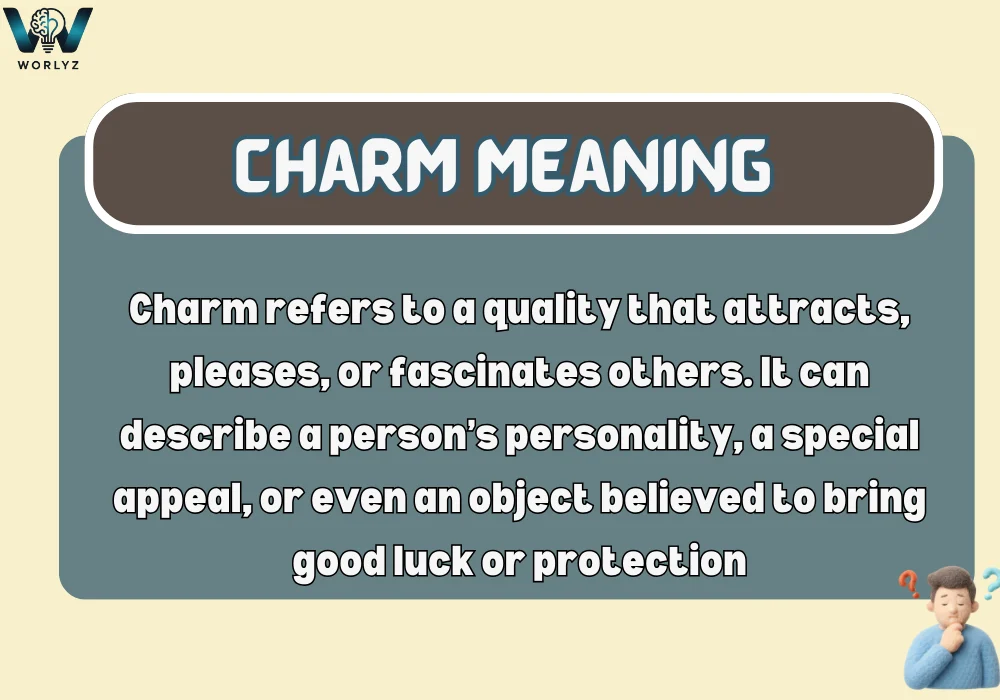
Charm refers to a quality that attracts, pleases, or fascinates others. It can describe a person’s personality, a special appeal, or even an object believed to bring good luck or protection.
At its core, charm is about making a positive impression.
Origin of the Word
The word charm comes from the Latin word carmen, meaning song or spell. Over time, it evolved to describe both magical spells and the power to attract or influence people.
This history explains why charm can have both emotional and magical meanings.
How Charm Is Used in Everyday Language
Charm as a Personality Trait
When charm is used to describe a person, it usually means they are:
- Pleasant to be around
- Naturally likable
- Good at making others feel comfortable
Example:
He won everyone over with his charm.
Charm as an Object or Symbol
Charm can also refer to a small object believed to bring luck, protection, or positive energy.
Examples include:
- A lucky charm
- A charm bracelet
- A charm worn for protection
In this sense, charm connects to older beliefs and traditions.
My charms meaning
General Meaning
“My charms” refers to the qualities or things that make a person attractive, likable, or special in a unique way.
What it can include
- Personality traits (kindness, confidence, humor)
- Physical attractiveness
- Positive energy or presence
- Special abilities or talents
Simple idea
“My charms” means the things that make me appealing or special to others.
Little charm meaning
Meaning of “Little charm”
A “little charm” usually refers to a small object or symbol believed to bring luck, protection, or positive energy.
Common examples
- Bracelet charms
- Necklaces with small symbols
- Keychain charms
Symbolic meaning
- Good luck
- Protection from negativity
- Reminder of hope or love
- Personal sentimental value
Charm meaning birds
Symbolism of birds as charms
When birds are used as charms or symbols, they often represent freedom and spiritual meaning.
Common meanings
- Freedom and independence
- Peace and harmony
- Spiritual messages or guidance
- Hope and new beginnings
Different bird symbolism
- Dove: peace and purity
- Eagle: strength and vision
- Sparrow: simplicity and protection
Charm meaning for a person
Meaning
When someone is described as having “charm,” it means they have a natural ability to attract or please others.
Traits of a charming person
- Friendly and warm nature
- Good communication skills
- Confident but gentle personality
- Makes others feel comfortable
Simple explanation
A charming person is someone who naturally wins hearts through their personality and behavior.
Charm Meaning in Simple Language
In modern terms, charm can mean:
- A special attractiveness
- A friendly or engaging quality
- Something that makes people feel drawn to you
Charm is often subtle and natural rather than forced.
Examples of Charm in Conversations
Everyday Conversation Example
She has a quiet charm that makes people trust her.
Social Media Example
Old cities have a charm you cannot find in modern places.
Object Based Example
This necklace is my lucky charm.
These examples show how charm can apply to people, places, and things.
Common Mistakes or Misunderstandings
Thinking Charm Means Physical Beauty Only
Charm is not just about looks. It often refers to personality, behavior, or attitude.
Confusing Charm With Manipulation
Charm is usually positive and natural, while manipulation involves control or dishonesty.
Using Charm in the Wrong Context
Charm should fit the situation. For example, charm may not be appropriate in serious or formal moments.
Related Words and Similar Meanings
If you are exploring the charm meaning, you may also come across:
- Charisma
- Appeal
- Magnetism
- Allure
- Enchantment
Each word has a slightly different tone but shares a similar idea.
FAQs:
What does charm mean in simple words?
Charm means a quality that makes someone or something pleasant, attractive, or likable.
Can charm refer to an object?
Yes, charm can refer to a small object believed to bring luck or protection.
Is charm always a positive trait?
Most of the time charm is positive, but it can sometimes be used to describe someone who influences others easily.
What is the difference between charm and charisma?
Charm is often gentle and subtle, while charisma is usually stronger and more noticeable.
Can places have charm?
Yes, places can have charm when they feel warm, unique, or emotionally appealing.
Conclusion:
The charm meaning goes beyond surface-level attraction. It can describe personality, objects, places, or feelings that naturally draw people in. Whether used for people, things, or experiences, charm represents a special quality that leaves a positive impression.
Understanding how charm works in different contexts helps you use the word correctly and recognize its deeper meaning in everyday conversations.

Alex is the owner and founder of Worlyz. He is passionate about explaining word meanings, language concepts, slang terms, and educational topics in a clear and simple manner. Alex focuses on creating high quality, well researched, and user focused content that helps readers understand complex words easily. Through Worlyz, his goal is to make learning language meanings and concepts accessible and reliable for everyone.